
Essay
Learning hard things.
The research on adult learning is kinder than the folklore, and stranger. Taking up a difficult skill after thirty is less a race against a closing window than a rare chance to be bad at something on purpose.
Written by CONTROL
This article runs 1,195 words and takes about five minutes to read.
Somewhere around thirty, most people stop being beginners. The career has a shape, the friends are chosen, and the skills you have are the skills you use. You are competent at a narrowing set of things, and competence is comfortable. The cost is that you rarely feel the specific, humbling sensation of not knowing how to do something with your hands or your mouth, and of having to learn it slowly in front of other people.
Many adults believe this is simply how brains work, that the window closes and what was not learned by twenty will never be learned well. The research tells a more interesting story. Some windows do narrow. Most of the popular rules about expertise are wrong in the details. And the adult brain turns out to respond to the difficulty of learning in ways that make the attempt worth more than the result.
The myth of the magic number
The best-known number in the literature of skill is 10,000 hours. It comes from a 1993 paper by K. Anders Ericsson, Ralf Krampe and Clemens Tesch-Römer, who studied violinists at a music academy in Berlin and found that the best of them had accumulated far more solitary, focused practice than their peers. By the age of twenty, the top students had logged an average of about 10,000 hours. Malcolm Gladwell turned that figure into a rule in his 2008 book Outliers, and the rule became a slogan.
Ericsson spent much of the rest of his career objecting to the slogan. The number was an average, not a threshold, and it varied by field. The violinists who reached it at twenty were, in his words, nowhere near masters. Most important, the hours had to be a particular kind of hours. Ericsson called it deliberate practice, meaning effortful work on specific weaknesses, with feedback, usually under a teacher, and usually unpleasant. Playing through the pieces you already know does not count, however long you do it. He made this case at length in Peak, written with Robert Pool and published in 2016.
Even the refined version has limits. In 2014, Brooke Macnamara, David Hambrick and Frederick Oswald pooled 88 studies covering more than 11,000 participants and asked how much of the difference between performers could be explained by deliberate practice. The answer depended on the domain. It was about 26 percent in games such as chess, 21 percent in music, 18 percent in sports, 4 percent in education, and less than 1 percent in the professions. Practice matters a great deal, in other words, but it does not explain most of why one person ends up better than another.
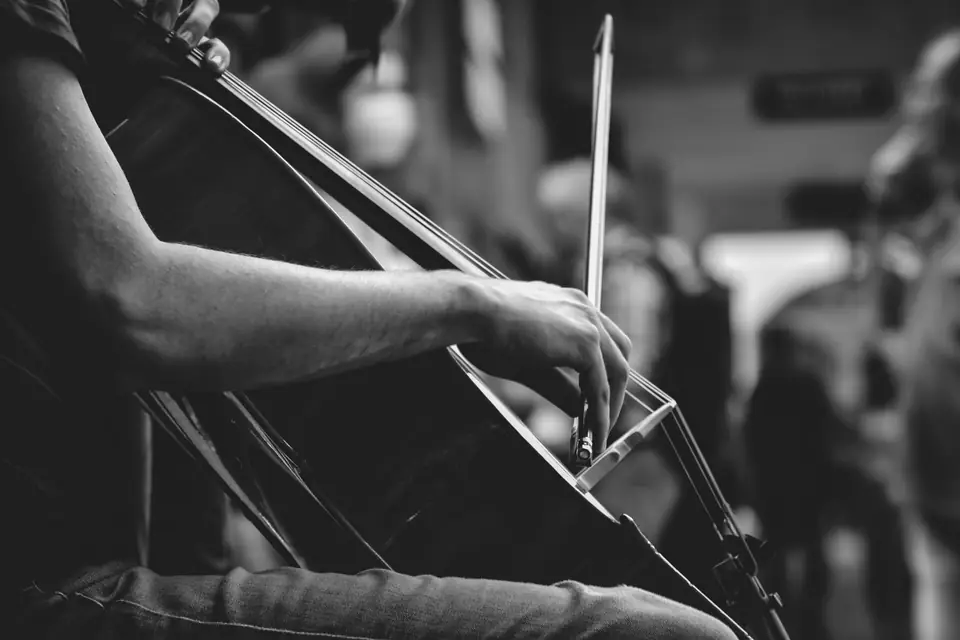
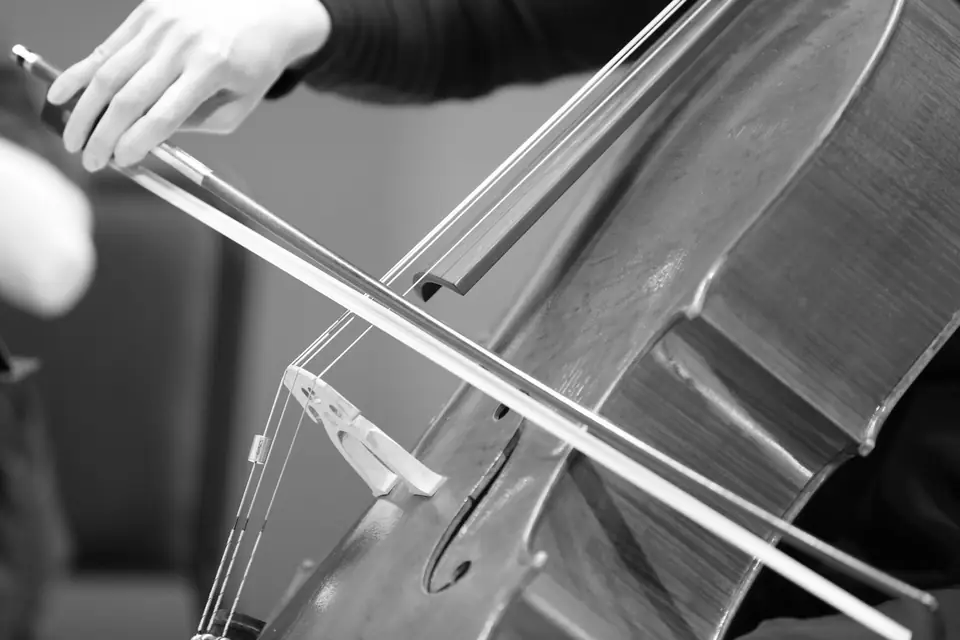
For the adult beginner, this is liberating rather than discouraging. If mastery were only a matter of hours, a forty-year-old who starts the cello would be permanently behind every child who started at six, and the math would be hopeless. Because it is not only hours, the question changes. It stops being whether you can catch up and becomes whether the practice itself is worth doing.
What really closes, and what does not
Language is the case people cite most, and here the evidence for an age effect is real. In 2018, Joshua Hartshorne, Joshua Tenenbaum and Steven Pinker analyzed an online grammar quiz taken by 669,498 native and non-native speakers of English. Their model suggested that the ability to learn grammar stays strong almost to adulthood, until about seventeen and a half, and then declines steadily. Other researchers have since reanalyzed the data and argued that the decline is more gradual than a sharp cutoff. Either way, the finding concerns reaching native-like grammar. It says nothing against an adult learning to read Italian, order dinner in Tokyo or hold a conversation with a mother-in-law in Portuguese.
The brain’s physical response to new skills is less age-bound than the folklore suggests. In a study published in Nature in 2004, Bogdan Draganski and colleagues taught adults to juggle three balls over three months and found a measurable increase in gray matter in regions involved in tracking visual motion. When the participants stopped practicing, the increase receded. A follow-up study in 2008 found changes after as little as seven days and concluded that learning a new task mattered more for the change than continuing to rehearse one already learned.
That second finding is the one to keep. The brain seems to respond to novelty and struggle, not to repetition of the comfortable. A 2014 study led by Denise Park at the University of Texas at Dallas reached a similar conclusion from a different direction. Older adults who spent about fifteen hours a week for three months learning demanding new skills, digital photography or quilting, showed gains in episodic memory. Groups who spent the same time socializing or doing easy, familiar activities did not.
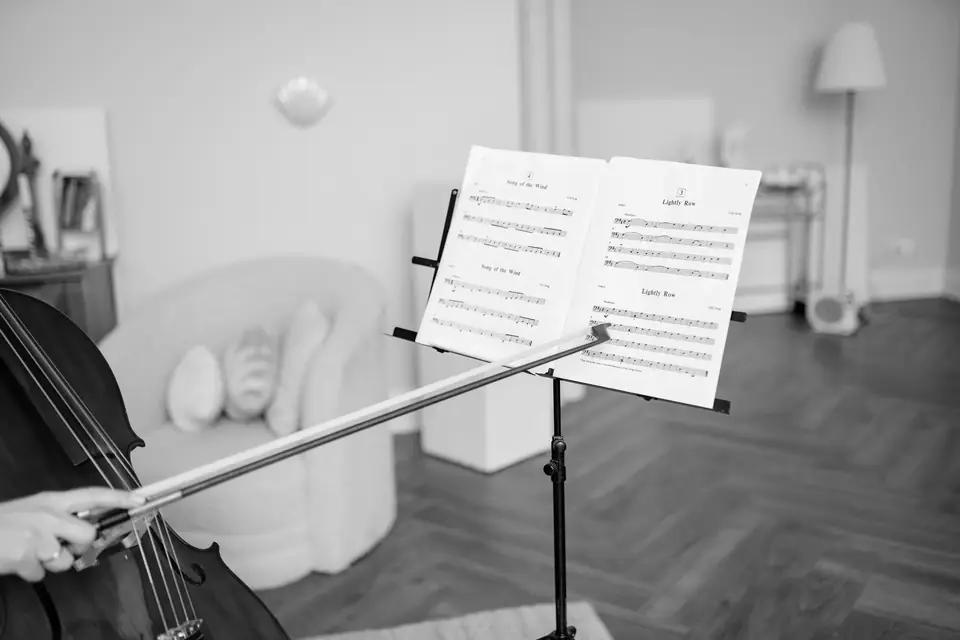
The brain seems to respond to novelty and struggle, not to repetition of the comfortable.
The freedom of being bad
The research explains why adult learning is possible. It does not explain why it feels so good, and it does. Part of the answer is that beginnerhood is the one place in adult life where expectations are appropriately low. Nobody expects a forty-year-old to play the Bach suites after a year. The only standard is last week. For people whose working lives are measured against quarterly targets and other people’s opinions, that is a strange and welcome kind of freedom.
Another part is that learning a hard thing restores a relationship with time that most adults have lost. The practice session does not scale. It cannot be delegated, automated or sped up by an app. Twenty minutes of scales is twenty minutes of scales. There is no dashboard, and the progress is visible only in retrospect, when you notice one evening that the passage that used to stop you no longer does.
The most famous late beginner in American kitchens is Julia Child, who enrolled at Le Cordon Bleu in Paris in her late thirties, after a career that had nothing to do with food. Mastering the Art of French Cooking appeared in 1961. Her case is not typical, and nobody should take up the oboe expecting a television show. But it is a useful correction to the idea that the important learning of a life is finished by the time the life is established.
The practical lessons are few. Find a teacher, because feedback is the part of deliberate practice that people skip when they teach themselves. Practice the difficult passages rather than the pleasant ones. Keep the sessions short and frequent. Expect to be bad for a long time, and notice that being bad in private, with nothing at stake, is one of the least stressful things an adult can do.
The generation raised on games already understands this better than it admits. Every hard game teaches the same thing, which is that failure repeated with attention becomes skill. The difference is that an instrument or a language will not reset when you put it down. What you learn stays with you, a little changed, which is more than most of what we do with our evenings can say.