
Essay
Look after it.
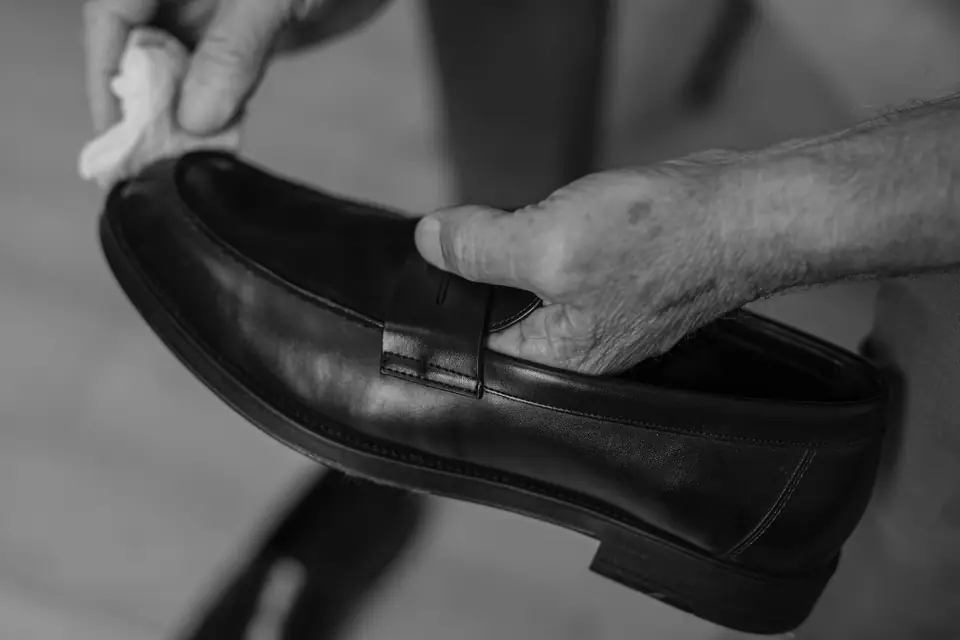
Buying something well is only half of owning it. The other half is ten unglamorous minutes a week, and those minutes decide whether a pair of boots or a wool coat lasts three winters or thirty.
Written by CONTROL
This article runs 923 words and takes about four minutes to read.
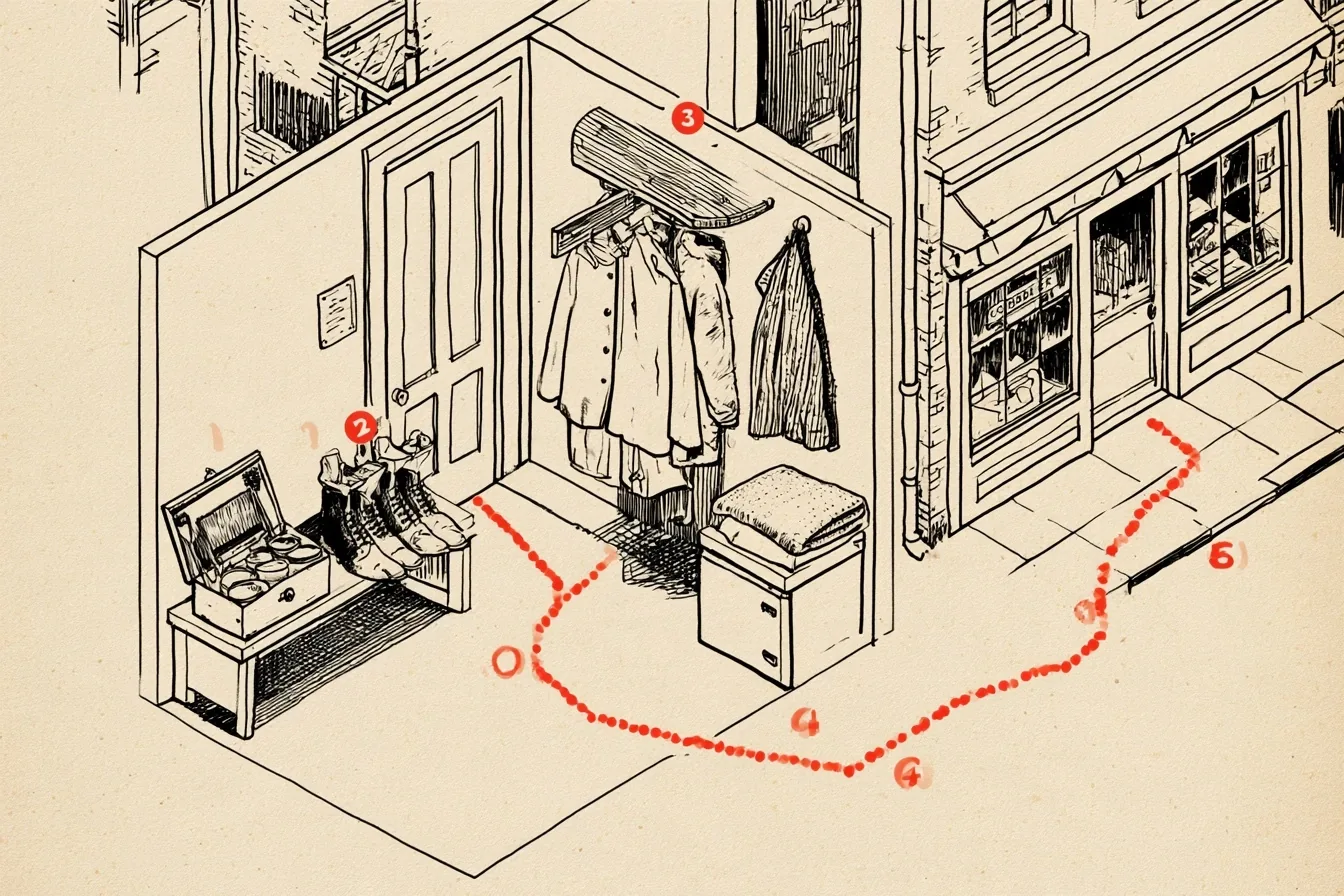
Buying well gets the attention. There are guides to leather, arguments about stitching and entire forums about the right boot. Care gets almost none of it, even though it decides most of the outcome. Good boots ignored for two winters look worse than cheap ones, and a wool coat thrown over a chair every night loses the shape of its shoulders within a season. The object sets the ceiling, and maintenance decides how close anyone gets to it.
Care is also the part of ownership that cannot be outsourced to a purchase. It asks for a small, repeated act of attention, on a schedule, long after the pleasure of buying has faded. That is why it is skipped, and it is also why it works. Ten minutes on a Sunday evening, one kit in one box and a fixed order of jobs are enough to keep good things good.
A shoebox of tools
Everything fits in a shoebox. It needs a horsehair brush for buffing, a stiffer brush for dirt, a clothes brush for wool and a suede brush with a rubber block. Add a leather cleaner, a leather conditioner, a tin of neutral wax polish, a tin in the color of your boots and a few cotton rags cut from old T-shirts. Buy one pair of cedar shoe trees for every pair of leather shoes you own. Keep the box somewhere visible, because a kit in the attic is a kit nobody uses.
Shoes, which carry the most weight
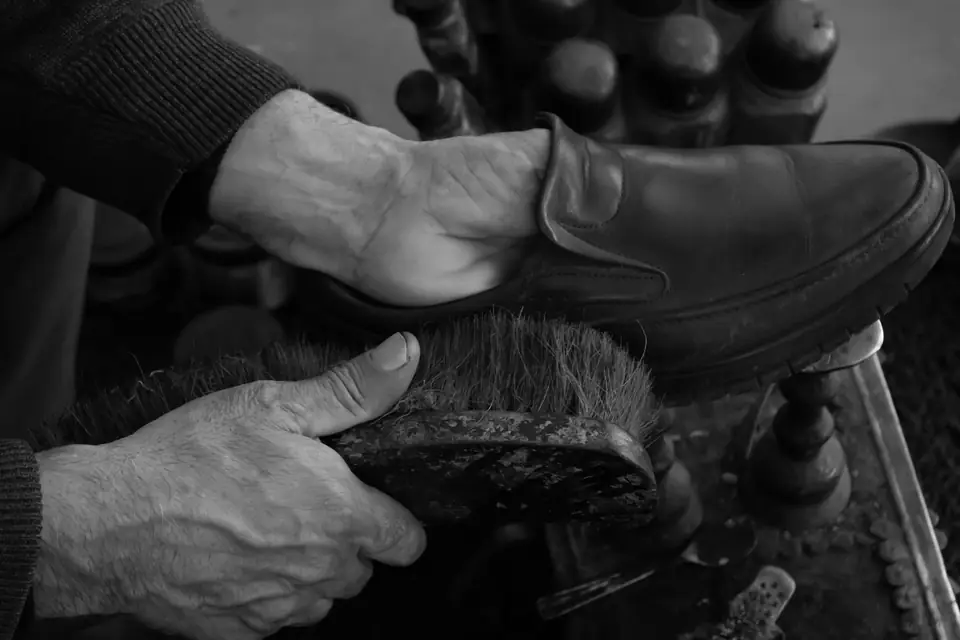
Put the trees in the moment the shoes come off, while the leather is still warm and damp. The wood draws out moisture and holds the shape as the leather dries, which is when creases set. Give each pair a day off between wears so that it can dry completely. On Sunday, knock the dirt off with the stiff brush and then buff with horsehair. Clean and condition the leather every two or three months of regular wear, let it rest for fifteen minutes and then polish if you want a shine. Brush suede dry and against the nap, and lift marks out with the rubber block.
Winter salt leaves white tide lines on leather. Wipe them off the same night with a rag dampened in two parts water to one part white vinegar, dry the boots with the trees in and condition them the next day.
Wool and waxed cotton
Brush wool coats and jackets after wearing, in long downward strokes, to lift dust before it settles into the fibers. Hang them on wooden hangers as wide as your shoulders, and give each piece a day off between wears so the fibers can recover. Dry-clean only for real stains, because the process is hard on the cloth, and steam out wrinkles by hanging a jacket in the bathroom during a hot shower.
Waxed cotton follows different rules. It should never go into a washing machine or meet hot water or detergent, since all three strip the wax. Sponge it with cold water, and rewax it about once a year, when the seams and elbows turn pale. Stand the tin in a bowl of hot water until the dressing softens, work it in with a rag, go over the cloth with a hair dryer so the wax melts in and leave the jacket to cure overnight in a warm room.
The moth problem
Clothes moth larvae eat wool, fur and feathers, and a fact sheet from Cornell University’s entomologists notes that the moths are attracted to articles soiled by food, drink and perspiration. The best defense is simply to put knits and coats away clean. Cedar helps less than its reputation suggests. According to the same source, cedar chests work mainly because they close tightly, and cedar oil can kill young larvae but may not affect older ones.
If damage appears, the fix is cold, and it has to be abrupt. The Cornell guidance calls for moving infested woolens from a warm room, around 70°F, straight into a freezer at 0°F and leaving them for at least 72 hours once the material reaches that temperature. A slow chill in a cold garage does not do the job, because the guidance depends on the change being sudden. Seal each piece in a plastic bag first so that it comes out dry.
The resole deadline
The hardest part of care is knowing when to hand something to a professional, and most owners fail by waiting too long. Goodyear-welted shoes can be resoled several times, but only while the welt, the strip of leather that joins the upper to the sole, is intact. Wear a hole through the sole and the damage reaches the welt, and the repair becomes expensive or impossible. The test is simple. Press a thumb into the center of each sole on Sunday, and take the pair to a cobbler when it feels soft or thin. Replace the rubber heel lift when it wears to an angle, before the wear reaches the leather stack above it.
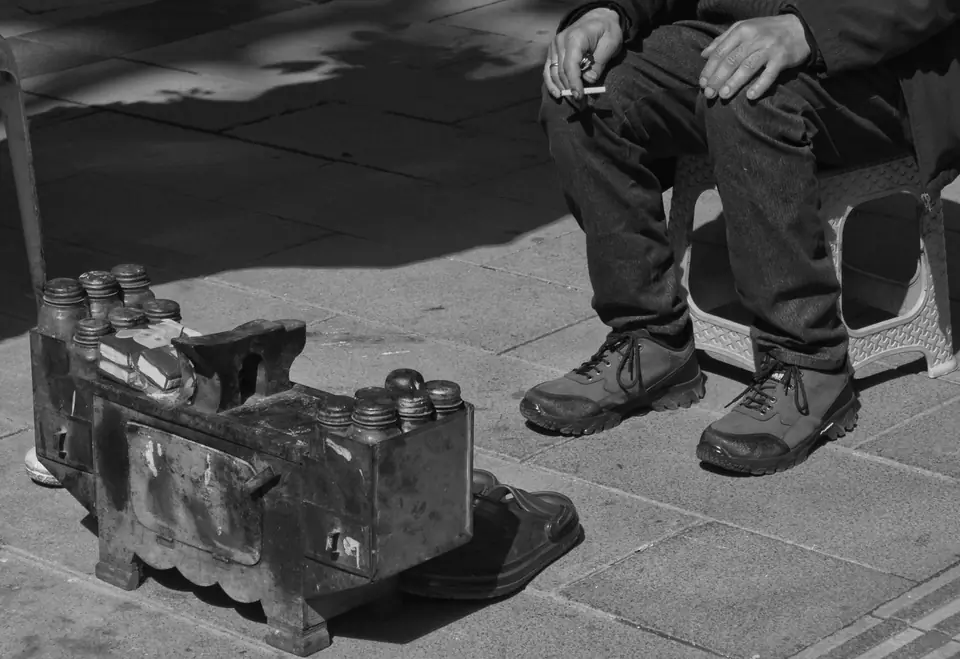
The object sets the ceiling, and maintenance decides how close anyone gets to it.
A cobbler’s bill is almost always smaller than the price of a new pair, and it buys something a new pair cannot, which is a shoe that has already shaped itself to its owner’s foot. That is the quiet reward of care. It does more than preserve an object. It lets the object become more particular to the person who keeps it, one brushed coat and one pressed sole at a time.