
Review
A house that rewards the patient reader.
Blue Prince, the puzzle game Tonda Ros designed and wrote over eight years, turns a country-house mystery into a lesson in paying attention.
Written by CONTROL
This article runs 460 words and takes about two minutes to read.
Blue Prince opens with a will and a condition. Simon P. Jones has inherited Mt. Holly, the estate of Herbert Sinclair, and he may keep it only if he finds the forty-sixth room in a house that has forty-five. The catch is that the house rebuilds itself every night.
Each time Simon opens a door, the player drafts the room behind it from three floor plans drawn at random. A day begins with 50 steps, and every move between rooms costs one. When the steps run out, or when a careless choice walls off the last open door, the day ends and the rooms are gone by morning. The structure borrows from card games and from the roguelike, in which failure is the ordinary way forward, but it wears the clothes of a Victorian parlor puzzle, all oak paneling, locked safes and portraits that seem to be looking at something.
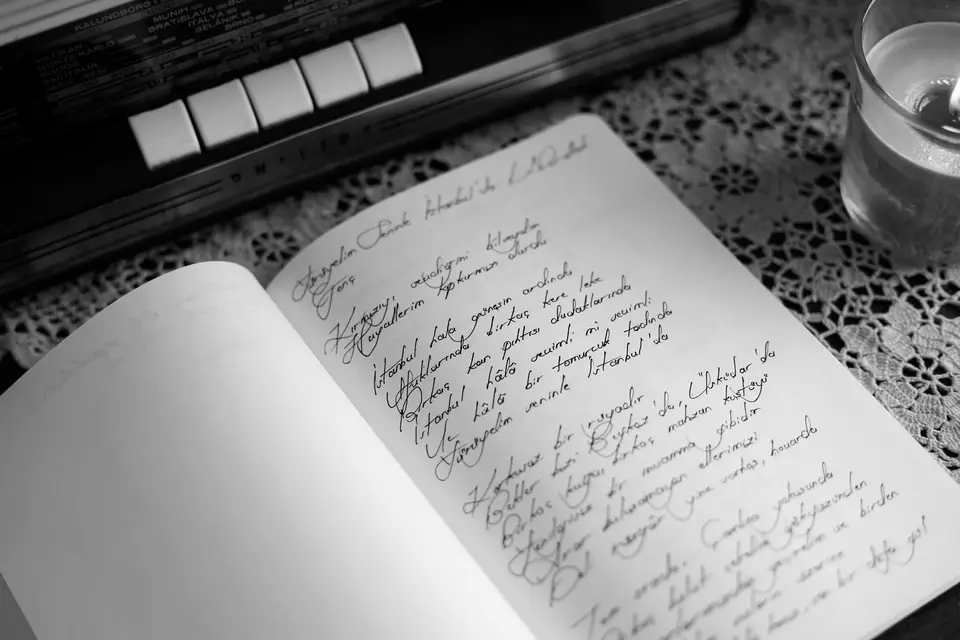
The notebook is the real inventory
What makes the game remarkable is what survives the reset. Almost nothing you build carries over, but everything you notice does. A date on a letter, a word under a painting and a number on a clock turn out to be connected, and the connection is recorded nowhere except in your own handwriting. Players of Blue Prince keep paper notebooks for weeks. The game gives you power over the architecture every morning and then shows, patiently, how little that power is worth without attention.
Ros has named his debts plainly. The clearest is Christopher Manson’s 1985 puzzle book Maze, and Manson himself contributed art and a puzzle to the game. Kit Williams’s Masquerade and the recreational mathematics of Martin Gardner and Raymond Smullyan are also in the walls. The result feels less like a video game with puzzles in it than like a very large book that happens to be interactive, with a missing children’s author and a family history hidden in its margins.
It is not a kind game. The draw can be cruel, and some days end having taught you nothing except that the Nursery did not appear again. The deepest layers, which begin after the forty-sixth room is found, ask for the kind of cross-referencing that sends ordinary adults to spreadsheets. Those frustrations are real, and they are also the point. The game trusts you to be bored for a while and to come back anyway.
The prizes it collected since release, including design awards at the D.I.C.E. Awards and the BAFTA Games Awards, make sense once you have spent a month in its rooms. Very few games have this much confidence in the reader.
The verdict: Blue Prince is the rare game that is worth clearing a season for. Buy a notebook first, and do not look anything up.