
Reported
Strong at seventy.
Muscle is not a matter of vanity in later life; it is the tissue that keeps a person independent. The evidence that strength training works, even into the tenth decade, is unusually consistent, and it says more about strength than about size.
Written by CONTROL
This article runs 1,325 words and takes about six minutes to read.
In 1990 a team of researchers in Boston led by Maria Fiatarone published a small study in the Journal of the American Medical Association that should have changed how we think about old age. They recruited ten frail volunteers who lived in a long-term care facility and whose average age was ninety. For eight weeks the volunteers trained their legs against heavy resistance. Nine finished the program. Their strength rose by an average of 174 percent, the muscle area of their mid-thighs grew by about 9 percent, and their walking speed on a tandem gait test improved by 48 percent.
The numbers were striking because the subjects were supposed to be past the point of adaptation. They were not. Muscle in a ninety-year-old still answers a demand, more slowly and from a lower base, but it answers. The question for a person of forty or fifty is not whether the body will lose muscle with age, because it will, but how much of the loss is inevitable and how much is simply the result of never asking the muscle for anything.
A name for the loss
The physician and nutrition scientist Irwin Rosenberg proposed the word “sarcopenia” in 1989, from the Greek for flesh and poverty. It received its own code in the American version of the International Classification of Diseases, M62.84, only in 2016, which formally recognized it as a disease state rather than a natural feature of getting older.
The definition has shifted in a revealing direction. When the European Working Group on Sarcopenia in Older People revised its consensus in 2019, it made low muscle strength the primary sign of the condition, ahead of low muscle mass. The change reflected what the data had been saying for years: what matters most is not how much muscle a person has but what that muscle can do.
Strength falls faster than size
A 2012 review in Frontiers in Physiology by Mitchell and colleagues gathered the longitudinal evidence on aging muscle. After the age of seventy-five, it found, muscle mass declines by roughly 0.64 to 0.70 percent a year in women and 0.80 to 0.98 percent a year in men. Strength falls much faster, by about 2.5 to 3 percent a year in women and 3 to 4 percent a year in men. In studies that measured both at once, strength was lost two to five times faster than mass. Researchers have a separate word for the loss of strength, dynapenia, and the review concluded that it is a more consistent risk for disability and death than the loss of muscle itself.
The Health, Aging and Body Composition study made the point bluntly. It followed 2,292 men and women aged seventy to seventy-nine for about five years. Weaker quadriceps and weaker grips were both associated with a higher risk of death. The size of the muscle, measured by CT scan and by body scanning, was not, and adjusting for muscle size left the association with strength largely unchanged. The paper’s title summarized the finding: strength, but not muscle mass, was associated with mortality.
What a handshake knows
Grip strength takes a hand dynamometer and a few seconds to measure, and it has turned out to be remarkably informative. The Prospective Urban Rural Epidemiology study, published in The Lancet in 2015, measured the grip of 139,691 adults in seventeen countries and followed them for a median of four years. Each five-kilogram reduction in grip strength was associated with a 16 percent higher risk of death from any cause and a 17 percent higher risk of cardiovascular death. Grip was a stronger predictor of both than systolic blood pressure.
It is worth being precise about what this means. A strong grip is not a charm, and squeezing a rubber ball will not buy anyone a longer life. Grip strength works as a signal because it reflects much else: the health of the nerves and muscles throughout the body, how active a person has been, and whether illness has already begun to take something away. It is a reading on the gauge, not the engine.
The legs tell a similar story with more direct consequences. Getting out of a chair, climbing stairs and catching oneself after a stumble are all feats of leg strength, and losing them is often the point at which independence ends. In Brazil, the sports physician Claudio Gil Araújo and his colleagues developed a simple test in which a person sits on the floor and rises again, scored from zero to ten, with points lost for each hand, knee or forearm used for support. In their study of adults aged fifty-one to eighty, published in 2014, those who scored from zero to three were five to six times more likely to die over roughly six years than those who scored from eight to ten.
What the trials show
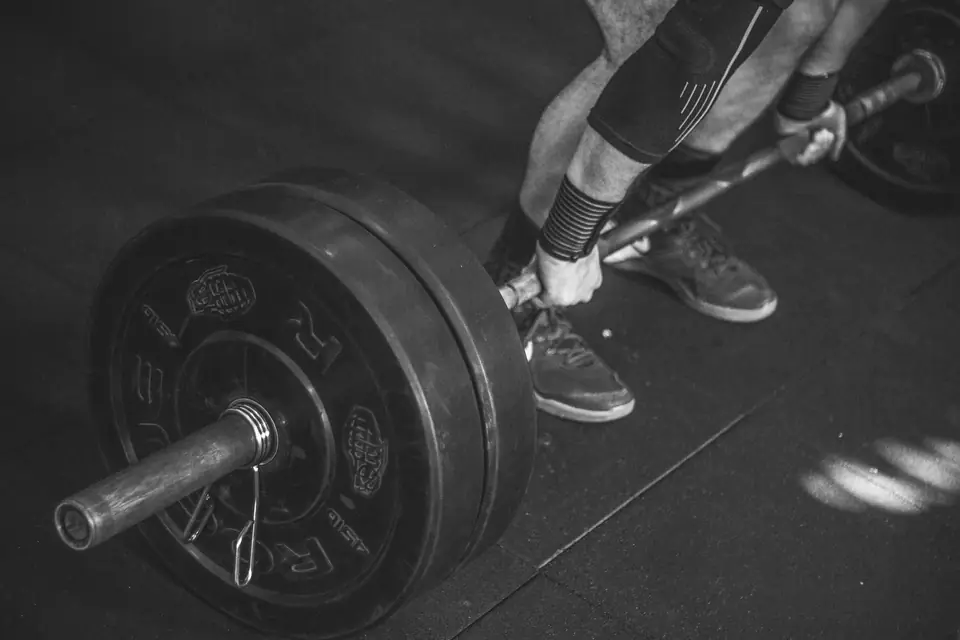
Associations can mislead, so the stronger evidence comes from trials that assign people to train. One of the more instructive is LIFTMOR, an Australian trial published in 2018 in the Journal of Bone and Mineral Research. It enrolled 101 postmenopausal women with low bone mass, whose average age was sixty-five, a group that has often been advised to avoid heavy loads. For eight months, half of them trained twice a week for thirty minutes under close supervision, performing deadlifts, back squats and overhead presses at more than 80 to 85 percent of their one-repetition maximum, along with jumping chin-ups with drop landings. Bone density in the lumbar spine rose by 2.9 percent in the training group and fell by 1.2 percent in the control group. Across more than 2,600 training sessions there was one adverse event, a minor back spasm.
The population data point the same way. A 2022 meta-analysis in the British Journal of Sports Medicine, drawn from sixteen cohort studies, found that thirty to sixty minutes a week of muscle-strengthening activity was associated with a 10 to 20 percent lower risk of death from all causes, cardiovascular disease and cancer. The relationship was J-shaped, with no clear evidence that more than an hour a week helped further. People who combined strength work with aerobic exercise had a 40 percent lower risk of death from all causes. These were observational studies, and the authors said so, but the direction is consistent with the trials.
The official guidance is modest. The Physical Activity Guidelines for Americans recommend muscle-strengthening activity that works the major muscle groups on at least two days a week, alongside aerobic exercise. What the research does require is load that is heavy relative to the person lifting it and that increases over time. Anyone with a heart condition, recent surgery or low bone density should begin with a physician’s advice and, ideally, a qualified coach, which is also how the LIFTMOR women trained.
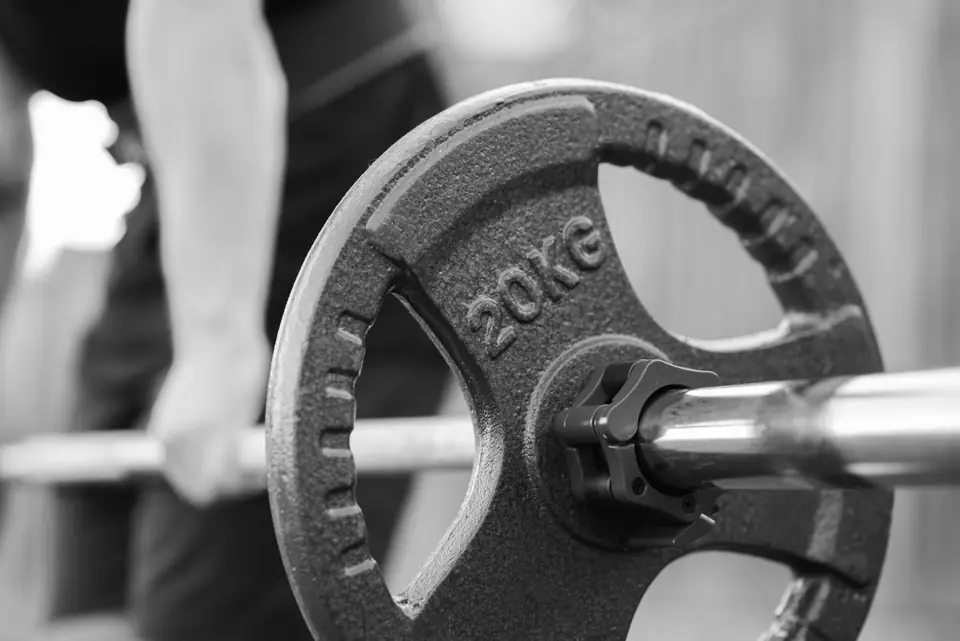
Muscle in a ninety-year-old still answers a demand, more slowly and from a lower base, but it answers.
The body as the last possession
The case for lifting in middle age is usually made in the language of appearance, which misses the point. Sarcopenia matters because it decides who carries the groceries up the stairs, who can get down on the floor with a grandchild and get back up, and who can recover from a fall without moving into someone else’s care. Strength is the physical form of agency. It is what lets a person keep deciding where to go and how to get there.
The research offers an unusual kind of good news. Most of the forces that shape how we age, from genes to income to luck, are out of our hands. Strength is not. It declines on a known schedule, it responds to a known stimulus, and it responds at any age at which anyone has thought to test it. The people who stand up easily at seventy are, in many cases, the people who kept asking their muscles to do something difficult at fifty.