Reported
The analog return.
Vinyl now earns more than a billion dollars a year in the United States, film stock is back in production and paper books have outlasted the e-reader panic. The people buying them are not nostalgic so much as tired of owning nothing they can hold.
Written by CONTROL
This article runs 1,153 words and takes about five minutes to read.
In 2006 the American vinyl record was, by the industry’s own accounting, close to dead. The Recording Industry Association of America put the trade value of the format that year at about 36 million dollars, a rounding error in a business then organized around the compact disc and the iPod. Nobody serious expected it to come back. Records were heavy, fragile, expensive to press and inconvenient to play, and they could not be carried in a pocket.
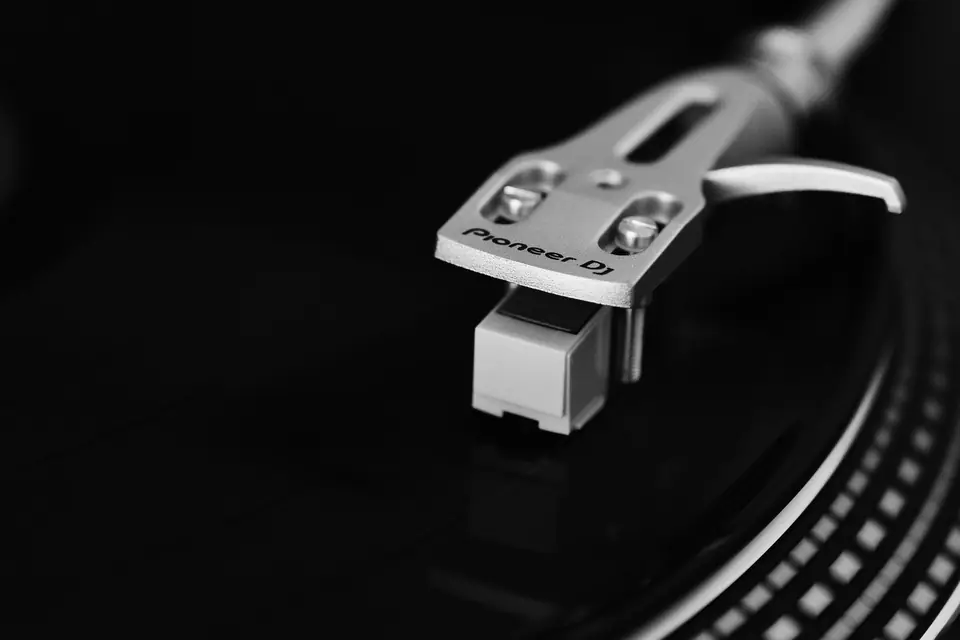
Last year the picture was reversed. In its report on 2025, the RIAA said that American vinyl revenue had passed a billion dollars. The figure, $1.04 billion at wholesale, was the nineteenth consecutive year of growth, on 46.8 million units. Vinyl brought in more than three times the revenue of CDs and accounted for more than three-quarters of all physical music revenue. Streaming still produced 82 percent of the industry’s money, which is the point worth holding onto. Almost everyone who buys a record today could hear the same music on a phone, instantly, for a monthly fee. They pay extra for the inconvenience.
The billion-dollar inconvenience
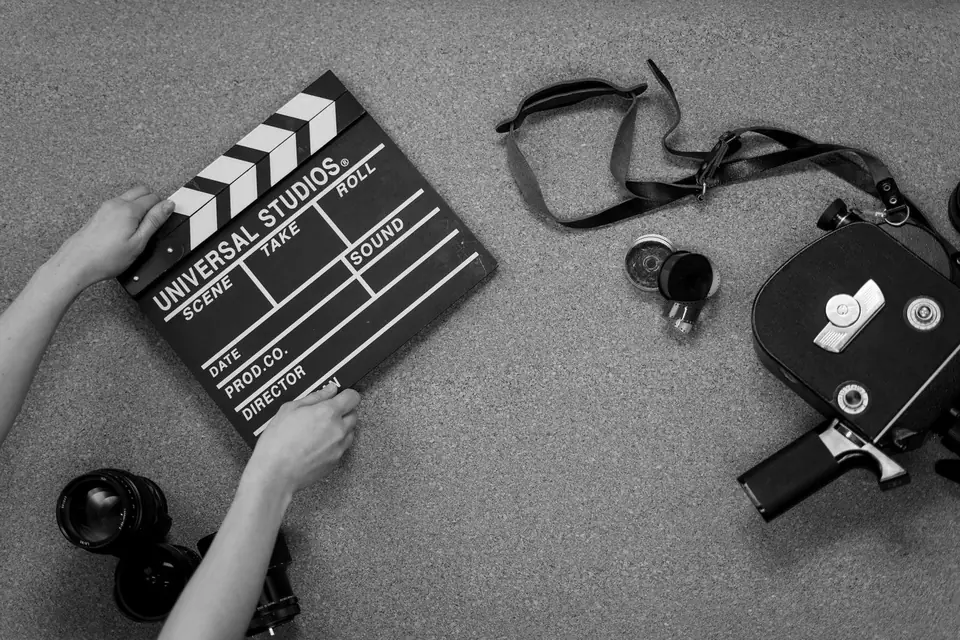
Music is the loudest example but not the only one. Kodak phased out its Ektachrome slide film between 2009 and 2013, when film photography looked finished. Kodak Alaris announced the film’s return in January 2017 and shipped it in 35mm in September 2018. In 2022 Nagraj Bokinkere, who ran film manufacturing at Eastman Kodak, went on a Rochester business podcast to recruit technicians and said, “We literally cannot keep up with demand.” The company had hired more than 300 people across film and chemicals in the previous eighteen months and moved its film finishing from a single five-day shift to round-the-clock production.
Books tell a subtler story. Around 2010 the e-reader was widely expected to do to the paperback what the MP3 had done to the CD. It did not. According to Circana BookScan, which tracks most American print sales, print unit sales peaked at 839.7 million in 2021, fell back after the pandemic surge and reached 762.4 million in 2025, still above where they had been before 2020. The paper notebook, meanwhile, has become a small luxury category of its own; the Italian brand Moleskine was launched in 1997, a decade before the smartphone, and has built a durable business on blank pages.
The journalist David Sax collected these trends in a 2016 book called The Revenge of Analog, and the decade since has mostly confirmed his thesis. The more of life that moves onto screens, the more certain kinds of people pay for things that do not.
What friction buys
The usual explanation is nostalgia, and it does not survive contact with the buyers. Many vinyl customers are too young to remember records as the default format, and many film photographers were born after the digital camera. They are not trying to return to something. They are choosing a set of constraints.
Consider what each format takes away. A record has two sides and a fixed running order, so it cannot be shuffled, skipped endlessly or interrupted by a recommendation. A roll of film has thirty-six exposures and no screen on the back, so each photograph costs money and cannot be checked until later. A notebook cannot send a notification. A printed book cannot be updated, tracked or quietly withdrawn by the company that sold it. In each case the product is defined by what it declines to do.
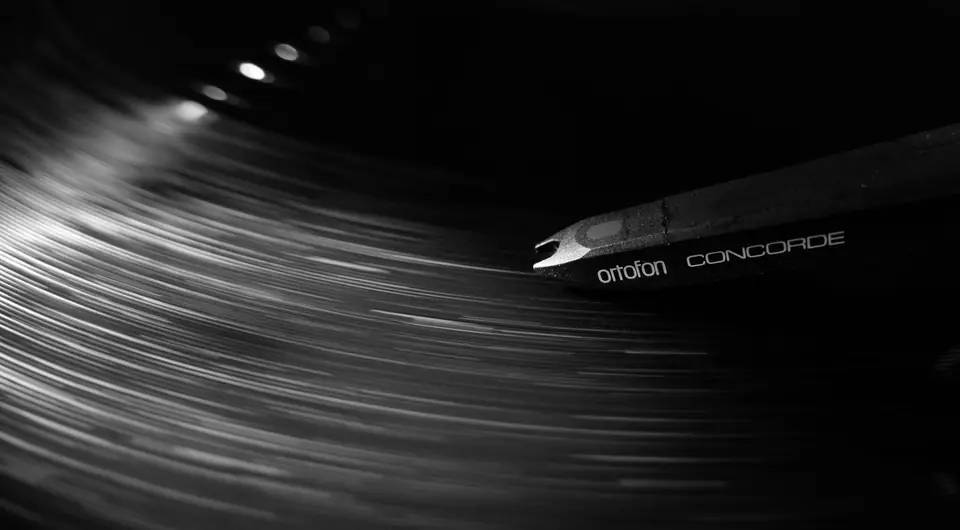
The engineers of the streaming era spent twenty years removing friction, and they were right that most people want it removed most of the time. Nobody misses rewinding a cassette with a pencil. But friction is also the thing that makes an act deliberate. Putting a record on the platter is a small decision to listen to a particular album for twenty minutes. Opening an app and letting it play is a decision to let someone else decide. The difference is not sound quality, which audiophiles will argue about forever. It is authorship.
The delay matters as much as the limit. A roll of film that goes to a lab comes back days later, by which time the photographer has forgotten half of what he shot and can look at the pictures almost as a stranger would. A record side that ends after twenty minutes asks the listener to get up, turn it over or choose something else, and in that pause he notices whether he is still listening. Digital tools are built to eliminate such gaps. Analog tools are built out of them, and the gaps turn out to be where attention lives.
The product is defined by what it declines to do.
The limits of the evidence
It is worth being careful here, because the analog revival attracts a certain amount of wishful science. In 2014 two psychologists, Pam Mueller and Daniel Oppenheimer, published a study in Psychological Science suggesting that students who took notes by hand understood lectures better than those who typed. It was cited for years as proof that paper is good for the brain. In 2019 a team led by Kayla Morehead published a careful replication and found that the advantage largely disappeared, particularly on tests taken days later. What mattered was the quality of the notes, not the instrument.
The honest case for analog does not depend on such studies. It depends on ownership and attention. A digital library is a license that can change its terms, lose a title in a rights dispute or vanish with a server. A record on a shelf is property in the old-fashioned sense: it can be lent, sold, inherited or played in thirty years on a machine that has never connected to the internet. A camera loaded with film is not a device collecting data about the person holding it. These are not aesthetic preferences. They are questions about who controls the thing you think you own.
Holding something
There is a version of this trend that is merely a luxury good, and the markup on some limited-edition colored vinyl suggests the industry knows it. Record Store Day, founded in 2007 to help independent shops, now releases hundreds of special pressings a year for collectors who may never play them. Analog can become one more form of consumption, bought for the display rather than the use.
But the basic impulse is sound, and it is spreading for a reason. A generation that grew up on cartridges remembers what it meant to own a game: to blow into it, lend it to a friend and find it years later in a box. The cloud offered everything and let people keep nothing. The return of the record, the roll of film and the paper notebook is a small, expensive vote for the opposite arrangement. It says that a person would rather have fewer things that stay put than infinite things that belong to someone else.