
Essay
The cabinet.
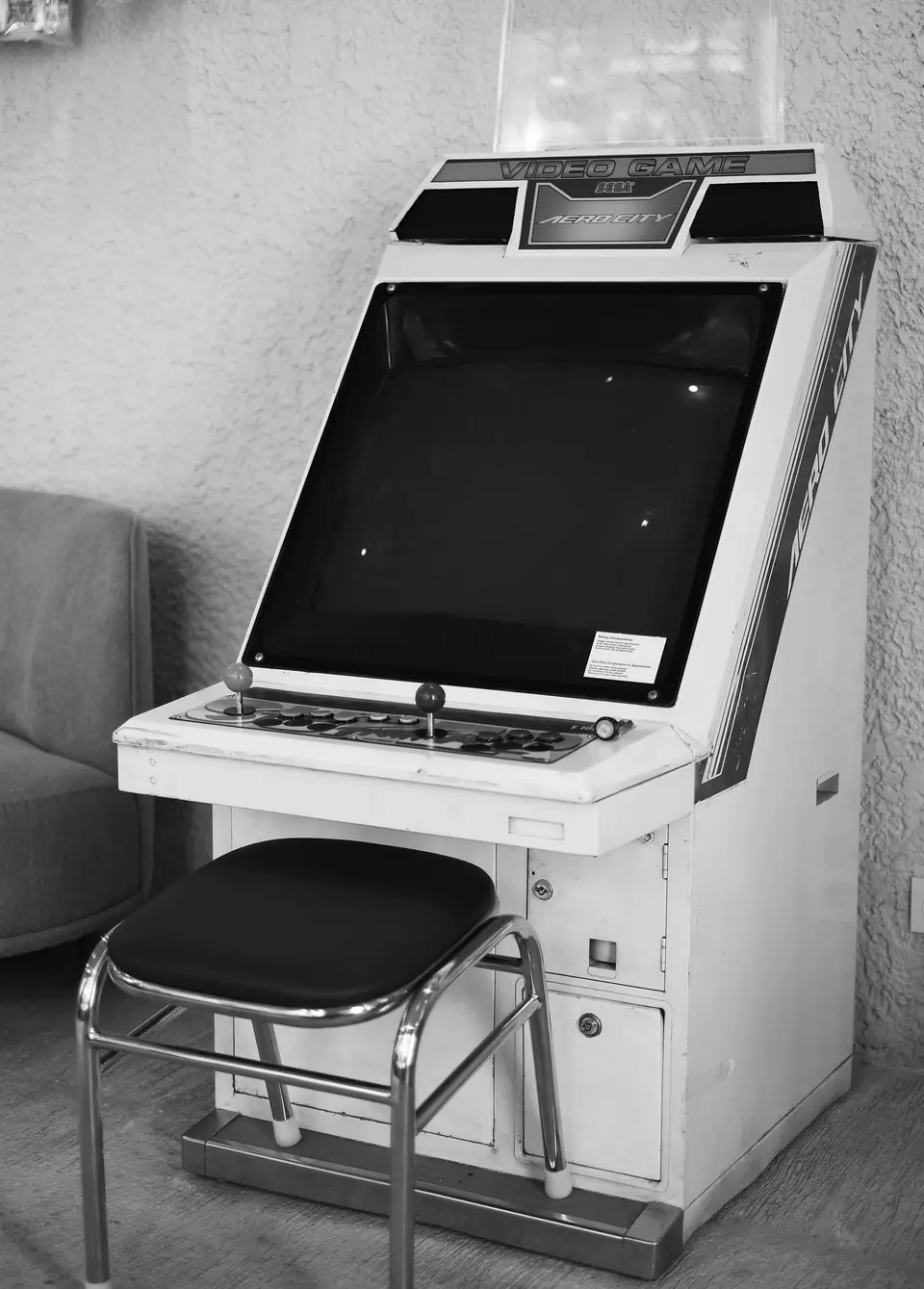
An arcade machine is the only video game that is also a piece of furniture, and bringing one home means taking a machine built to collect money and teaching it to live in a house. It is worth the trouble for anyone who understands what they are taking on.
Written by CONTROL
This article runs 871 words and takes about four minutes to read.
Every other game in the house can be put away. An arcade cabinet cannot. A real upright stands five to six feet tall, measures about two to two and a half feet wide and generally weighs around 250 pounds. It is furniture, an appliance and a television at once, and it was designed for a business, a room full of strangers and a coin box that someone emptied on a schedule. At home it becomes something else, the only way to play arcade games exactly as they were built, standing up, with a real stick in your hand and nobody waiting behind you with a quarter.
A body that outlives its game
The arcade was ruthless about novelty, and its cabinets carry the evidence. A dedicated cabinet was built for one game, with that game’s artwork, control panel and marquee. A conversion is a cabinet that an operator stripped and refitted with a different game, often with new art over the old. Operators did this constantly, because a game could go stale in six months to a year and a new board was far cheaper than a new cabinet. Collectors pay more for an original dedicated machine, while a clean conversion plays just as well for less. You can usually spot a conversion by paint over old artwork, leftover pieces of the previous game on the bezel or a control panel with holes that do not match its buttons.
The industry eventually standardized the swap. Most cabinets built since the mid-1980s follow the JAMMA standard, named for the Japan Amusement Machine and Marketing Association, which introduced it in 1985. It is a single 56-pin edge connector, with 28 pins on each side, that carries power, RGB video, one channel of sound and the controls for two players with three action buttons and a start button each. Games that needed more buttons, such as Street Fighter II, added extra connectors. JAMMA was followed in 1996 by a newer standard called JVS, which uses USB-style connectors for its controls.
The practical result is that a JAMMA cabinet is not tied to its game. A JAMMA cabinet can become a different game in a few minutes. Unplug one board from the harness and plug in another, and as long as the new game uses the same controls and the same monitor orientation, the cabinet is a different machine. The cheapest way into the hobby is often a plain conversion cabinet and one board you love, with the freedom to change your mind later.
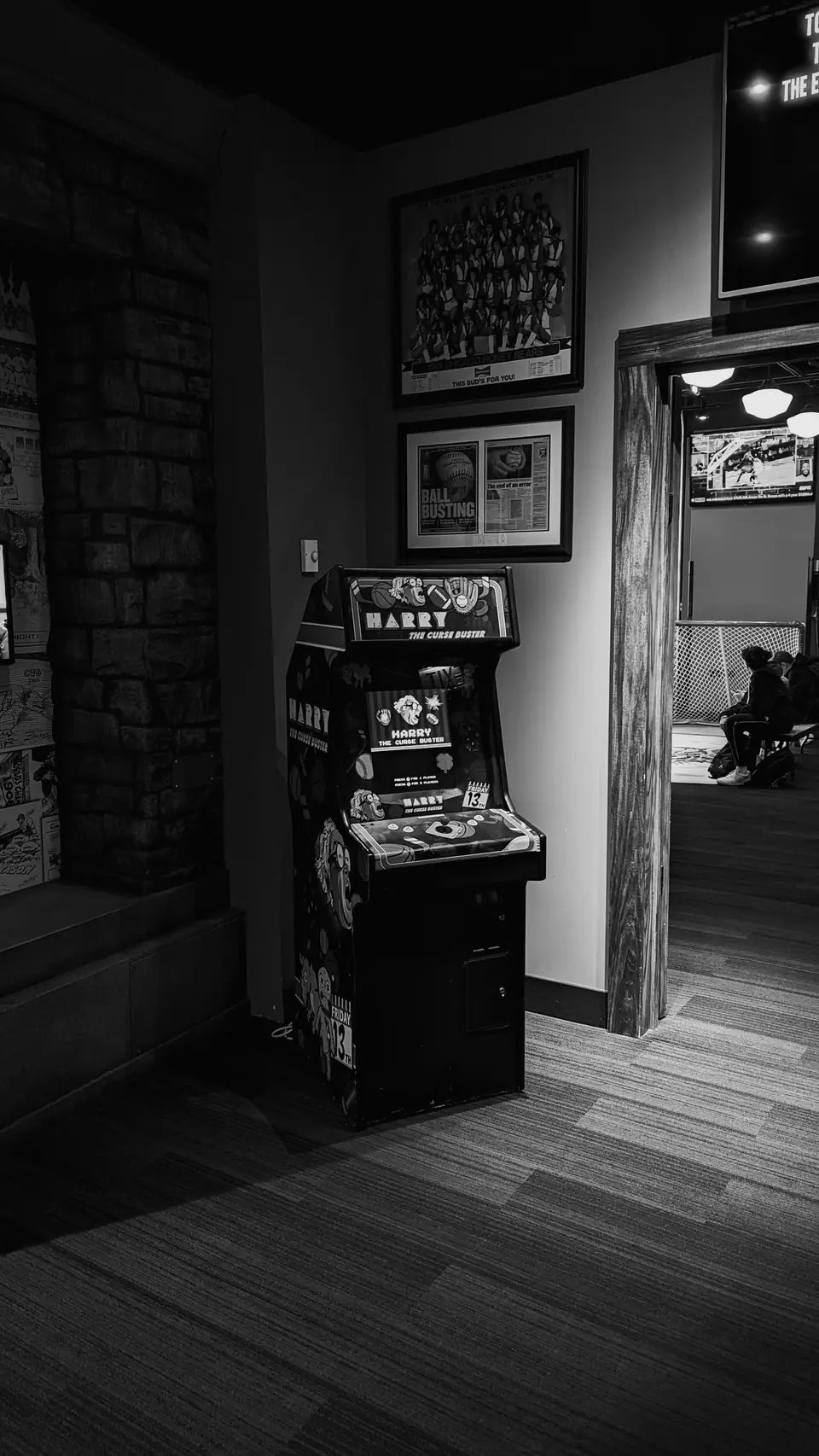
A JAMMA cabinet can become a different game in a few minutes.
The monitor
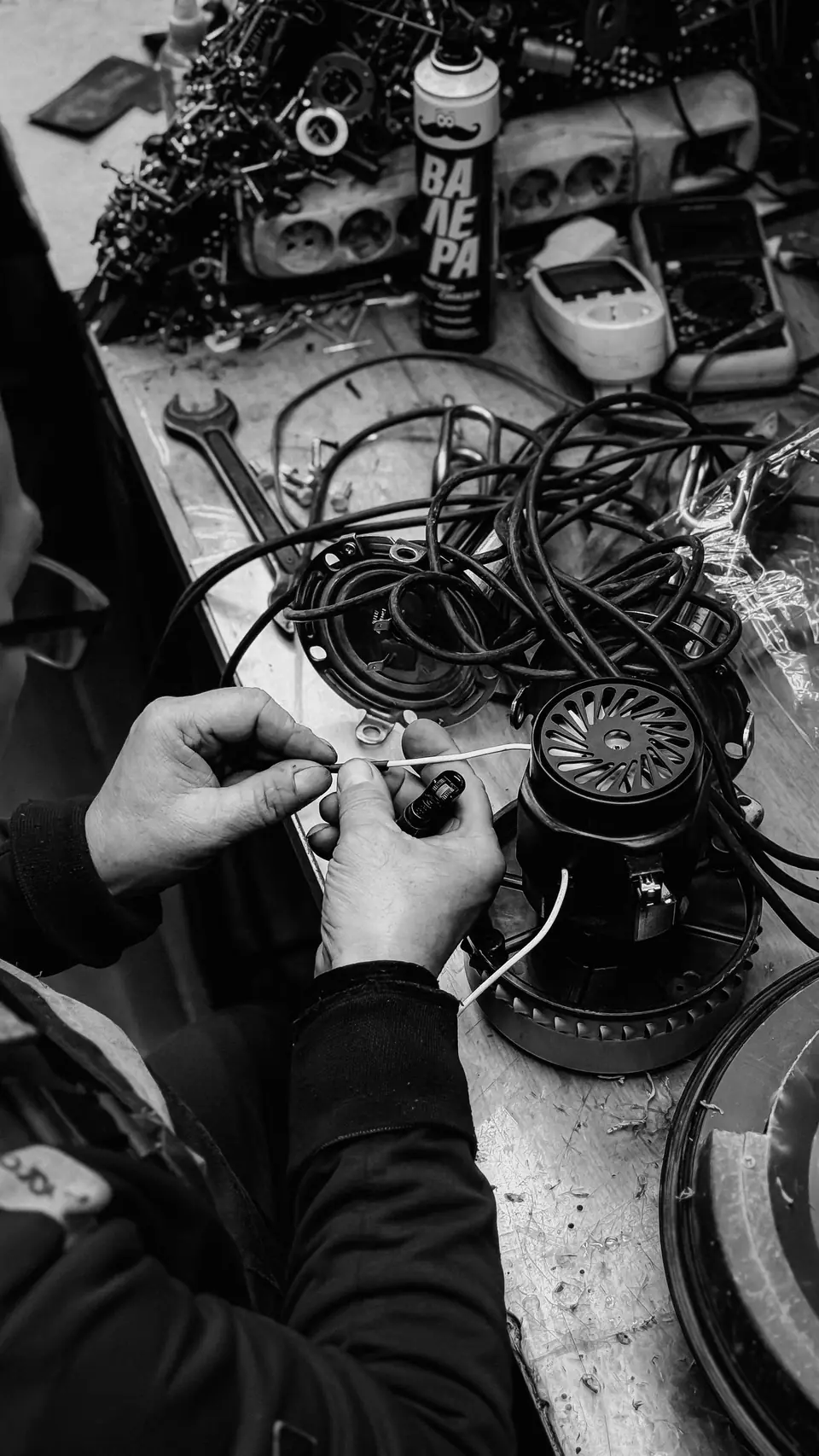
Classic cabinets use arcade CRT monitors from makers such as Wells-Gardner, Electrohome, Nanao and Hantarex. Their enemy is burn-in, which happens when the same image sits on the screen for too long and marks the phosphor for good. In an arcade, the attract mode ran all day because the machine had to advertise itself. At home there is nobody to advertise to, so turn the machine off when nobody is playing. Aging monitors are revived with a cap kit, which replaces the old capacitors on the chassis, and sometimes with a new flyback transformer. The anode holds thousands of volts even when the machine is unplugged, so hire a technician who knows how to discharge it, and never reach inside yourself.

The first hour
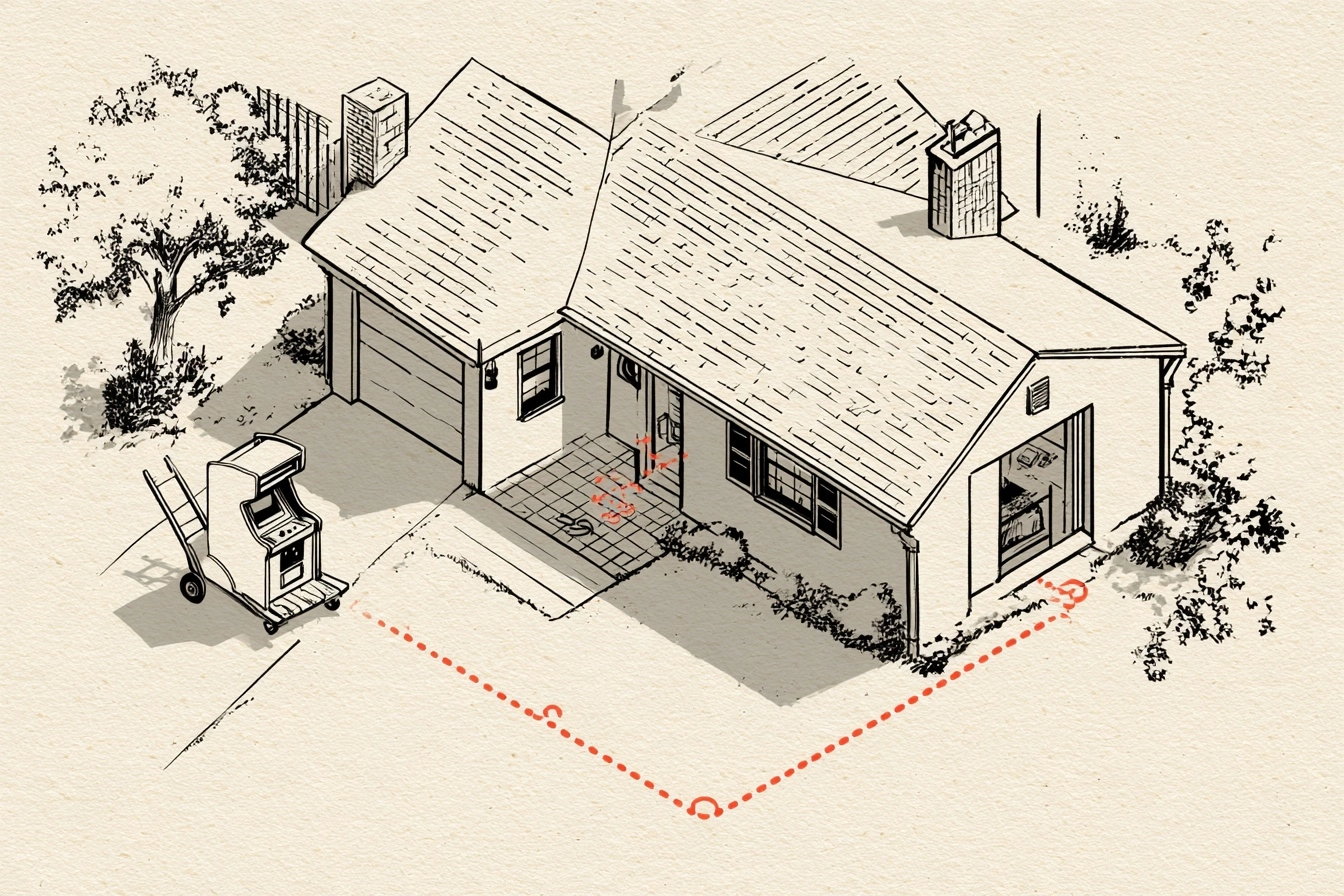
The hardest part of owning a cabinet is getting it into the house. Measure every door, hallway and stair on the route before the cabinet leaves the seller’s house, and clear the path from start to finish before anyone lifts. Use a heavy-duty appliance dolly with ratchet straps, wrap the cabinet in moving blankets and bring more people than you think you need; professional movers recommend three or four for a full upright. Keep a CRT cabinet as close to upright as the move allows, and never lift it by the control panel. If it rode home in a freezing truck, let it sit indoors for a couple of days before you switch it on, because very cold glass and a hot tube do not mix.
For anyone who wants the shape without the burden, the modern copies are honest about what they are. Arcade1Up, founded in 2018 by Tastemakers, sells three-quarter-scale cabinets that stand about four feet tall, weigh under 60 pounds, run licensed games through emulation and use a 17-inch LCD. At full size, Chicago Gaming Company builds the Ms. Pac-Man/Galaga: Class of 1981 cabinet under contract with Bandai Namco, 68 inches tall with a 27-inch LCD and six games. Neither is an original, and neither needs a technician.
A machine with a household history
Put the cabinet on a floor that can take the weight, close to an outlet and away from windows that throw sunlight on the screen. Switch it off when you walk away, and write every repair and board swap on a card taped inside the back door. In an arcade, a cabinet had an operator and a route, and its history was written in coins. At home nobody empties the coin box, and that card becomes the only record of the machine’s second life, which will matter a great deal to whoever owns it next.