
The Long Read
The last bored generation.
People who grew up before the smartphone learned to wait with nothing in their hands. Psychologists now argue that boredom was doing a job, and the question for everyone who remembers it is whether anything has taken over that job.
Written by CONTROL
This article runs 1,347 words and takes about six minutes to read.
Anyone who was a child before 2007 can describe a particular kind of afternoon. It might have been in the back seat on a long drive, in a doctor’s waiting room with a magazine about golf, or at a grandparent’s house on a Sunday when the television showed nothing but sports and church. The clock seemed to have stopped. There was nothing to do, and the nothing had a texture: the pattern of the upholstery, the sound of a lawnmower three houses away, the slow realization that the only way out was to invent something.
That afternoon has mostly disappeared. The first iPhone went on sale on June 29, 2007, and within a few years the gaps in an ordinary day, the queue, the platform, the red light and the three minutes before a meeting, had been filled. People who remember life before that date belong to a strange cohort. They are not better or wiser than those who came after, and many of them reach for their phones as quickly as anyone. But they remember what it was like when nothing came to rescue them, and psychology has lately begun to suggest that the rescue has a cost.
A young word for an old feeling
The feeling is ancient, but the English word for it is surprisingly recent. The verb “to bore,” in the sense of making someone weary with dullness, is recorded from the 1760s, and the noun “boredom” appears in print by 1829. Charles Dickens is often credited with coining it in Bleak House, which he began serializing in 1852, but the word was already in circulation. It seems fitting that the vocabulary arrived with industrial life, regular hours and the first mass leisure, when more people than ever had time they did not know how to fill.
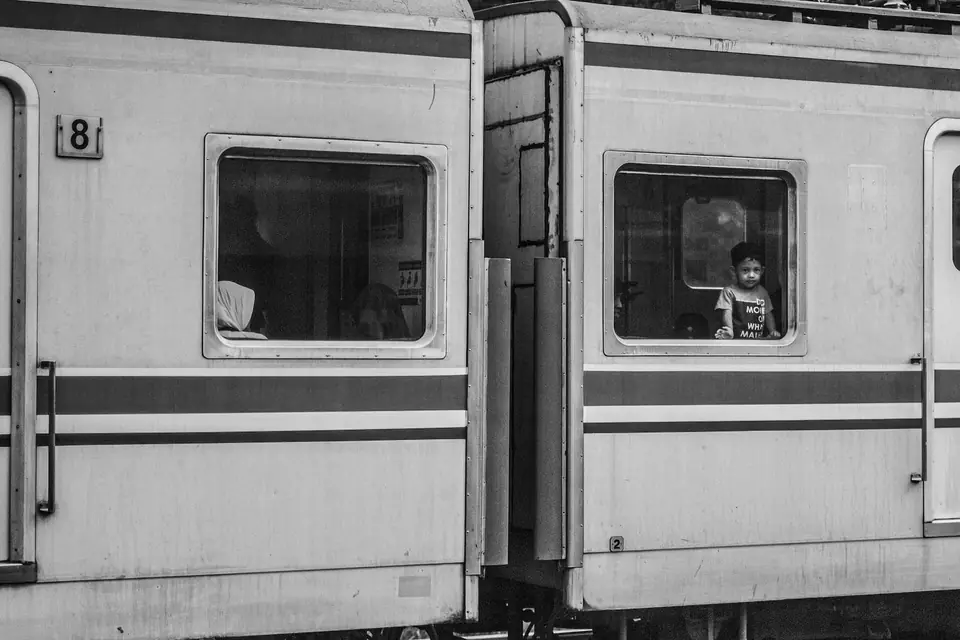
Philosophers took it seriously well before psychologists did. In a lecture course given in 1929 and 1930, Martin Heidegger analyzed boredom at length and chose as one of his central examples a man waiting four hours for a train at a small provincial station, checking his watch, counting the trees and finding that nothing will hold his interest. It is a scene that would be almost unintelligible to a teenager now, who would spend those four hours looking at a screen and might not experience them as waiting at all.

What boredom is
For most of the twentieth century psychologists treated boredom as a nuisance or a symptom, a thing associated with poor performance, risky behavior and depression. The more recent research has tried to define it precisely. In a 2012 paper, the psychologist John Eastwood and his colleagues proposed that boredom is the aversive experience of wanting, but being unable, to engage in satisfying activity. The important word is wanting. Boredom is not the absence of desire. It is desire with nowhere to go, and attention that cannot find a place to land.
That definition leads to a functional account. In 2014 the philosopher Andreas Elpidorou argued that boredom works as a regulatory state. It informs us that what we are doing is out of step with our interests, and its discomfort pushes us toward something that feels more meaningful. On this view boredom resembles pain or hunger. It is unpleasant because it is supposed to be, since an unpleasant signal is the kind we act on. Eastwood and James Danckert developed the argument for a general readership in their 2020 book, Out of My Skull, which treats boredom as a call to action rather than a disorder.
There is some evidence that answering the call can be productive. In a 2014 study in the Creativity Research Journal, the psychologists Sandi Mann and Rebekah Cadman asked some participants to spend time on a deliberately tedious task, copying numbers out of a telephone directory, before asking them to think of uses for a pair of plastic cups. The bored participants came up with more ideas than those who had skipped the dull task. It was a small laboratory result, and it should not be inflated into a law, but it fits the functional picture. Boredom sends the mind looking, and a mind that is looking will sometimes find something.
The discomfort of the unoccupied mind
The difficulty is that the looking hurts. In 2014 the social psychologist Timothy Wilson and his colleagues published a set of eleven studies in Science in which they asked people to sit alone in a room with nothing to do for between six and fifteen minutes and simply think. Most participants found it unpleasant. In one study, participants were first given a mild electric shock, and those who said they would pay to avoid another one were then left alone for fifteen minutes with the option of shocking themselves. Twelve of the eighteen men, two thirds, pressed the button at least once, as did six of the twenty-four women.
The study is usually told as a joke about modern life, but its lesson is older and more serious. The discomfort of the unoccupied mind did not begin with the smartphone. It is the ordinary human condition, as Heidegger’s traveler on his provincial platform could have attested. What the phone changed was not the feeling but the response. For almost all of history, the feeling of boredom had to run its course, and the only relief lay in doing something, whether that meant inventing a game, walking outside, picking up a book or starting a conversation. Now the relief is available within a second, and it requires no invention at all.
Boredom is not the absence of desire. It is desire with nowhere to go.
A signal answered too quickly
If boredom is a signal, the phone is a remarkably efficient way of silencing it without answering it. The signal says that the present activity is not satisfying and that something better should be found. The feed offers something, instantly and endlessly, but rarely the thing the signal was pointing toward. It is like responding to hunger with a stream of crackers, never quite a meal, yet always enough to end the complaint. The mind is occupied without being engaged, which is close to the condition the researchers were describing in the first place.
This is what the generation that remembers waiting may have kept, or may yet recover. It is not moral superiority, and it is not a better attention span, which is a claim that would be hard to prove. It is a memory of the whole cycle. Boredom arrives and becomes nearly intolerable, and then, if nothing interrupts it, the mind turns toward something of its own making. The children who spent those endless afternoons were not enjoying them. They were being pushed, by discomfort, into the habit of producing something from nothing: a made-up game with rules no one wrote down, a drawing, a plan, an idea they could not have been handed.
The waiting room, again
There is no serious case for smashing the phone. It has made a great many hours less wasted and a great many lives less lonely. The case is more modest. It is that the gaps in the day were never empty, and that they did work we did not notice because it was slow and unpleasant. The line at the post office was where a thought got finished. The train platform was where a decision was reached. The back seat was where a child learned that the world does not always entertain, and that this is not an emergency.
Heidegger’s traveler had four hours and nothing but trees to count. Most of us will never face such a stretch again unless we choose it. The people who remember those hours know something that cannot be learned from a description of them: that on the far side of boredom there was usually something worth reaching. Whether their children learn the same thing will depend less on what the phones can do than on whether anyone is willing, now and then, to leave them in the other room and wait.