
The Long Read
The third place.
A sociologist in Florida named the rooms where strangers became regulars, and then watched them disappear. The arcade, the mall, the bar and the barbershop taught a generation how to be in public, and the question now is whether anything can teach it again.
Written by CONTROL
This article runs 1,210 words and takes about five minutes to read.
In 1989 a sociologist at the University of West Florida published a book with an unhurried subtitle. Ray Oldenburg called it The Great Good Place, and the subtitle promised cafes, coffee shops, community centers, beauty parlors, general stores, bars, hangouts, and how they get you through the day. The argument was simple enough to fit on a napkin. Home is the first place and work is the second, and a healthy life, like a healthy town, needs a third: somewhere outside both where people gather regularly, voluntarily and informally, and are glad to be there.
Oldenburg was not describing luxury. He was describing infrastructure. His third places were neutral ground, where nobody was host and nobody was guest. They leveled status, so the lawyer and the mechanic were simply two people at the counter. Conversation was the main activity, and the mood was playful. They were cheap, open at odd hours and plain to look at. Above all they had regulars, the people whose presence turned a room into a place and whose absence was noticed. He thought such rooms did civic work that nothing else did: they were where people practiced being in public, argued about the town and learned to tolerate one another.
He also thought they were dying, and he blamed the American suburb, which separated houses from shops and made the car the only way to reach anyone. Oldenburg died in November 2022, at ninety. By then the decline he described in 1989 had become a statistic that the Surgeon General of the United States put in writing.
The rooms we grew up in
Readers of this magazine had third places, even if nobody called them that. The first was often the arcade. In 1982, by industry estimates, Americans put about eight billion dollars in quarters into arcade machines, more than the pop music and Hollywood film industries took in combined. The money is the least interesting part. An arcade was a room where a twelve-year-old could stand behind a stranger, watch him play and learn something without being introduced. The high-score table was a public record kept by the room itself. Your initials were your reputation, and you had to show up in person to defend them.
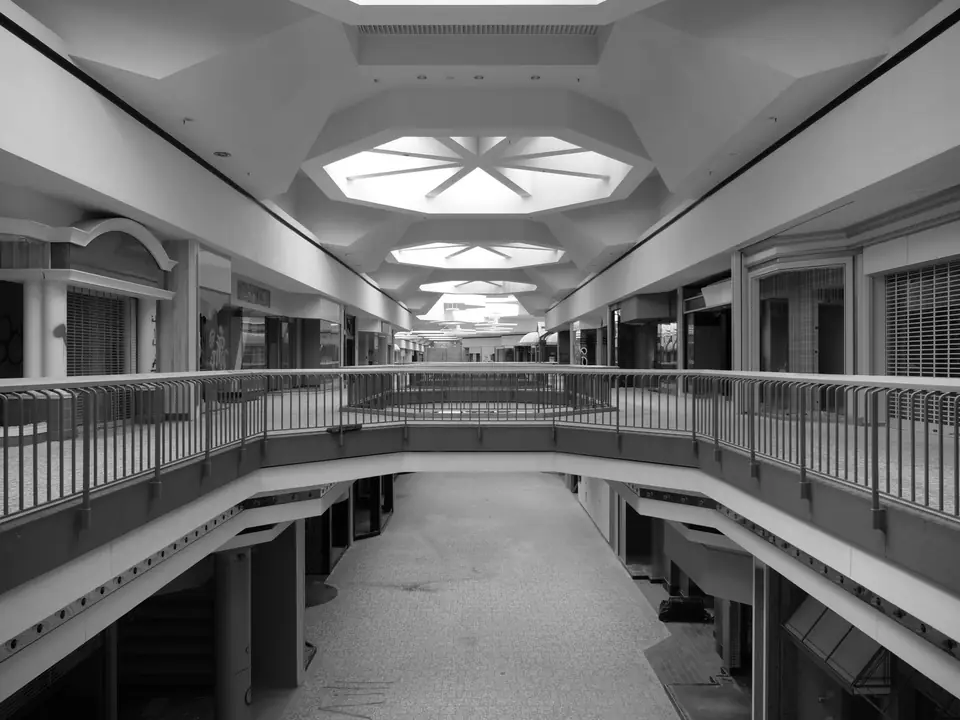
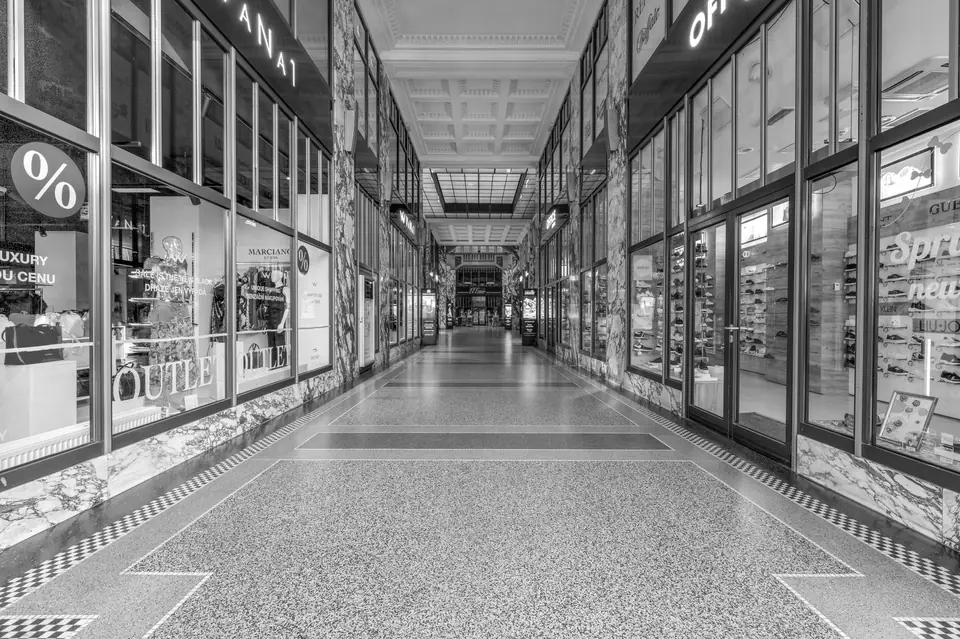
The mall was the arcade’s larger cousin. Southdale Center opened outside Minneapolis in 1956 as the first fully enclosed, climate-controlled shopping mall in the country, and roughly fifteen hundred enclosed malls followed over the next half century. Their designers meant them to be town squares with parking, and for teenagers they briefly were. The mall was the one place in the suburb where you could walk without a destination, and it had a fountain, a food court and nobody asking you to leave. Estimates now vary with the definition, but the Federal Reserve Bank of Richmond has put the surviving count at around 1,150, and other analysts put the number of healthy ones far lower.
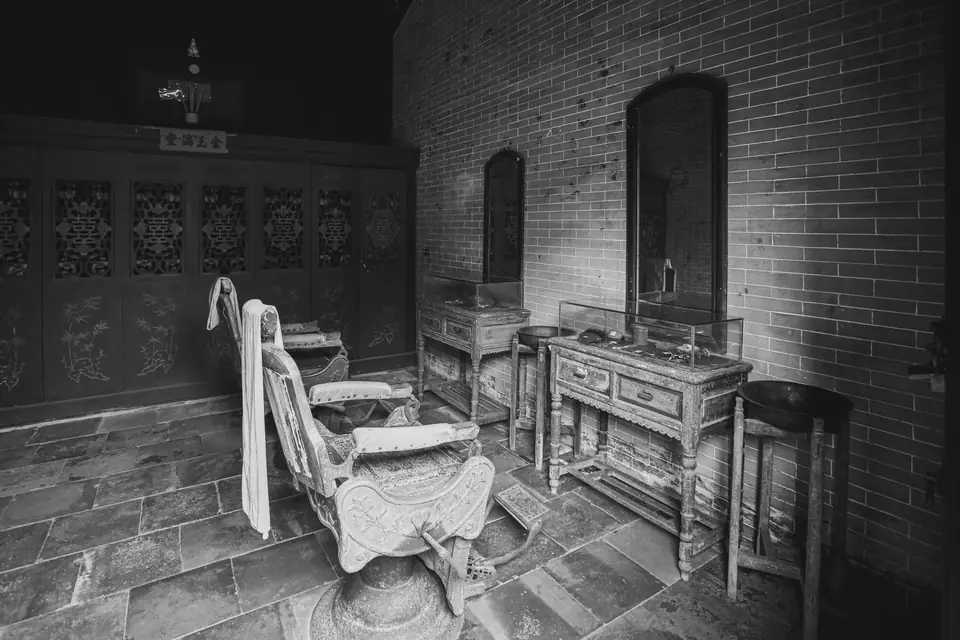
The bar and the barbershop were the adult versions, and Oldenburg loved them both. The corner bar was, in his account, a democratic institution, a place where the regulars knew your name and your politics and served you anyway. The barbershop, particularly in Black neighborhoods, has been something more than that: a club, a debating society and a clinic. That last word is not a figure of speech. In a trial whose first results appeared in the New England Journal of Medicine in 2018, researchers led by Ronald Victor of Cedars-Sinai sent pharmacists into 52 Los Angeles County barbershops to treat customers with high blood pressure. After a year, systolic pressure in the intervention group had fallen by nearly 29 points, against about 7 in the control group. The researchers went to the barbershop because that is where the trust was.
The researchers went to the barbershop because that is where the trust was.
What replaced them
The arcades collapsed first, after 1983, when home consoles moved the machine into the living room. The malls hollowed out more slowly, as online shopping removed the errand that justified the trip. Bars lost ground to streaming, delivery and the plain cost of a drink. Each change made sense on its own terms, and each moved an activity from a shared room into a private one.
In May 2023 the Surgeon General, Vivek Murthy, issued an advisory on what he called an epidemic of loneliness and isolation. It reported that about half of American adults had experienced measurable loneliness even before the pandemic, and that people aged fifteen to twenty-four had seen their in-person time with friends fall by about 70 percent over two decades. The advisory compared the mortality risk of social disconnection to smoking fifteen cigarettes a day. It did not use Oldenburg’s vocabulary, but it described the world he predicted, one where the first and second places remain and the third has been replaced by a feed.
The feed is a poor substitute for reasons Oldenburg would have recognized. It is not neutral ground; it belongs to a company that wants something from you. It does not level status; it measures status constantly and displays the score. It has no regulars, only followers, and nobody notices when you stop coming. Most important, it is optimized to keep you, whereas a good third place is content to let you go home.
The return, such as it is
There are signs of a revival, although they come with an asterisk. Barcade opened in a former metal shop in Williamsburg, Brooklyn, in 2004, combining craft beer with the machines its founders grew up on, and the idea spread to cities across the country. Board-game cafes, climbing gyms, run clubs and neighborhood libraries have all found audiences among adults who want a room with other people in it and a reason to be there. Some dead malls are being rebuilt as mixed-use districts with apartments above the shops, which is to say as the kind of walkable town the mall once imitated.
The asterisk is money. Oldenburg’s third places were cheap and often a little shabby, and their economics depended on low rent and patient owners. Many of the new ones charge admission, sell memberships or are designed to be photographed, which makes them closer to entertainment than to a hangout. A room you pay twenty dollars an hour to sit in is a venue, not a third place, and it rarely produces regulars.
The deeper obstacle is habit. Third places are not built by architects; they are built by people who come back. A barbershop becomes a barbershop in Oldenburg’s sense only after the same men have spent years arguing in it on Saturday mornings. That requires something the phone has trained out of us, which is a willingness to be somewhere slightly boring, with people we did not choose, on a regular schedule, for no measurable return.
That is the part of the argument that falls to the reader. The arcade taught a generation that a public room could be a place where you were known by your initials and nothing else. The rooms still exist, in diminished and altered forms, and they still work in the old way. They require only that you keep turning up until somebody notices when you do not.