

Essay
Twelve rules.
A rule is a decision made once, in a calm hour, so that it does not have to be made again under pressure. Here are twelve of them for keeping your attention, your time, your money and your things in your own hands.
Written by CONTROL
This article runs 658 words and takes about three minutes to read.
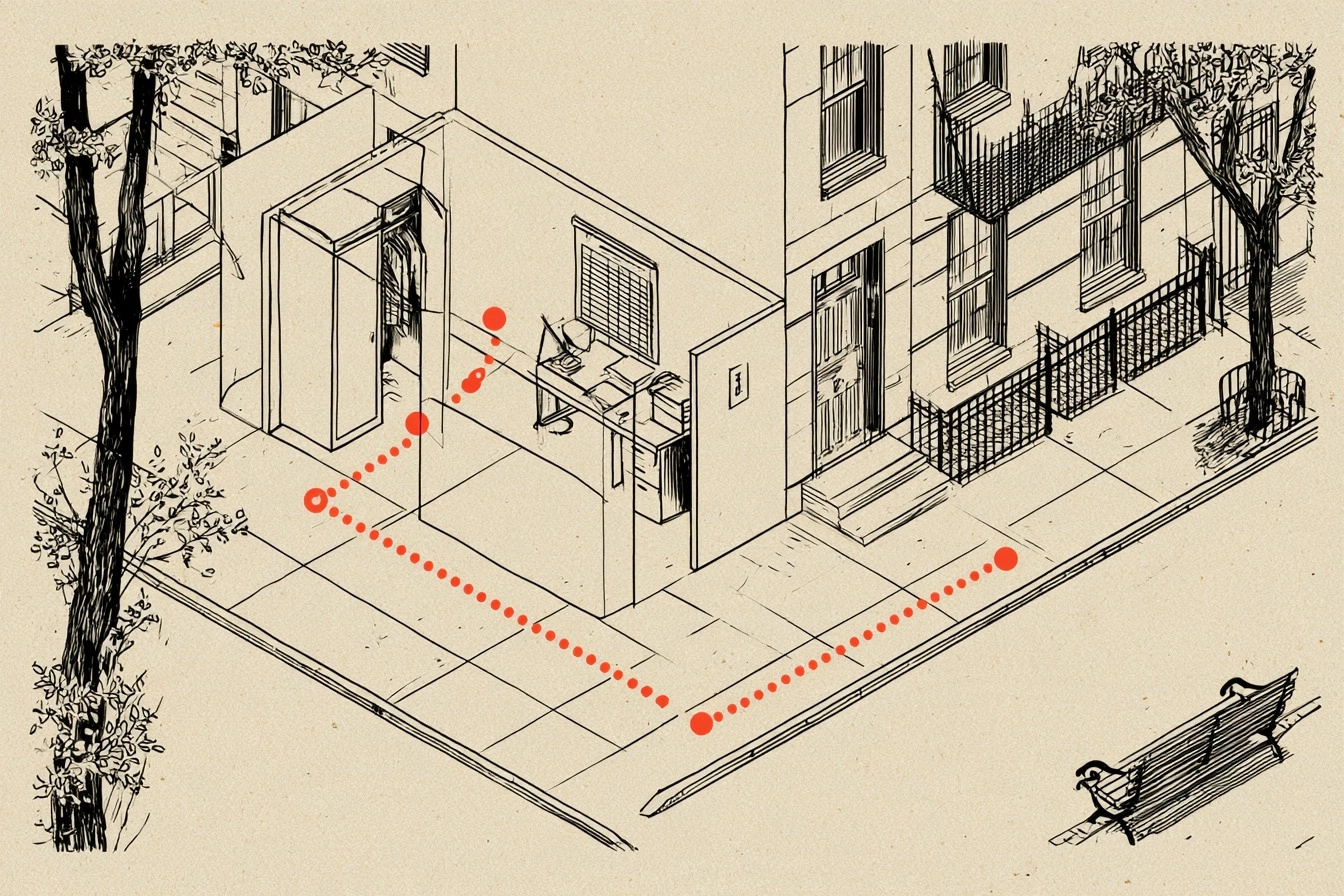
In the twelfth book of the Odyssey, Odysseus wants to hear the Sirens without steering onto their rocks, so he has his crew plug their ears with wax and tie him to the mast. He does not trust his future self to resist, and he is right not to. The arrangement is the oldest account we have of a person managing temptation by deciding in advance. In 1971 the economist Herbert Simon made a related observation about modern life, which is that when information becomes abundant, attention becomes the scarce thing. Almost everything that competes for our attention now arrives at the moment we are least equipped to refuse it.
A rule is a way of tying yourself to the mast. It is a decision made once, in a calm hour, that spares you from making it again when you are tired, flattered or bored. The twelve below are grouped by what they protect.
Attention
One: the phone sleeps in another room. The first and last minutes of the day set the tone for everything between them, and distance does what willpower reliably fails to do.
Two: notifications are for people, not for companies. Every alert from an app is a request made on someone else’s schedule, and you are allowed to decline all of them at once.
Three: decide what you are looking for before you open a screen. A search has an end, while a feed is built so that it never does.


Time
Four: the things that matter go on the calendar before the things that ask. A week left empty fills from the outside in, and the people who ask loudest are rarely the ones who matter most.
Five: say yes slowly and no quickly. “Let me check, and I’ll tell you tomorrow” costs nothing and prevents most of the promises you would later regret.
Six: keep one hour a day that nobody can buy. It does not need a purpose, because its purpose is to prove that some of your time still belongs to you.
Money
Seven: pay yourself on the day you are paid, automatically. A transfer that runs on payday needs no discipline at the end of the month, when discipline is in shortest supply.
Eight: do not borrow for anything that loses value. Debt on a car, a television or a holiday means paying interest on something that is worth less every day you own it.
Nine: wait thirty days before any purchase you would have to think about. Write it down with the date, and buy it only if you still want it a month later, which is less often than you would guess.
Things
Ten: buy the version that can be repaired. A boot that can be resoled or a phone whose battery can be replaced turns a future purchase into a small errand.
Eleven: before anything comes in, decide what it replaces. If the answer is nothing, the new thing is not solving a problem, and it is adding one you will have to store, clean and eventually throw away.
Twelve: keep your word, and give it rarely. It is the only thing you own that cannot be bought back once it has been spent.


A rule is a way of tying yourself to the mast.
What the rules are for
None of these is a test of character, and all of them will be broken. That is not a reason to abandon them. It is a reason to keep them few and plain enough to remember, so that when one breaks you notice. Write the twelve on an index card and keep it somewhere you will see it, then choose the one you broke most often last week and attend to that one only. The aim is not obedience. The aim is to have voted in advance, when you were thinking clearly, and to let that vote stand on the days when you are not.