
Essay
Buy it once.
The cheapest pair of boots is often the most expensive thing a person owns. Measured over ten years instead of one afternoon, a purchase stops being a price and becomes a question of time, repair and who controls the money.
Written by CONTROL
This article runs 1,017 words and takes about four minutes to read.
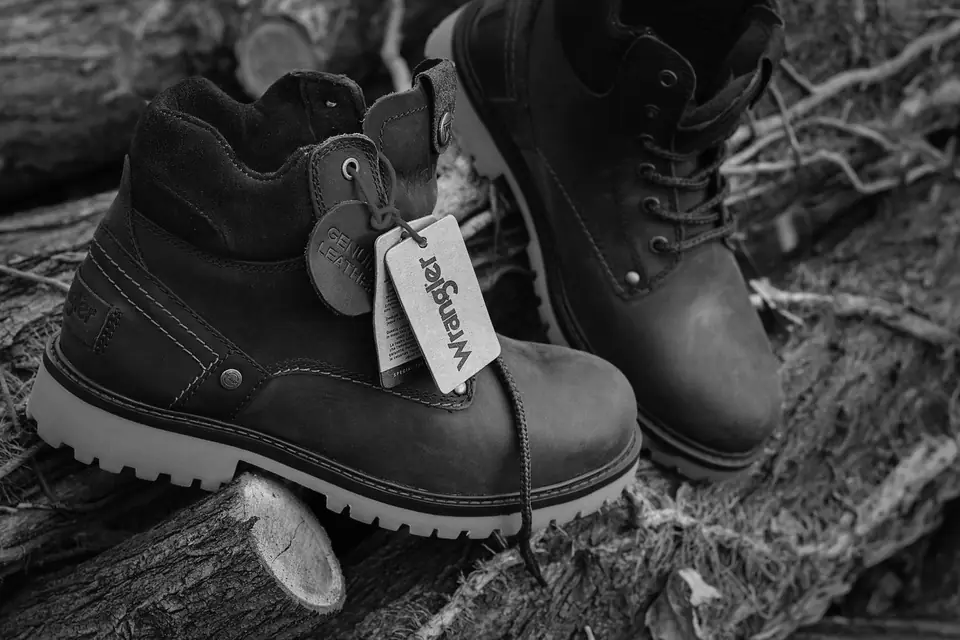
In Terry Pratchett’s 1993 Discworld novel Men at Arms, Captain Sam Vimes of the city watch works out why the rich stay rich. A good pair of leather boots costs fifty dollars and keeps a man’s feet dry for ten years. A cheap pair costs ten dollars and starts to leak within a season or two. Over the decade, the poor man spends a hundred dollars on boots and still has wet feet. Pratchett attached the idea to Vimes by name, and readers have called it the boots theory ever since.
The passage has outlived the plot of the novel in public memory. In January 2022 the food writer Jack Monroe proposed a Vimes Boots Index to measure how rising prices fall hardest on the cheapest goods, and Pratchett’s estate backed the idea. The theory lasts because it is not really about boots. It is about time, and about the strange fact that money spent slowly can buy more than money spent quickly.
The arithmetic of a decade
The modern version takes one line of division. Take the price of a thing and divide it by the number of times you will use it. A pair of $400 boots worn 150 days a year for ten years is worn 1,500 times, which comes to about 27 cents a wear. A pair of $80 boots that has to be replaced every year is worn 150 times before it goes, which comes to about 53 cents a wear. The cheap pair costs nearly twice as much every time you put it on, and that figure does not yet count the resoles that keep the better pair going. The box below sets out the sum.
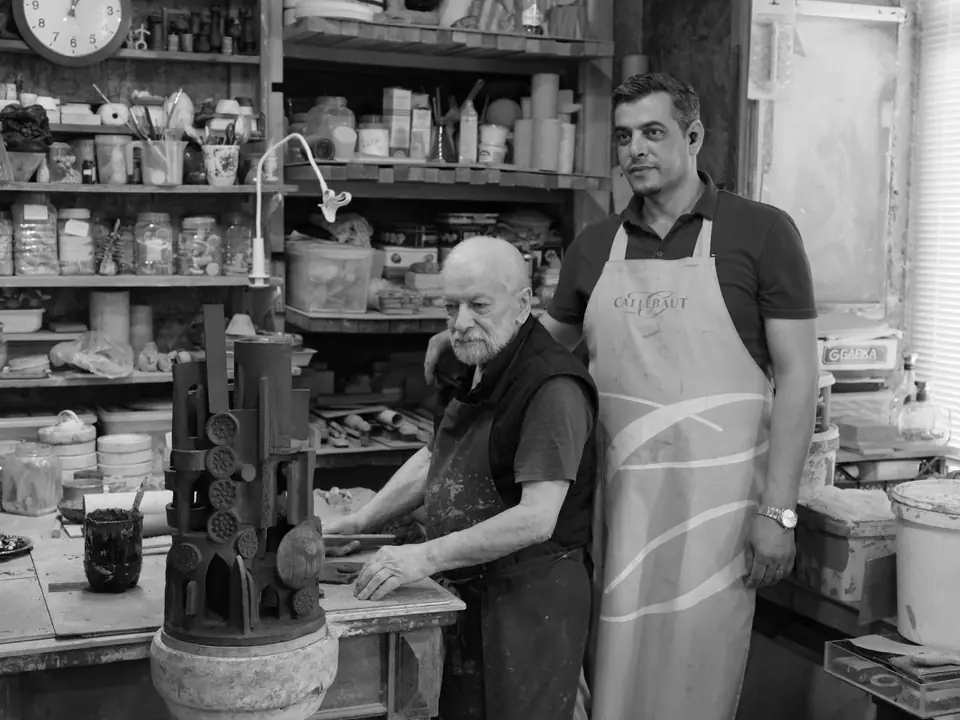
The sum is honest only if the use is real. A $400 pair that stays in the closet because it pinches is the most expensive pair in the house. The arithmetic rewards the things you already reach for every morning, and it punishes the things you buy for the person you hope to become. Before it tells you what to buy, it asks you to be truthful about how you live.
Before it tells you what to buy, it asks you to be truthful about how you live.
Reading the object
Durability is not a mood or a brand. It can usually be read on the object itself. On boots and shoes, look for a line of stitching that runs around the top edge of the sole. That is usually a welt, and it means a cobbler can take the old sole off and stitch a new one on several times over. A sole that is only glued on usually ends the life of the shoe when it wears through. The first construction assumes that the owner will come back to it, and the second assumes that the owner will not.
Look closely at the leather as well. Full-grain leather shows small pores, creases softly and takes conditioner and polish well. Corrected-grain leather has been sanded and coated to hide its flaws, so it has an even, glassy shine that can look almost like plastic, and it tends to crack at the flex point rather than crease. An expensive boot in corrected grain can lose to a cheaper secondhand boot in full grain, so it pays to read the surface before reading the tag. The same logic runs through the rest of a closet. Wool, cotton, linen and leather tend to wear in, while most cheap synthetics pill, shine and wear out.
The second owner
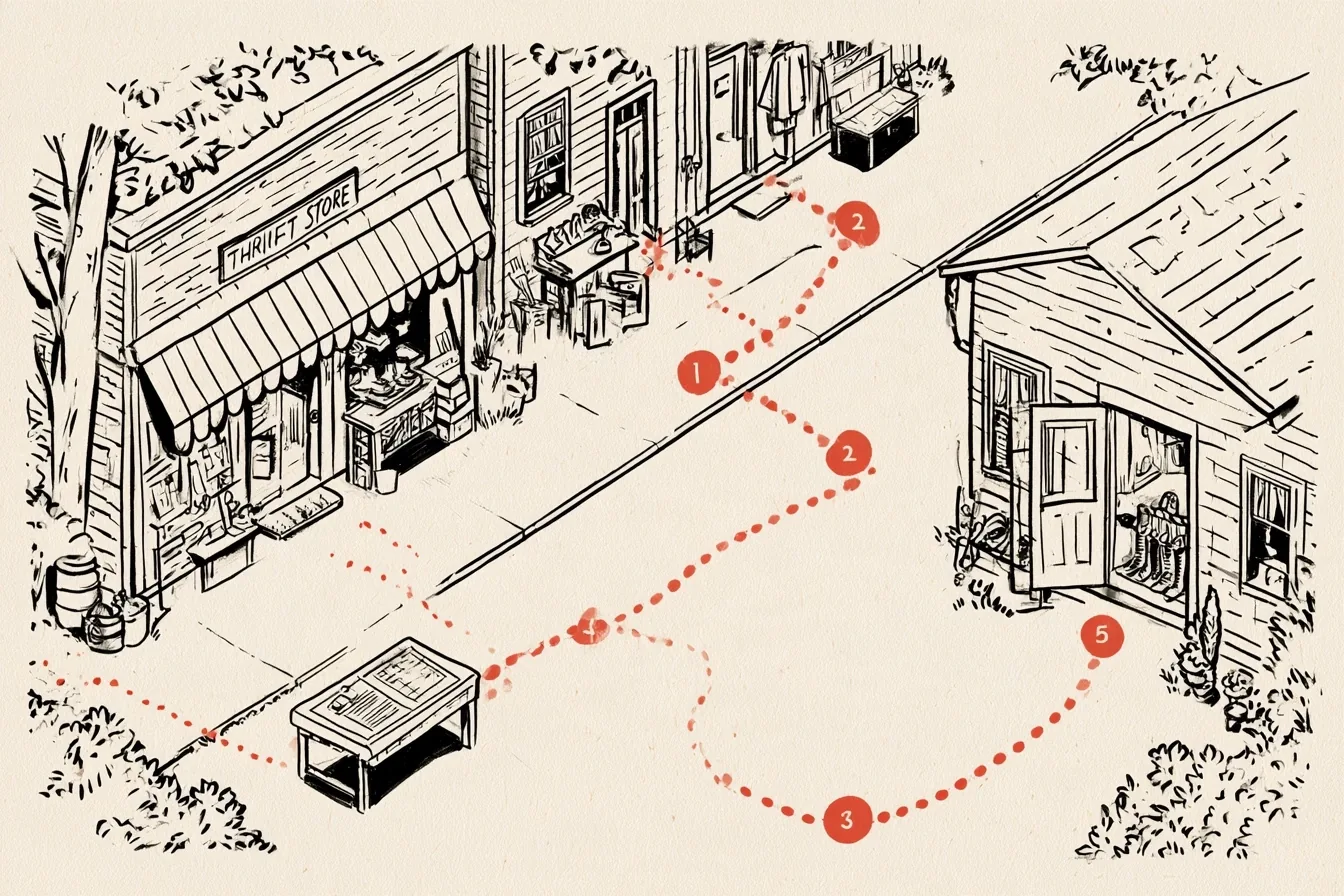
The better arithmetic often belongs to the second owner. Someone else paid full price and absorbed the first loss, and a well-made boot or coat can reach a thrift store, a consignment shop or a resale site with most of its life still in it. On a used boot, flex the toe to look for cracks and check how much heel is left. On a coat, look at the collar, the cuffs and the armpits, where wear shows first, and tug the buttons. A good object bought used is not a compromise. It is evidence that the thing was built to have more than one life.
Urgency is the expensive part
Vimes’s poor man is not foolish. He is short of money on the day his boots fail, and he buys what he can afford that day. Most people who could afford the better pair are short of something else, which is time. The cheap pair gets bought on the afternoon the old ones split, because there is a meeting on Friday and the nearest shop is open. Urgency, not taste, is what keeps the cycle turning.
The defense is to shop before the need arrives. Keep a short list of the next few things you expect to replace, with the maker and the size, and check resale listings for them every few weeks. Buy when the right one appears rather than when the old one quits. Spend on the things you use every day and that touch your body, such as shoes, the winter coat, the bag you carry and the bed you sleep in. Save on anything driven by fashion, rarely used or impossible to repair.
The maintenance clause
The boots theory carries a clause in small print. The good boots last ten years only if somebody looks after them. That means cedar shoe trees at night, a brush for the dirt and a conditioner for the leather every few months. It means a trip to the cobbler for new soles before the wear reaches the welt, not after. Skip those small jobs and the $400 boots begin to behave like the $80 ones, and the numbers in the box below stop being true.
Pratchett’s point was about injustice, and it deserves to be read that way: the poor man pays more because he never has the fifty dollars at once. For readers who do have the choice, the lesson is quieter. Buying once is less a shopping rule than a decision about time. It means choosing things that expect to be kept, and then keeping them.
The arithmetic
Cost per wear is the price divided by the number of times you wear it. The cheap pair costs twice as much.