

Field Notes
Carry-on only.
Traveling with one bag is less a packing trick than a small act of control over a system built to separate passengers from their belongings. A full week fits in 22 by 14 by 9 inches for anyone honest about what they actually use.
Written by CONTROL
This article runs 869 words and takes about four minutes to read.
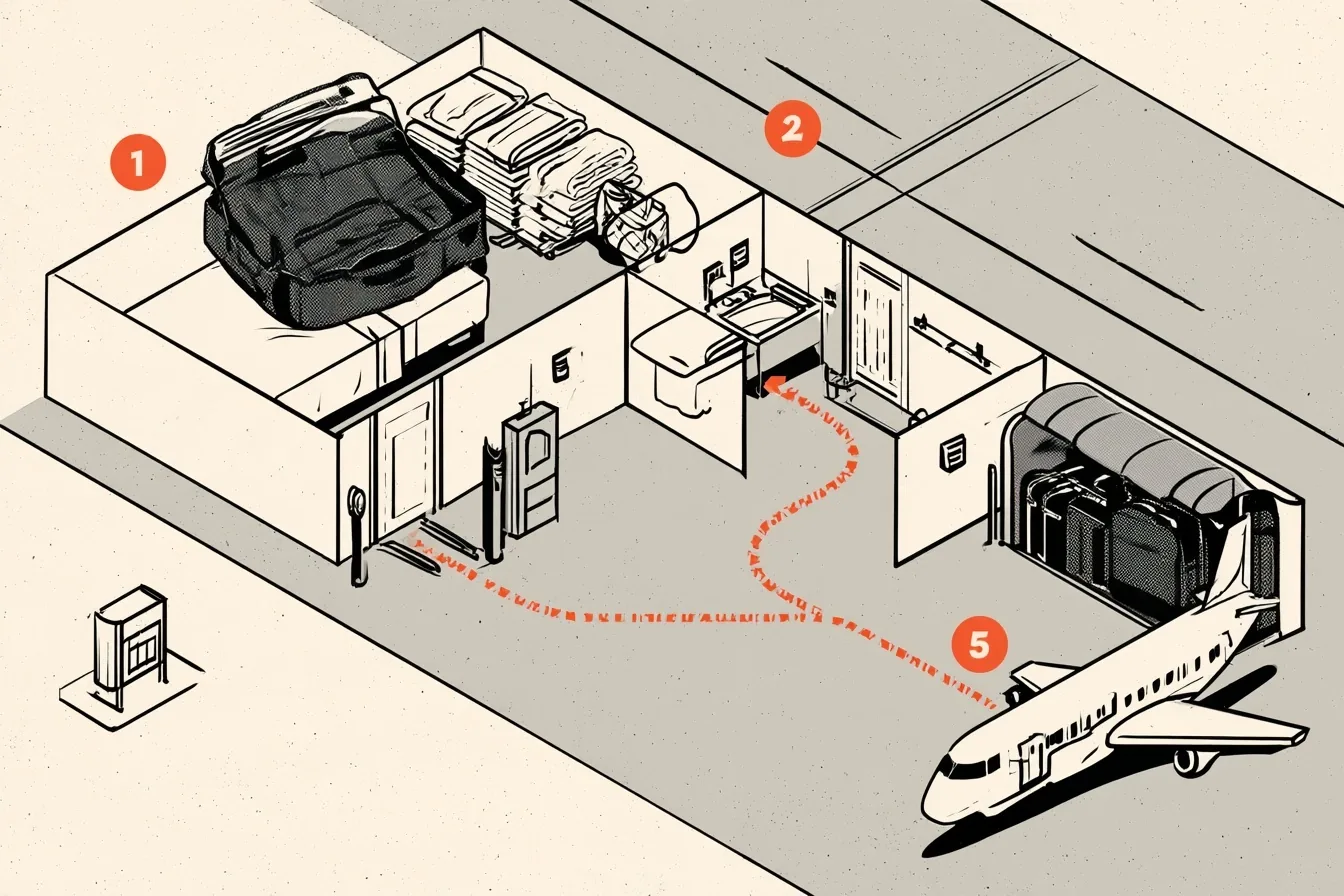
Air travel is a long series of handoffs. The ticket goes to an app, the passport to an agent, the shoes to a gray bin and, for most passengers, the suitcase to a conveyor belt that disappears behind a rubber curtain. The checked bag is the largest of those surrenders, and it is also the only one that is optional. The traveler with one bag walks off the plane and into the city while everyone else waits at the carousel. That traveler never loses a suitcase, never pays to check one and never has to choose between two pairs of shoes at five in the morning.
The discipline behind it is less about folding than about knowing. It requires knowing the rules of the box, knowing what a week actually requires and knowing where the plan tends to fail.
The size of the box
American, Delta and United all allow a carry-on of 22 by 14 by 9 inches, and that measurement includes the wheels and the handles. Many international and low-cost carriers allow less, and some weigh cabin bags as well, so the only rules that matter are those of the airline you are actually flying. Measure your bag once with a tape, write the numbers inside the lid and stop guessing at the gate.
Read the fare as carefully as the dimensions. On United, a Basic Economy ticket allows only a personal item that fits under the seat on most routes other than long-haul international ones, and a full-size bag brought to the gate is checked with the bag fee plus a gate handling charge. The fix is to buy the next fare up or to pack for the smaller box.
What a week requires
A week needs less than most people pack. Two pairs of trousers, four shirts, one knit, five sets of underwear and socks and one pair of shoes besides the pair on your feet will cover it. Wear the heaviest things on the plane, meaning the jacket, the boots and the sweater, because they take the most room in a bag and are the most comfortable things to sleep in.
Choose one color family, such as navy, olive and bone, so that everything goes with everything else. Merino wool resists odor and can be worn several times between washes, which is why it earns its place. A soft bag without wheels holds more for the same outside dimensions, since a frame and wheel housings take up room inside the shell.
Roll soft things, such as T-shirts, knits and underwear, into tight cylinders and use them to fill gaps. Fold anything with a collar or a structured shoulder, because rolling sets creases into shirts and tailoring. Stuff the socks inside the spare shoes and lay the shoes heel to toe along the bottom of the bag.
The pouch and the liquids
Keep the passport, cards, a pen, headphones, chargers and cables in one pouch that lives in the same pocket on every trip. Toiletries go in one clear quart-size bag, with every liquid in a container of 3.4 ounces, or 100 milliliters, or less. Keep that bag at the top so that it comes out at security without disturbing anything else.
Batteries deserve their own rule. Spare lithium batteries and power banks are banned from checked luggage, so they belong in the cabin with you. If an airline takes your bag at the gate, take the battery out before you hand the bag over.
Spare lithium batteries and power banks are banned from checked luggage, so they belong in the cabin with you.
The sink is the laundry. On the evening of the third or fourth day, wash a shirt, underwear and socks in warm water with a little soap, rinse them and squeeze out what you can. Lay each piece flat on a dry bath towel, roll the towel up tightly and stand on it for a few seconds. The towel pulls out most of the water, and merino or thin cotton will usually be dry by morning on a hanger. That one habit roughly halves the clothing a trip requires.
Where the plan fails
The plan usually fails at the gate, in front of a full overhead bin. When the bins fill, the agent tags the remaining bags for the hold, and the one-bag traveler joins everyone else at the carousel. Boarding as early as the ticket allows is the first defense. Packing the soft bag loosely enough that it can squeeze into the last gap in a crowded bin is the second, and it is another reason to buy soft.
If the bag is taken anyway, pull out the battery, the passport, any medication and the pouch before it leaves your hands, because those are the things that cannot be replaced on arrival. Everything else is clothing, and clothing can be bought in any city.
Pack to about three-quarters full and leave the rest empty for the trip home. Unpack the moment you walk in the door, restock the toiletry bag and return the pouch to its pocket. The next trip then starts half packed, and the small freedom of walking past the carousel becomes a habit rather than an achievement.