
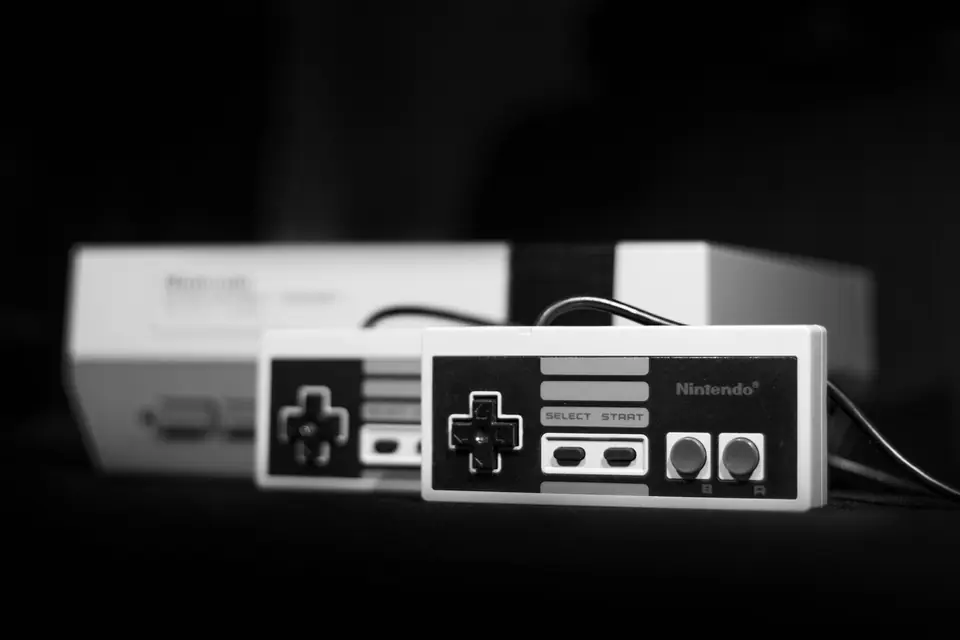
History
The codes.
The most famous cheat code began as a programmer’s shortcut, and codes became the first secret knowledge a generation traded among itself. Here are the real ones, each checked, and the story of why they felt like power.
Written by CONTROL
This article runs 1,101 words and takes about five minutes to read.
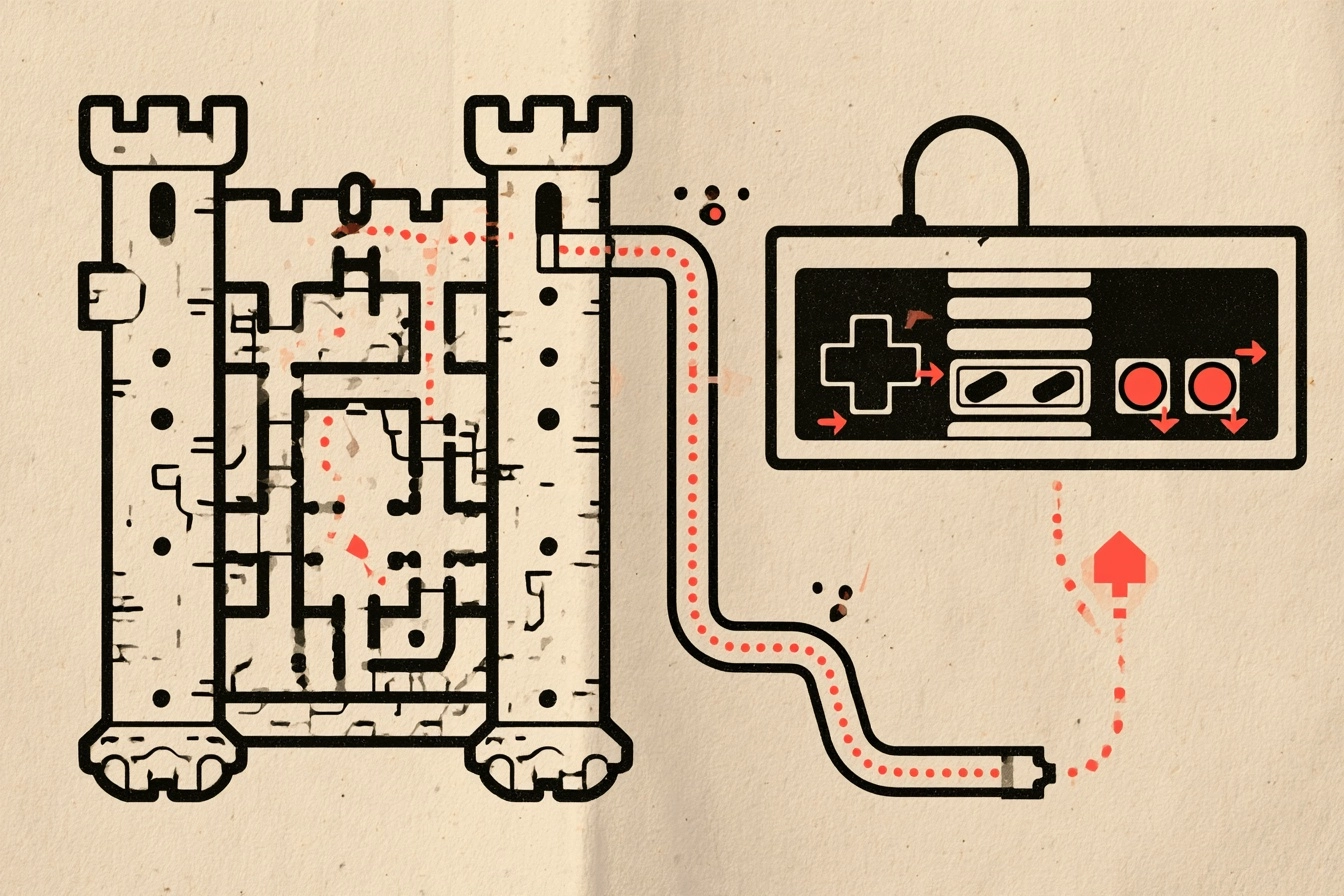
Every child in 1990 knew someone whose cousin knew a code. Half of those codes were real, and the other half cost you an afternoon. The real ones mattered out of proportion to what they did, because they were the first evidence many of us had that a game was not a sealed box. It had been made by people, and the people had left doors in it. A code was a small piece of authority over a machine designed to beat you, and it traveled the way rumors travel, by mouth, on the school bus and eventually in print. What follows keeps only the codes we could confirm, and the story they tell together.
A shortcut that shipped
Kazuhisa Hashimoto created the most famous code in games while porting the 1985 arcade shooter Gradius to the NES, because he found the game too hard to finish during testing. In the 1986 NES version, pause the game and press Up, Up, Down, Down, Left, Right, Left, Right, B, A to receive a full set of power-ups. The code was meant to be removed before release. It was overlooked until the game was being prepared for mass production, and it stayed in because taking it out risked creating new bugs.
It became famous through Contra. At the title screen, before the demo starts, press Up, Up, Down, Down, Left, Right, Left, Right, B, A, then Start, and you begin with 30 lives instead of three. Press Select to choose two players before you press Start, and both players get 30. The code was a programmer’s crutch, and it became a generation’s password.

The code was a programmer’s crutch, and it became a generation’s password.

Doors in the wall
Some secrets were built into the level design. In Super Mario Bros., near the end of World 1-2, jump onto the brick ceiling and run right over the exit pipe to find pipes to Worlds 2, 3 and 4. In World 4-2, a beanstalk hidden in a block earlier in the level leads to pipes for Worlds 6, 7 and 8, and running over the ceiling past the final pipe leads to a pipe for World 5.
Other secrets were accidents, and the minus world is the best of them. In World 1-2, break the ceiling bricks just before the exit pipe but leave the last one standing. Crouch and jump backward into the corner of that brick, and with practice Mario slips through the wall into the warp zone. Enter the first pipe and the screen reads World -1, an underwater level with the layout of World 7-2. Its exit pipe sends you back to its own start, so the only way out is to lose every life. It is a level nobody designed, and a generation spent hours trying to reach it.
Passwords held their own surprises. In The Legend of Zelda, name your save file ZELDA and the game starts the Second Quest, the harder version with rearranged dungeons, without making you beat the first. In Metroid, enter JUSTIN BAILEY on the password screen and fill the remaining spaces with blanks, and Samus begins without her armor and with a full supply of missiles. According to George Sinfield, a senior editor at Nintendo Power, the password works by coincidence and was never planned, which means that a random string of game data happened to spell a boy’s name and became folklore.
In Mike Tyson’s Punch-Out!!, enter 007 373 5963 on the password screen to go straight to the final fight against Tyson. Enter 135 792 4680 for the Another World Circuit, a run of eight fighters that ends with Tyson instead of Super Macho Man. These codes belong to the cartridges with Tyson’s name on the label; in 1990, after Nintendo’s license with Tyson expired, a reissue replaced him with a fictional boxer called Mr. Dream.


Codes as policy
By the 1990s publishers had learned to use codes on purpose. During the Capcom logo that opens the 1992 Super NES version of Street Fighter II, press Down, R, Up, L, Y, B, and both players may choose the same fighter, the second appearing in a different color. The Japanese version adds X and A to the end.
Mortal Kombat used a code to settle an argument. Nintendo replaced the blood with sweat on the Super NES, while Sega hid it behind a code on the Genesis. At the Code of Honor screen, press A, B, A, C, A, B, B, a joke about the 1981 album Abacab by the band Genesis. The code let one cartridge be two games, a mild one on the shelf and a bloody one for anyone who knew the sequence.
On the PC, Doom took typed commands during play. IDDQD makes you invincible, IDKFA gives you all weapons, full ammunition, all keys and 200 percent armor, and IDSPISPOPD lets you walk through walls in the original game. In Doom II, use IDCLIP instead.
By 1997 the secret had become a reward. The cheats in GoldenEye 007 are earned against the clock. Finish Facility on 00 Agent in under 2:05 for Invincibility, Dam on Secret Agent in under 2:40 for Paintball Mode, Runway on Agent in under 5:00 for DK Mode, which gives everyone oversized heads and arms, and Egypt on 00 Agent in under 6:00 for All Guns. Finishing Egypt at any time and on any difficulty gives you the Golden Gun.
Who owns the game
The question underneath all of this reached a courtroom. The Game Genie, a cartridge adapter designed by the British studio Codemasters and sold by Lewis Galoob Toys, let players type in codes that altered almost any NES game. Galoob announced it in May 1990, Nintendo sued, and an injunction kept it off American shelves for about a year. In July 1991 Judge Fern M. Smith ruled that Galoob had not violated Nintendo’s copyrights, and the Ninth Circuit affirmed in May 1992. The courts found that the changes were not fixed in any permanent form and that players altering a game for their own use was fair use. Galoob was awarded the $15 million bond Nintendo had posted.
That ruling put in law what every child with a code already believed, which is that the cartridge was yours and so were its secrets, provided you knew the order of the buttons. Copy the codes you use onto an index card and tape it inside the lid of the storage box. The cartridges will outlive the web pages, and the card will outlive both.