
Essay
Cooking for other people.
Feeding someone is the oldest form of care and a gentle form of control. As more Americans eat alone, one reliable dish and a table with chairs around it may be the most practical social institution an adult can build.
Written by CONTROL
This article runs 1,047 words and takes about five minutes to read.
The word “companion” comes from the Latin for “with” and “bread.” A companion, at the root, is someone you eat with. The language remembered what the culture has been busy forgetting, which is that sharing food is not an accessory to friendship but one of the ways friendship is made.
This essay is about cooking for other people, which is a different activity from cooking. Cooking for yourself is maintenance. Cooking for others is hospitality, and hospitality has a long history, a surprising amount of power and, at the moment, a shrinking audience.
The oldest thing we do
In Catching Fire, published in 2009, the Harvard primatologist Richard Wrangham argued that cooking was central to human evolution. Cooked food is easier to chew and digest, and he proposed that the energy it freed helped our ancestors grow larger brains, with the change beginning around the emergence of Homo erectus nearly two million years ago. The timeline is disputed, since clear archaeological evidence of controlled cooking fires is far more recent. But the broad point is widely accepted. Humans are the animal that cooks, and the fire has always been a place where people gather.
A meal cooked for someone carries a message no other gift quite does. It says that you spent time on them, that you thought about what they would like, and that you trust them in your home. Almost every culture has rituals built on this exchange, from the harvest feast to the funeral casserole. When words run out, people still bring food.
The quiet power of the host
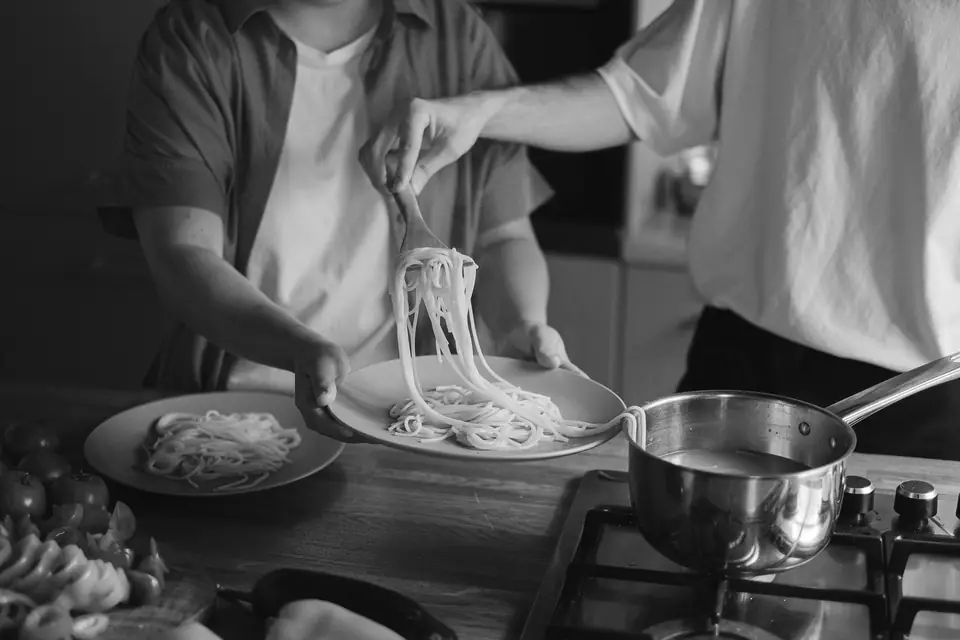
There is another side to hospitality that is less often discussed. The person who cooks is in charge. The host decides when the guests arrive and what they will eat, where they sit and when the evening begins to wind down. For an evening, the table is a small society, and the cook writes its rules.
This is not sinister. It is the benign form of control that makes an evening work, and it is also why cooking for others is so satisfying for people who otherwise feel that the world is arranging them. In an ordinary week, most of us are guests in other people’s systems. We work to someone else’s schedule and eat what the delivery app suggests. The host gets to set the terms, and the terms are generous. Everyone is fed. Nobody pays. The only obligation is to stay.
Good hosts use that power lightly. They cook something they can make without panic, they finish most of the work before the doorbell rings, and they sit down. A host who spends the evening at the stove has cooked for other people but has not eaten with them, which misses the point.
The host gets to set the terms, and the terms are generous.
One reliable dish
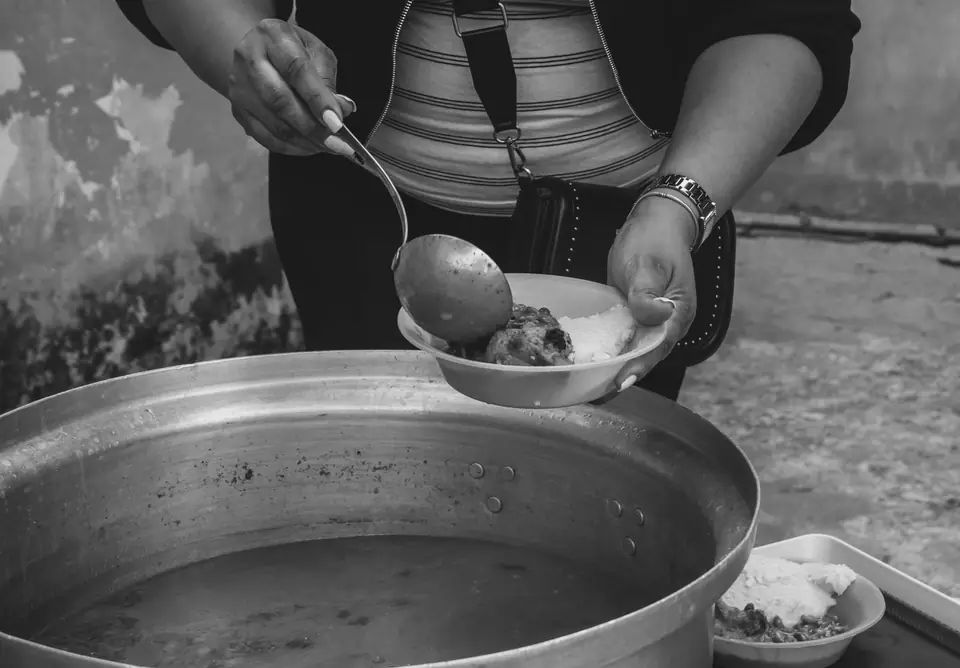
The single most useful thing a would-be host can have is not a set of knives or a shelf of cookbooks. It is one dish, learned so well that it can be made while talking, scaled for six or ten, and served without apology. For some people it is a roast chicken. For others it is a braise that sits happily in a low oven, a big pot of beans, a curry, or a pasta sauce.
Marcella Hazan, the Italian cookbook author who taught a generation of Americans to cook the food of her country, is remembered for a tomato sauce made from little more than tomatoes, butter and a halved onion, simmered slowly. It has become a favorite of home cooks precisely because it is hard to ruin and easy to love. That is the standard to aim for. The dish should be good enough to be proud of and simple enough that making it does not cost you the evening.
Learn it by making it repeatedly for yourself first, then for one other person, then for a table. By the fourth or fifth time the recipe will be in your hands rather than on your phone, and you will have gained something rarer than a skill, which is the confidence to invite people over on a Tuesday.
A table in a lonelier country
In 1989 the sociologist Ray Oldenburg published The Great Good Place, which gave us the term “third place” for the cafés, bars, barbershops and other gathering spots outside home and work where community happens. The decline of those places has been a theme of American life for decades. Less noticed has been the decline of the table at home as a place of gathering.
The 2025 World Happiness Report included a chapter on shared meals. It found that in 2023 about 26 percent of American adults said they had eaten all their meals alone the previous day, an increase of 53 percent since 2003. The same research found that people who share meals report higher life satisfaction and more positive emotions, and that in many cases meal sharing predicted well-being more strongly than income or employment did. The data show correlation, not proof that dinner causes happiness. But the pattern is consistent, and it is not surprising to anyone who has sat at a crowded table.
This is where the home cook matters. A third place does not have to be a café. A kitchen table that regularly holds friends, neighbors or a mix of both is a third place for everyone except the host, and even the host is changed by it. It is also one of the few social institutions that an individual can build alone, at modest cost, starting this week.
The practical version is simple. Pick a night. Cook the dish you know. Invite a few people, and then invite them again. The second invitation matters more than the first, because it turns an event into a habit. After a few months, you will have something that no app has managed to provide, which is a place where people expect to see each other.
The generation that grew up passing a controller around a living-room floor already knows that the best games were played side by side. The same is true of meals. Food eaten alone keeps a person alive. Food cooked for other people, and eaten with them, keeps a small world together.