
History
Rip and tear.
A small team in a Texas office built Doom, gave the first third of it away and later gave away the code. More than thirty years on, the game’s long life is one of the strongest cases in software for letting go.
Written by CONTROL
This article runs 1,085 words and takes about five minutes to read.
Doom came out in December 1993 on a university file server, and within two years an estimated 10 to 20 million people had played it. It invented the word deathmatch, it shipped in a format anyone could modify, and three decades later programmers still test new gadgets by asking whether they can run it. The usual story about Doom is about violence and speed. The more interesting one is about generosity. At almost every turn, the people who made it gave away something a more cautious company would have guarded. Almost every time, the gift made the game larger.
From Shreveport to Mesquite
id Software was founded on February 1, 1991, in Shreveport, Louisiana, by four employees of a software company called Softdisk: John Carmack, John Romero, Tom Hall and Adrian Carmack, who is no relation to John. The company moved to Madison, Wisconsin, that September and to Mesquite, Texas, on April 1, 1992. A month later, on May 5, 1992, it released Wolfenstein 3D, whose smooth first-person view was unlike anything else on a home computer. Carmack wrote the engines, and Romero designed the levels and did much of the talking.
Suite 666
Work on Doom began in November 1992, in a dark office building the team nicknamed Suite 666. Carmack took the name from a line in the film The Color of Money, in which a pool hustler is asked what is in his cue case and answers, “In here? Doom.” Tom Hall wrote a detailed design document for the game, known as the Doom Bible, and most of it was thrown out because Carmack argued that the story mattered less than the technology. The other founders let Hall go in July 1993, and Sandy Petersen was hired that September to help finish the levels.
The hardest enemy was the computer itself. Romero’s levels were larger and more complex than anything the engine had been asked to draw, and by 1993 they were slowing the game down. In mid-1993 Carmack solved the problem with binary space partitioning, a technique that sorts a level ahead of time so the engine knows which walls to draw without testing all of them every frame. The levels stayed ambitious, and the game ran on ordinary office computers. That last point matters more than it seems. A game that required expensive hardware would have reached a small audience, however good it was.
Midnight in Wisconsin
After 30 straight hours of testing, the team uploaded the first episode, Knee-Deep in the Dead, to a University of Wisconsin–Parkside server at midnight on December 10, 1993. The server had been set up for about 175 users, and some 10,000 people tried to download the game at once, which crashed the network.
The first episode was free shareware, and id encouraged anyone to copy it, pass it around and sell it on disks. By the logic of most software companies, this was reckless. A third of the product was handed to the public with permission to redistribute it. Only a small share of players paid for the remaining episodes, and that was still enough to bring in as much as $100,000 in orders on a single day. The free episode was the advertising, the distribution network and the demonstration all at once, and the players did the work of spreading it.
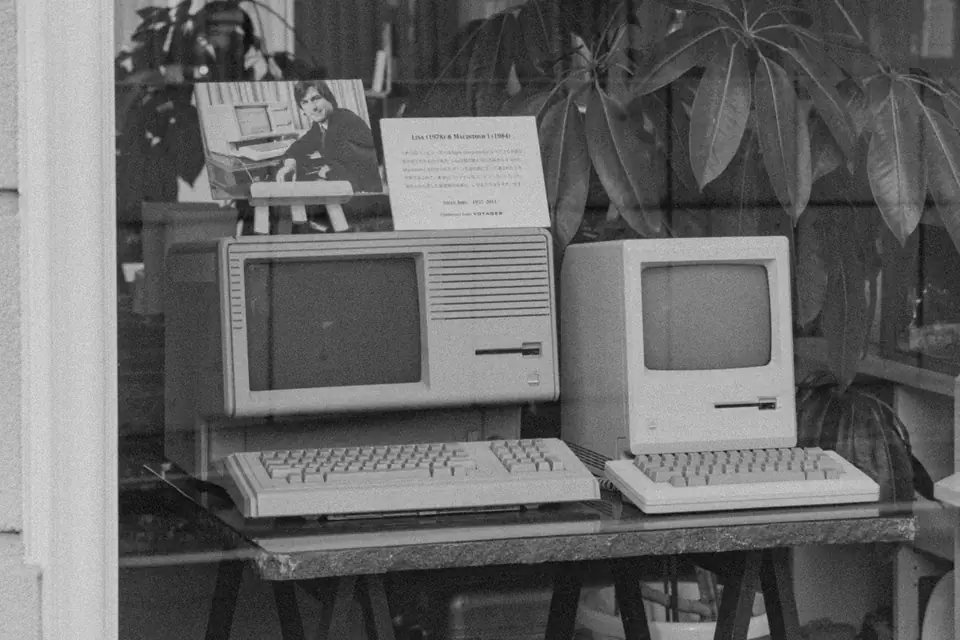
At almost every turn, the people who made it gave away something a more cautious company would have guarded.
The files anyone could open
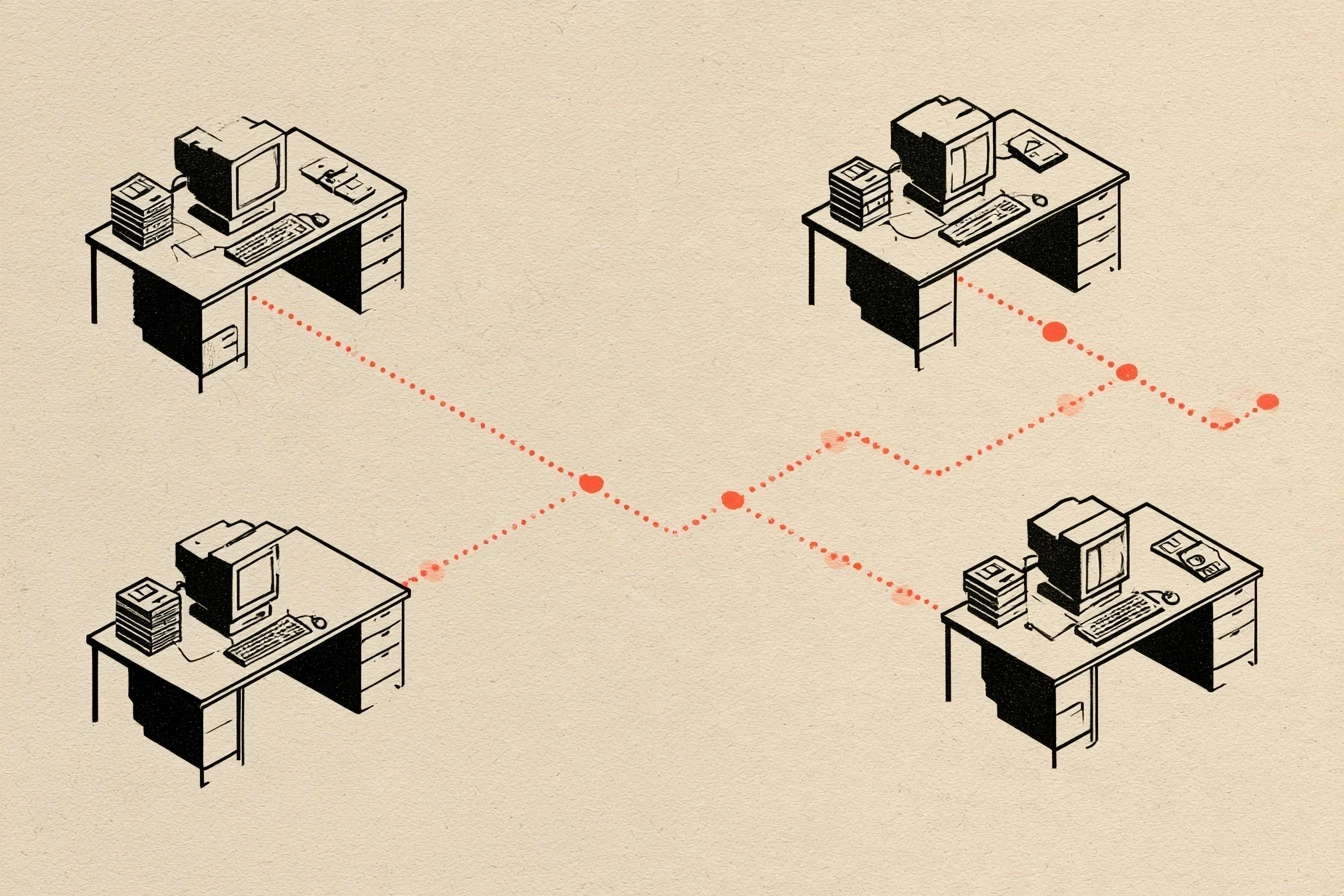
Doom let up to four players share a game over an office network, either cooperatively or in the mode the team called deathmatch. The first version sent its data as broadcast packets, which slowed entire networks to a crawl. Intel banned the game, and Carnegie Mellon University warned that it would disconnect the computers of anyone caught playing it in network mode. The bans were a kind of tribute. Nobody bans a game that people do not want to play at work.
The game also kept its maps, sounds and graphics in WAD files, which stands for “Where’s All the Data?” Keeping the content apart from the engine made it possible for players to replace one without touching the other. On January 26, 1994, a programmer named Brendon Wyber released the Doom Editor Utility, and the modding community has not stopped since. The company had left the door open, and a generation of level designers walked through it, some of them into careers in the industry.
The team’s sense of humor was left open too. The cheat codes carry its private jokes. IDDQD, which makes you invincible, comes from Delta Q Delta, an informal fraternity the programmers made up in which the Q stood for quit, the grade its members were supposed to aim for. IDSPISPOPD, which lets you walk through walls in the original game, is short for “Smashing Pumpkins Into Small Piles Of Putrid Debris.” IDKFA gives you every weapon, full ammunition, all the keys and 200 percent armor.
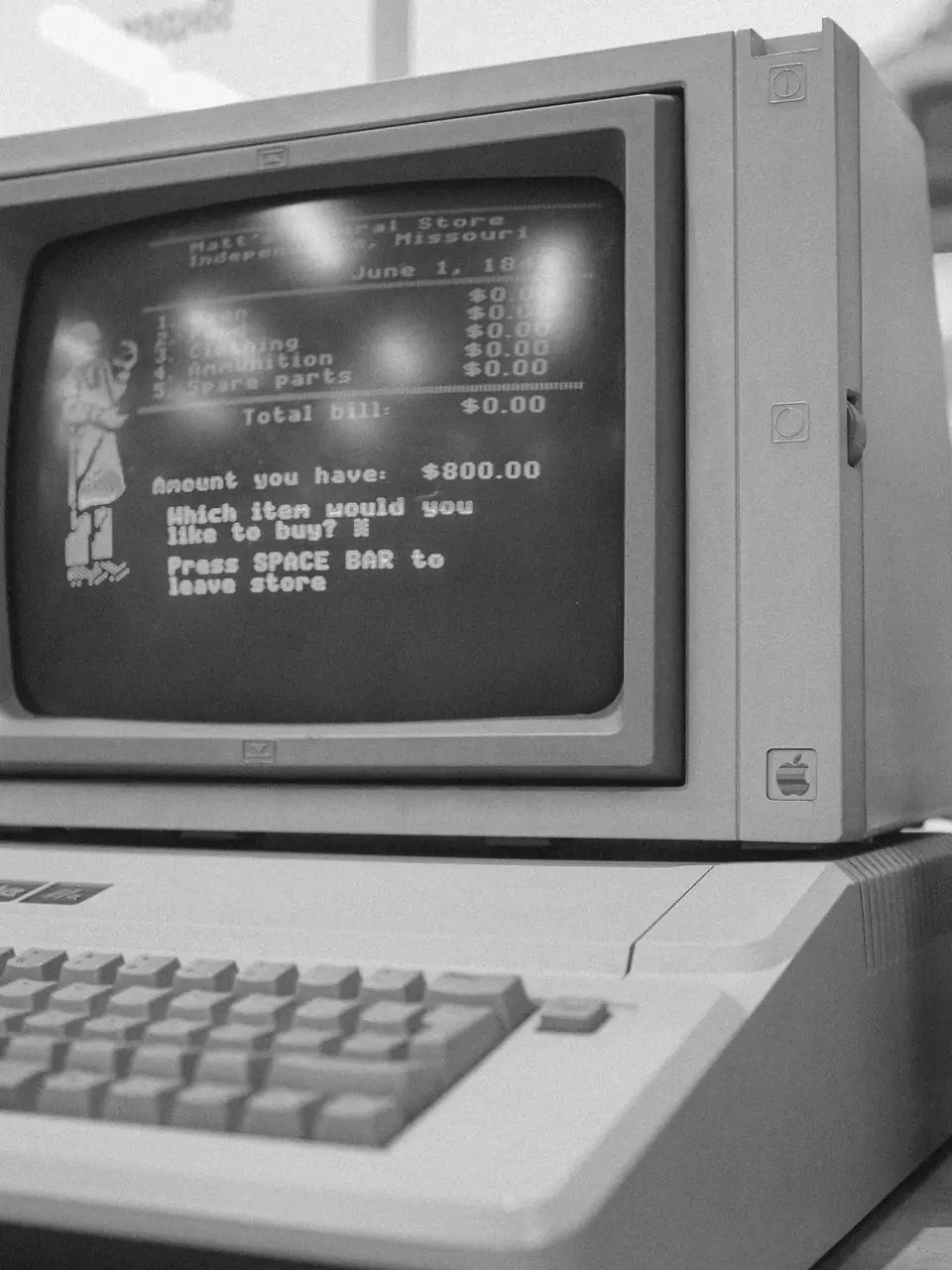
The code, given away
The largest gift came last. In 1997 id released the source code for noncommercial use, and in 1999 it put the code under the GNU General Public License. That decision is the reason Doom runs on nearly everything, including graphing calculators, a TI-84 powered by 100 pounds of potatoes in 2020 and a John Deere tractor in 2022. Some of the stranger claims deserve care. When Foone Turing ran it on a pregnancy test in 2020, only the plastic shell was original, and the screen and processor had been swapped in.
Most games from 1993 survive, if at all, as museum pieces that require old hardware or an emulator. Doom survives as a living thing, because its owners let go of it. The code became a common inheritance, and programmers treat porting it as a rite of passage and a benchmark. No marketing budget could have bought that kind of longevity. It came from surrendering control of the thing at precisely the moment when most companies would have tightened their grip.
The game is easy to play properly now. Doom + Doom II, released by Nightdive Studios on August 8, 2024, bundles the original episodes, the official expansions and a new episode called Legacy of Rust, with support for fan-made mods, which is fitting for a game that the fans have kept alive for three decades. Type IDDQD once, for old times’ sake, and then turn it off. The game was always better when you could lose.