
History
Four shades of green.
In 1989 Gunpei Yokoi built a handheld from cheap, proven parts and four AA batteries, and it beat every color rival of its day. The Game Boy remains a strong argument against the idea that the newest machine is the better one.
Written by CONTROL
This article runs 1,085 words and takes about five minutes to read.
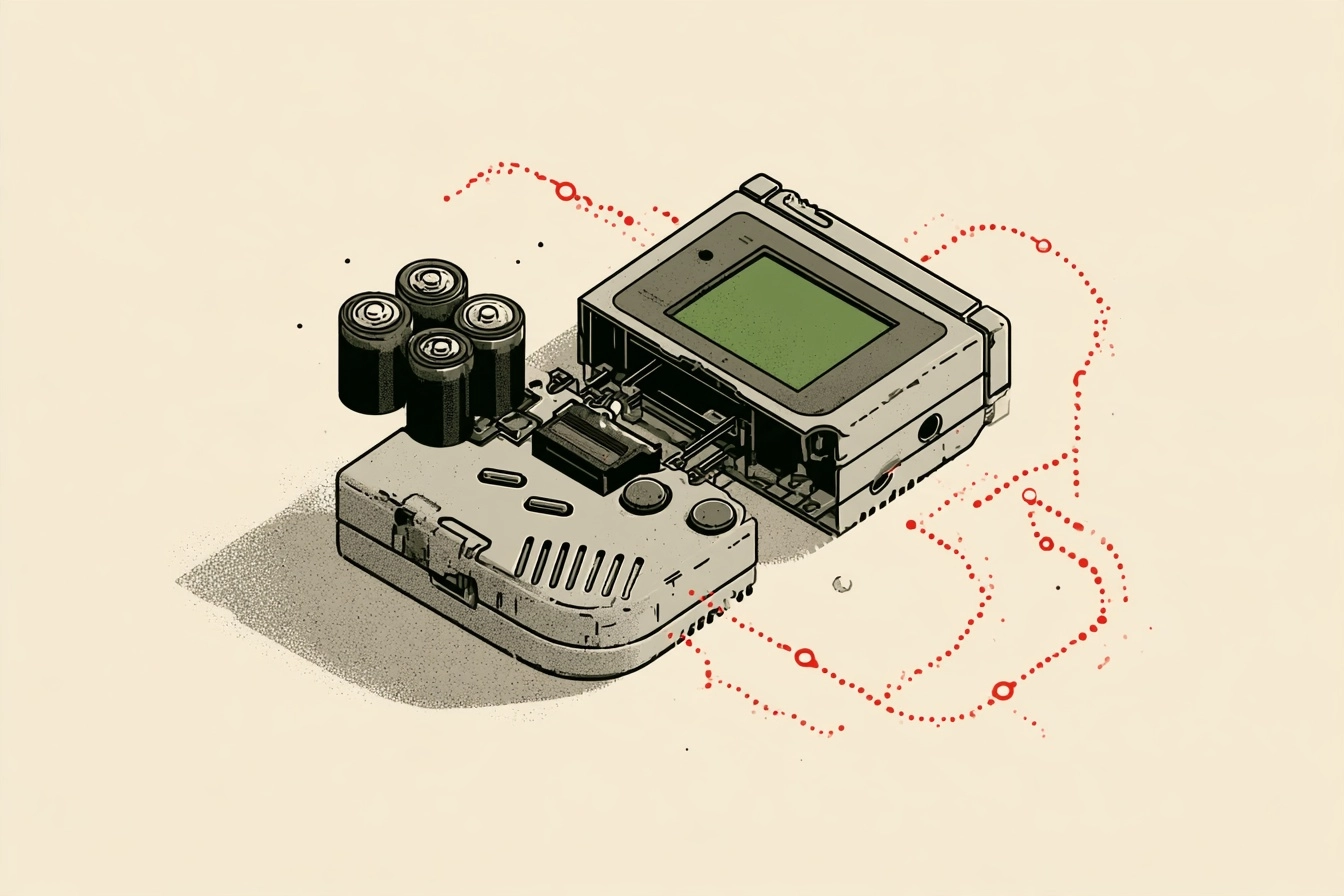
The Game Boy was not the most powerful handheld of its day, and it never tried to be. Its screen had no color and no light of its own. It was thick, gray and heavy enough to leave a mark in a coat pocket. It was also cheap, tough and able to run for many hours on batteries you could buy at a gas station, and it outsold every rival built to beat it. The man behind it had a name for that approach, and the idea has aged remarkably well.
The maintenance man
Gunpei Yokoi joined Nintendo in 1965 to maintain the assembly-line machines at its playing-card factory in Kyoto. In his spare time he built a toy arm that stretched out on a lattice, and in 1966 Nintendo’s president, Hiroshi Yamauchi, told him to turn it into a product for Christmas. It sold, and Yokoi moved from fixing machines to inventing toys. In 1980 he created Game & Watch, a line of pocket games with simple LCD screens, after watching a businessman on a bullet train pass the time with a calculator.
The details of that origin matter. Yokoi was not trained as a visionary. He was trained to keep old machines running, and he learned the habits of a repairman: respect for parts that work, suspicion of parts that are new, and an eye for what a familiar thing might do if you turned it sideways. The calculator on the train was not a revelation about the future. It was a cheap, common screen that nobody had thought to play with.
Withered technology
Yokoi’s rule became known as “lateral thinking with withered technology.” The withered technology is the mature kind: parts that are cheap, reliable and fully understood. The lateral thinking is finding a new use for them. He believed that a toy did not need the newest components, and that the play mattered more than the specification sheet. The Game Boy was that rule in a gray plastic case.
It is a more radical idea than it sounds. The electronics business runs on the opposite assumption, that the newest part is the best part and that customers will pay for the difference. Yokoi was betting that most people did not want the most advanced machine. They wanted one that worked every time they picked it up, at a price their parents would pay, with games good enough that nobody noticed the screen.
He believed that a toy did not need the newest components, and that the play mattered more than the specification sheet.
The gray brick
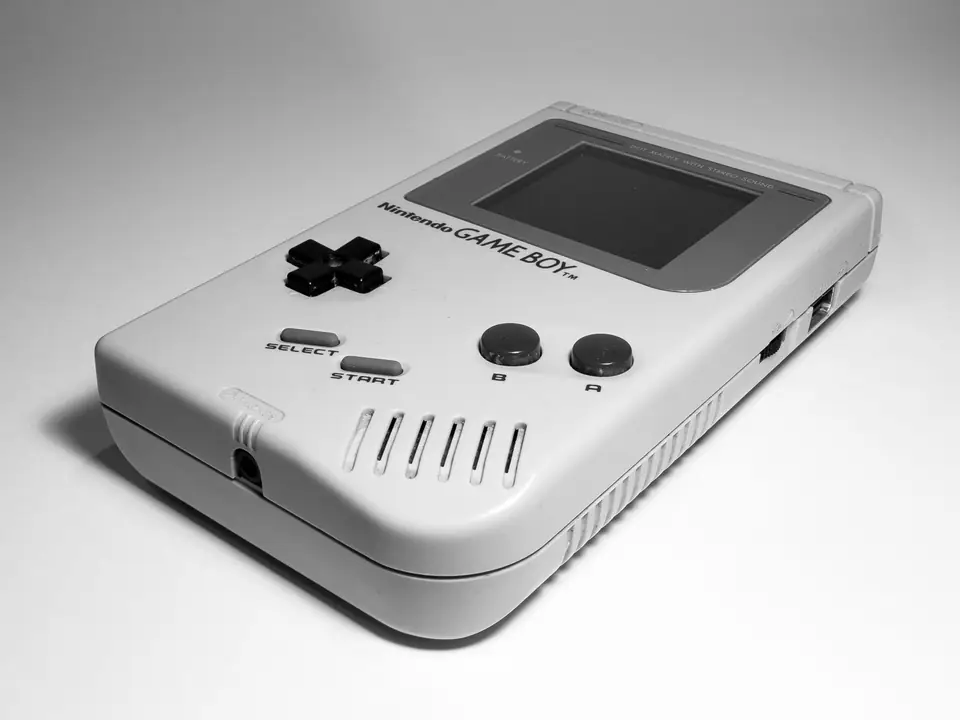
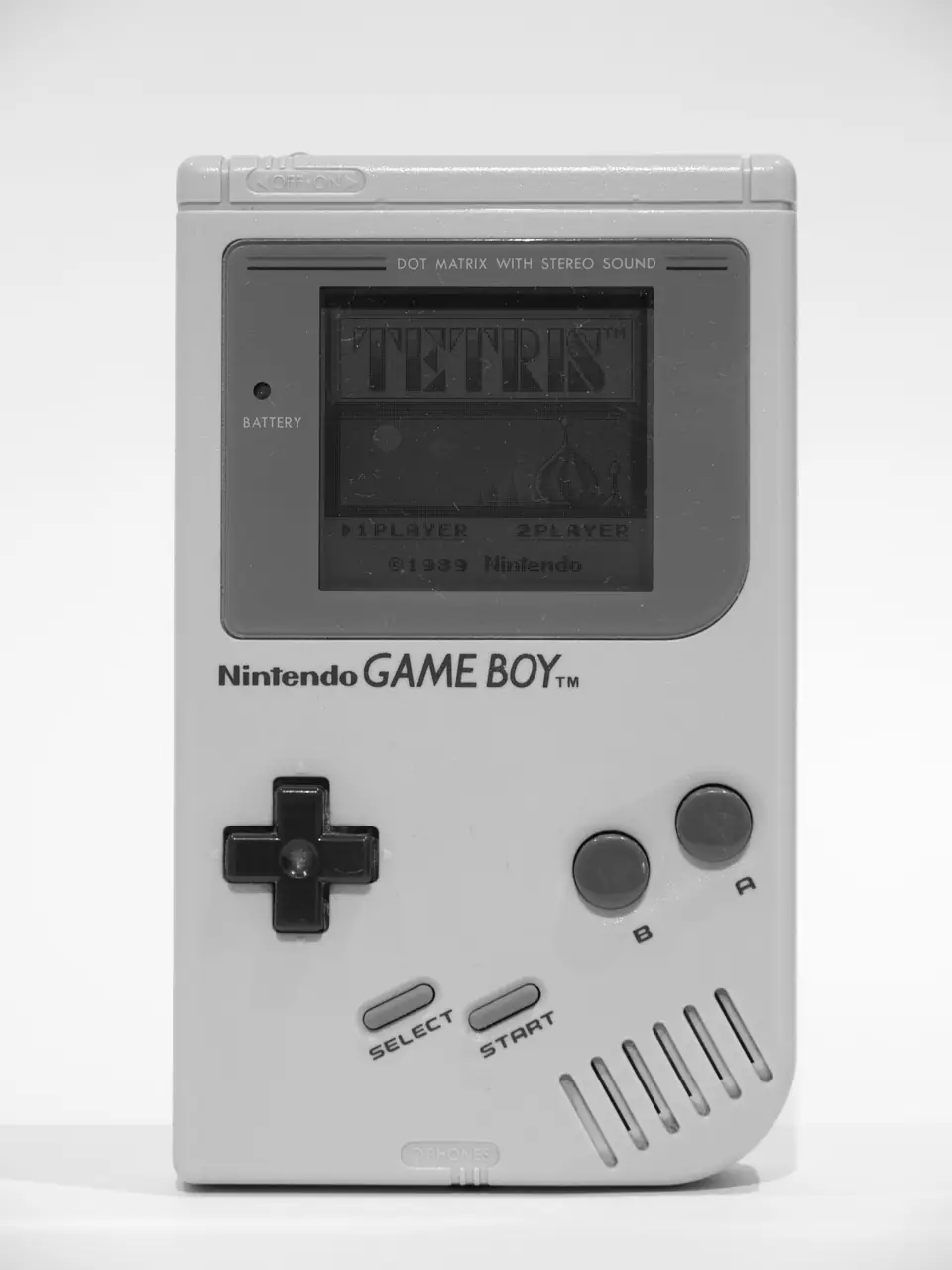
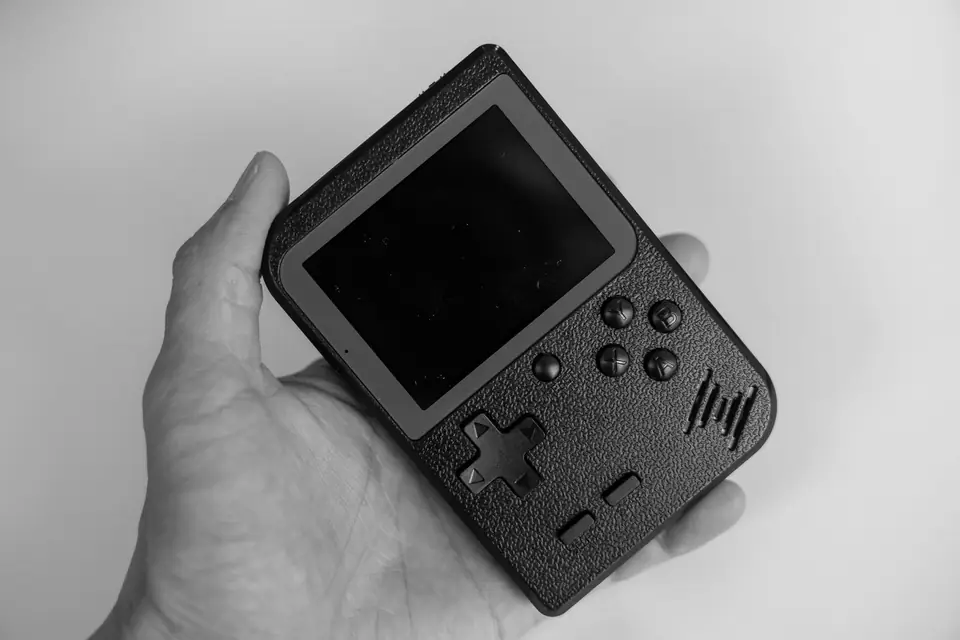
Yokoi and Satoru Okada of Nintendo Research & Development 1 designed the Game Boy, which went on sale in Japan on April 21, 1989, and in North America on July 31, 1989, for $89.99. Its 2.5-inch screen showed 160 by 144 pixels in four shades, with no backlight and no color. What it gave up in looks it paid back in endurance, because it ran for up to 30 hours on four AA batteries.
Nintendo wanted to pack in Super Mario Land, but Henk Rogers, who held the handheld rights to Tetris, convinced Nintendo of America president Minoru Arakawa that Mario would sell the machine to boys while Tetris would sell it to everyone. Outside Japan, the Game Boy shipped with Tetris, and that version eventually sold 35 million copies. The choice was Yokoi’s rule applied to software. A falling-block puzzle needed no color and no detail, and it looked at home on a small green screen. It also brought in parents, commuters and office workers who would never have bought a machine for a plumber.
The machine that survived a fire
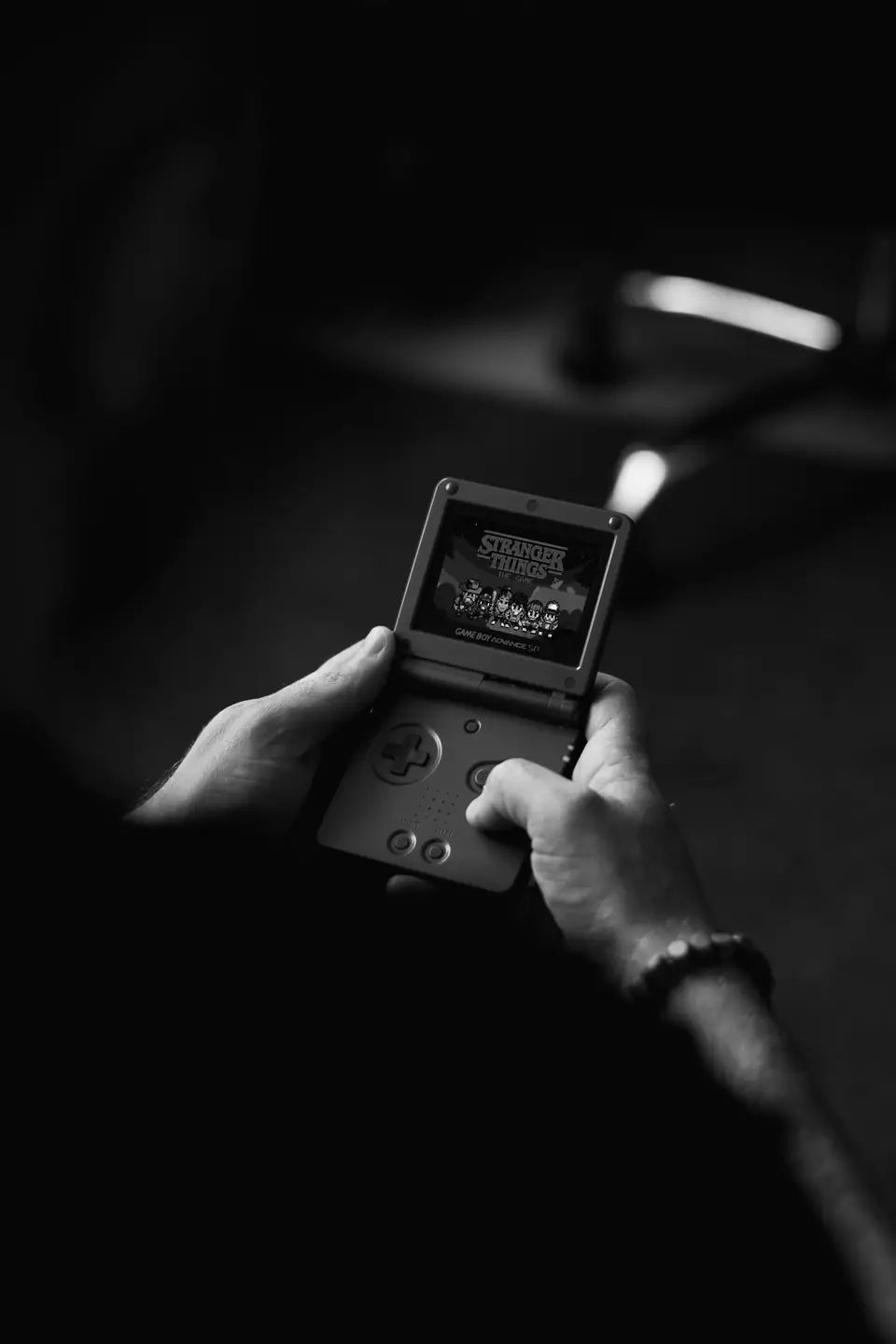
The Game Boy’s toughness became legend through one unit in particular. In January 1991, during Operation Desert Storm, a bombing set fire to the barracks where Stephan Scoggins, a U.S. Army medic, kept his Game Boy. The front of the case came out charred and blistered, and the A and B buttons melted. When Nintendo’s technicians put a Tetris cartridge in it, the machine still started. Nintendo replaced his unit, kept the burned one and put it on display at its store in New York City, where it played Tetris for years. In 2023 it was reported to have been retired to Nintendo’s headquarters in Redmond, Washington.
The story works as marketing, and Nintendo treated it that way. It also works as a description of the design. A machine made from mature parts, in a thick case, with a screen that draws little power, has fewer ways to fail. The durability was not a happy accident. It followed from the same decisions that made the Game Boy look out of date on the day it launched.
Why color lost
The obvious threat was color. Atari’s Lynx arrived in 1989 and Sega’s Game Gear reached America in April 1991, and both had backlit color screens that made the Game Boy look old on its first day. Both also ran on six AA batteries, and the Game Gear lasted three to five hours on a set. The Game Boy beat them with a lower price, a longer battery life and a far deeper library of games. The Game Gear sold about 14 million units, and the Game Boy and Game Boy Color together sold 118.69 million.
The lesson is not that better technology never wins. Color screens and backlights eventually arrived on Nintendo’s own handhelds, once the parts had become cheap and efficient enough to meet Yokoi’s standard. The lesson is about timing and about who is in charge. The Lynx and the Game Gear were designed around what the engineers could do. The Game Boy was designed around what the player would actually do, which was play for hours, on a bus or under the covers, without thinking about the batteries.
That principle outlasts the hardware, and it is useful well beyond games. Choose the proven version that does the job for years over the newest one that impresses for a month. For anyone who wants the original, the first model is numbered DMG-01 on the back. Open the battery door before you pay and check for corrosion, then switch it on and look for dead vertical lines on the screen, a common fault that repair shops can often fix. Put in four fresh AA batteries and a copy of Tetris, and you will not need to think about power again for a long while, which was always the point.