
History
The map in the mail.
For 24 years, Nintendo Power mailed a generation the maps and secrets it could not find anywhere else. Its rise and fall show what happens to expertise when a company owns it, and what happens when it stops being scarce.
Written by CONTROL
This article runs 1,092 words and takes about five minutes to read.
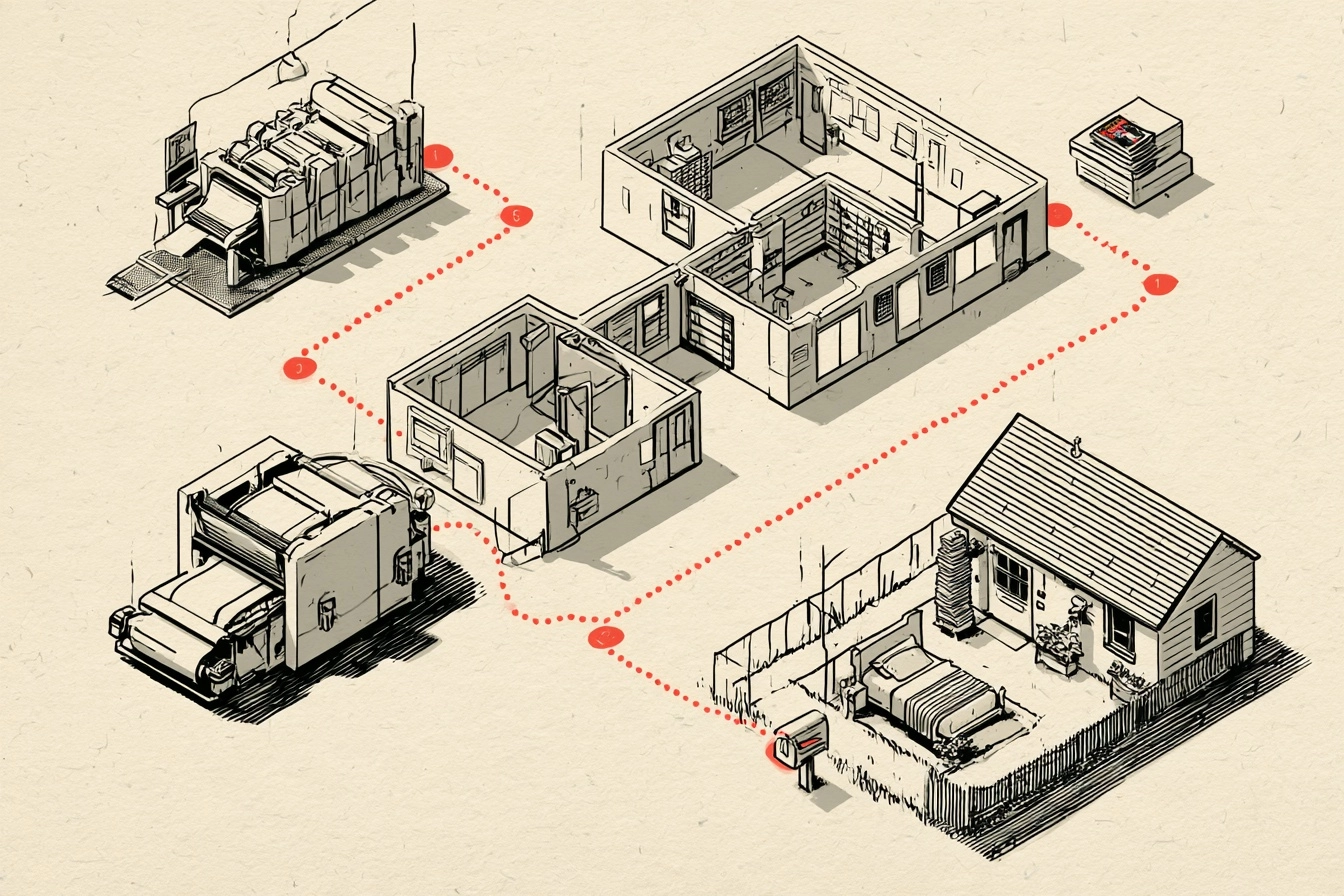
In the summer of 1988, 3.6 million copies of a new magazine went out through the American mail, free, to every member of a club that had cost nothing to join. The cover showed Super Mario Bros. 2, and inside were maps. For a child stuck in a dungeon, the maps were not a perk of membership but the entire point of it. For Nintendo they were something shrewder than a gift. The company that made the games hard had found a way to supply the help as well, and to make the reader grateful for it.

The man in the warehouse
Howard Phillips joined Nintendo of America in 1981, at 22, to run its first warehouse in Tukwila, Washington. He played everything the company sold and everything its rivals sold, and he became known inside and outside Nintendo as the Game Master. After the NES arrived in America in 1985, the questions began to pile up, because the games were built to be difficult and many of them hid their best rooms on purpose. In 1987 Phillips and Gail Tilden, a marketing manager at Nintendo of America, started the Nintendo Fun Club, which cost nothing to join.
The club’s newsletter, Nintendo Fun Club News, ran for seven issues between 1987 and the summer of 1988, and membership reached 600,000. Its secret was the screenshot. In the years before the internet, a printed picture of the screen was the surest way to show a child how a trick worked, and Phillips said later that this was exactly why children loved it. A description could be misread. A picture of the fourth block from the left, with an arrow pointing at it, could not.
The room in Redmond
Nintendo also answered the phone. A handful of game play counselors grew into a room in Redmond, Washington, where, at its peak, a couple hundred people took calls for nearly 24 hours a day. A counselor handled about 100 calls a shift, and the hardest questions were answered from a large green binder full of notes, hand-drawn maps and solutions. The line began on a local Redmond number and later moved to a paid 900 number. It ran from 1987 to 2005, and a shirt made for the staff counted 28 million calls.
It is worth pausing on the move from a local number to a 900 line, because it contains the whole business in small. The games created the problem, and the company sold the way out. None of this was sinister. But the arrangement made Nintendo the keeper of its own mysteries, and it taught a generation that the answer to a hard problem lived in an official place, held by people who had been there first.
The games created the problem, and the company sold the way out.
A magazine about one company, by that company
The newsletter could not keep up with the questions, so Tilden founded a real magazine. The first Nintendo Power, dated July/August 1988, went free to every Fun Club member. Phillips served as a co-editor and checked the strategy for accuracy, and a caricature of him, bow tie included, starred in a comic strip called Howard and Nester. The pages did in print what the counselors did one call at a time: they gave full maps, boss patterns and the locations of hidden rooms. The binder in Redmond had become a magazine, and the magazine went to every house on the list.
By any ordinary standard of journalism, Nintendo Power was a conflict of interest bound with staples. Its subject and its publisher were the same company, and it decided which games deserved a cover and which secrets to reveal in which month. Its readers did not mind, and it is not obvious they should have. The maps were right. The magazine’s authority rested on accuracy rather than independence, and for a ten-year-old who wanted to reach the end of a castle, accuracy was the only virtue that counted.
The business side was just as neat. In the early 1990s, the magazine gave new subscribers a free copy of Dragon Warrior, a role-playing game for the NES. The promotion cleared a pile of unsold cartridges out of the warehouse and brought in a wave of subscriptions at the same time. Surplus stock became readers, and readers became buyers of the next game on the cover.
What the search box took
The magazine’s hardest opponent was the thing that replaced the green binder. Once every map and walkthrough sat one search away, a monthly strategy guide lost its hold on secrets. Nintendo handed publishing to Future US in 2007, beginning with issue 222, and in August 2012 it chose not to renew the license. The final issue, number 285, came out in December 2012, 24 years after the first, with a circulation that year of 475,000. That is a large number for a magazine and a small one for a company that had once mailed 3.6 million copies of a single issue.
The internet did not simply make the maps free. It moved them. Players began drawing the maps themselves and posting them for anyone, and the knowledge that had lived in a binder in Redmond came to live with the people who played the games. That was a real gain, and hardly anyone would trade it back. Something smaller was lost along the way. A monthly magazine imposed a wait, and the wait gave a secret its value. It also meant that every child on the mailing list opened the same pages in the same week and argued about them on the same playground.

The map and the controller
The best thing about Nintendo Power was a restraint built into its form. It could show you the room with the hidden stairs, but it could not climb them for you. The map told you where to go, and the playing was still yours. Help of that kind leaves the reader in charge, which is a different thing from help that finishes the job, and it is the kind this magazine would like to offer.
The originals are still easy to find. Back issues and the old Player’s Guides turn up at used bookstores, flea markets and online auctions. The ones worth owning are the issues that covered the games you actually played, and the pages worth reading first are the maps, drawn by people who had already been lost in the same rooms and came back to say where the door was.