
Essay
Ride one bicycle.
A bicycle is one of the few machines a person can own outright, understand completely and repair at the curb. One good bike that fits, kept running by your own hands, is a daily lesson in what control actually feels like.
Written by CONTROL
This article runs 939 words and takes about four minutes to read.
In 1885 John Kemp Starley of Coventry introduced the Rover, the first commercially successful safety bicycle. It had two wheels of nearly equal size and a chain driving the rear one, and the rider’s feet could reach the ground. The penny-farthing it replaced had been a machine for daring young men. The safety bicycle was safer and far more popular, especially among women, and it helped set off the bicycle boom of the 1890s. The shape Starley settled on is, with refinements, the shape of nearly every bicycle sold today.
That continuity is the point. The car in the driveway runs on software its owner cannot read, and the phone cannot be opened without special tools. A bicycle is the rare modern machine whose entire workings are visible. You can watch the chain turn the wheel. You can learn every adjustment on it in a season, and most of them need only a few hand tools. Owning one well is a small, daily practice in understanding the thing that carries you.
Most people lose that chance by buying a bike for the rider they imagine and then never riding it. The one hanging from the garage ceiling with two flat tires is a monument to that mistake. What most of us need is one bicycle, comfortable for a five-mile commute, sturdy enough for a gravel path on the weekend and simple enough to keep running at home.
The right bike is an ordinary one
For commuting and weekends, look at hybrid, touring or gravel bikes rather than racing bikes or full-suspension mountain bikes. You want tires wider than a road racer’s, a frame with mounting points for fenders and a rear rack, and gearing low enough to climb the worst hill on your route without standing. Fenders keep a wet road off your trousers, and a rack carries your bag so your back does not sweat through your shirt.
Buy it from a local shop, even if it costs a little more than online. The shop will size you, adjust the bike and usually check it again after the cables have stretched in the first few weeks. Stand over the top tube with both feet flat on the floor, and there should be clear space between you and the frame. Set the saddle so your leg is nearly straight, with a slight bend at the knee, when the pedal is at the bottom of its stroke; if your hips rock as you pedal, the saddle is too high. Ride the bike for at least fifteen minutes before you pay. Numb hands, a sore neck or a reach that feels too long will show up in that time, and a good shop can fix most of them with a different stem or handlebar.
Maintenance is a way of knowing
The League of American Bicyclists teaches a pre-ride routine called the ABC Quick Check. A is for air, so squeeze the tires and pump them to the pressure printed on the sidewall. B is for brakes, so check that the pads are not worn and that the levers stop the wheels firmly. C is for chain and cranks, so pull on the cranks to feel for looseness and look for rust or grime on the chain. Quick is for quick releases, which should all be closed, and Check is a short, slow ride to confirm that everything works.
Wipe the chain with a rag and add a few drops of chain lube when it looks dry or starts to squeak, then wipe off the excess so it does not collect grit. Take the bike to a shop for a tune-up once a year, before the season when you ride most. None of this is difficult, and all of it adds up to something a car owner rarely has, which is an exact sense of the condition of the machine.
The first flat decides everything
The moment that ends many people’s cycling is the first flat tire. It usually happens two miles from home, and it is where many bikes go back into the garage for good. The remedy is to learn the repair in the kitchen before you need it on the road.
Carry a spare inner tube, two tire levers and a small pump in a saddle bag. At home, practice once: remove the wheel, lever off one side of the tire, pull out the tube, run your fingers carefully around the inside of the tire to find the thorn or the glass, fit the new tube and pump it up. The first attempt takes half an hour. By the third it takes ten minutes, and a flat becomes an errand rather than a verdict.
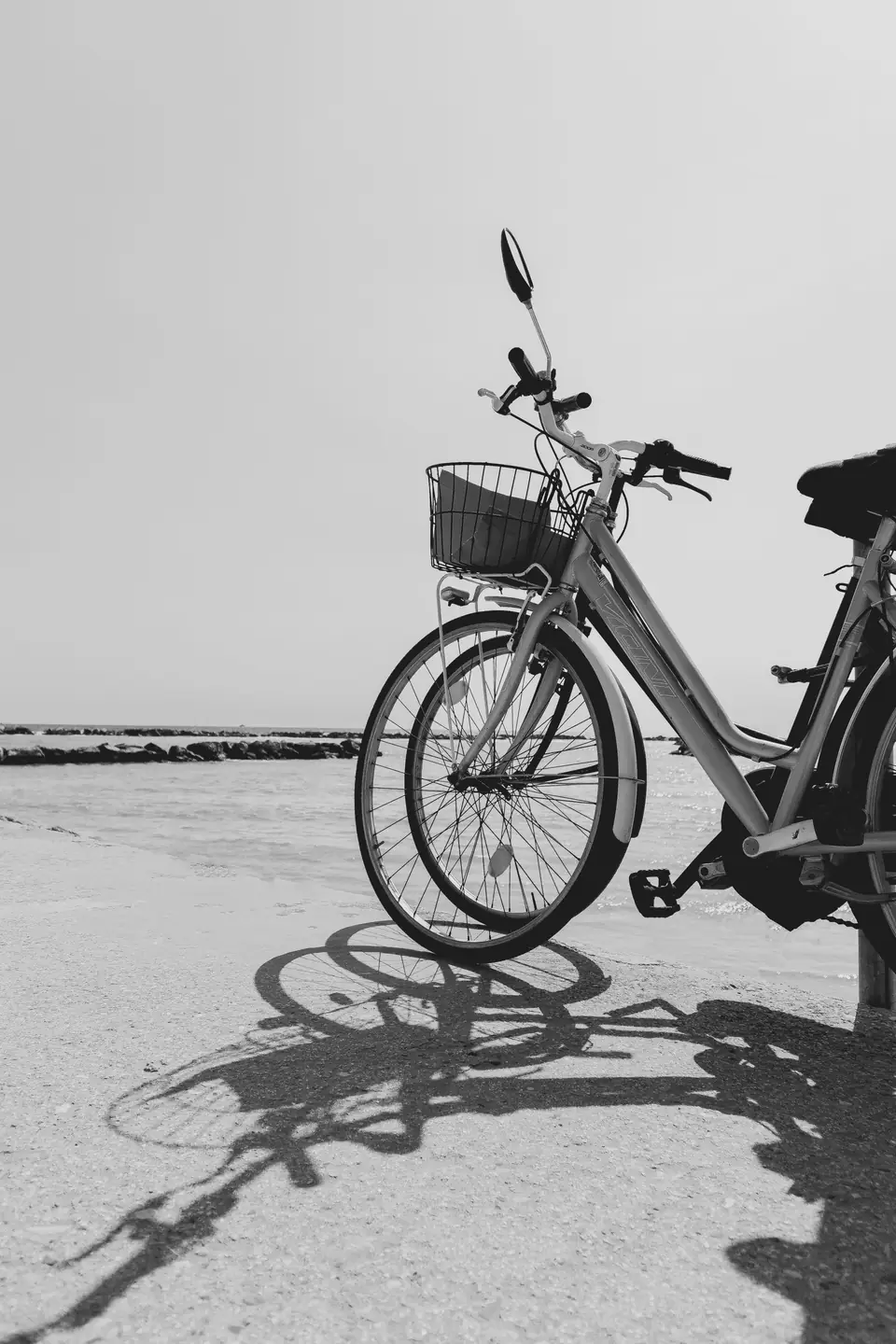
By the third it takes ten minutes, and a flat becomes an errand rather than a verdict.
Keeping what you own
Keeping the bike is the last skill. Sheldon Brown, the Massachusetts bicycle mechanic whose website is still one of the most trusted references in cycling nearly two decades after his death in 2008, taught a locking method that most riders never learn. Put a small U-lock around the rear rim and tire, inside the rear triangle of the frame, and around the post or rack. Because the rim cannot pass through the frame, the lock holds the wheel and the frame together.
Photograph the bike and write down its serial number, which is usually stamped under the frame where the pedals attach, and file both with your important papers. Then ride it. A bicycle that is fitted, checked and understood gives back more control than it asks for, and it asks for very little.