
The Long Read
Save states.
The retro market sells childhood back to us in plastic miniatures, subscription libraries and seven-figure auctions. The psychology of nostalgia explains why we keep buying, and the emulator’s save state explains what we are really trying to buy.
Written by CONTROL
This article runs 1,297 words and takes about six minutes to read.
Every emulator, the software that lets a modern computer imitate an old console, offers a feature the original machines never had. It is called a save state. At any moment, in the middle of a jump or a boss fight or a conversation with a shopkeeper, the player can press a key and freeze the entire machine, every value in its memory, exactly as it is. Later, the player can press another key and return to that instant as if no time had passed at all. The cartridges of the 1980s made you earn your progress, and the save state lets you keep it forever.
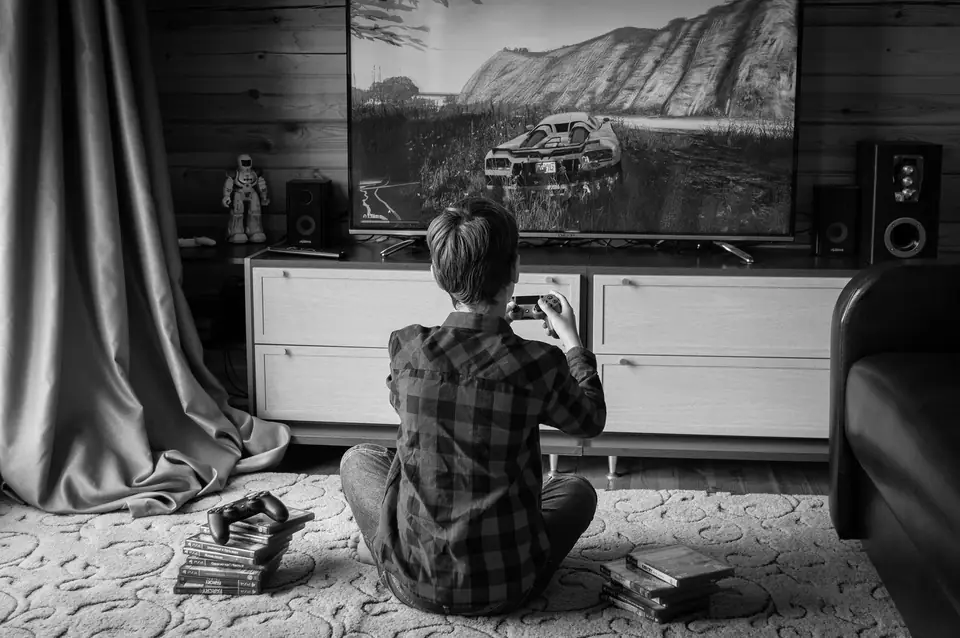
It is hard to think of a more exact image for what the retro game market sells. People in their thirties and forties are not, for the most part, buying old games because they are better than new ones. They are buying a return to a particular moment, the living room, the carpet, the brother holding the second controller, and they would like to arrive there exactly as it was. The industry has learned that this wish is worth a great deal of money. The psychology of nostalgia suggests that the wish is also doing something useful, though not quite what the buyer thinks.
A disease that became a resource
The word “nostalgia” was coined in 1688 by Johannes Hofer, a medical student in Basel, from the Greek words for homecoming and pain. Hofer was describing a condition he observed in Swiss mercenaries serving abroad, whose longing for home seemed to bring on fever, fainting and, in extreme cases, death. For about two centuries nostalgia remained a medical diagnosis, and for much of the twentieth it was treated as a kind of weakness, a refusal to live in the present.
The modern research has turned that view around. Since the early 2000s the psychologists Constantine Sedikides and Tim Wildschut and their colleagues have run dozens of studies on what nostalgia does. Their 2006 paper found that nostalgic reflection tended to raise positive mood, self-regard and feelings of social connection. A 2008 study led by Xinyue Zhou found that loneliness tends to trigger nostalgia, and that nostalgia in turn increases the sense of being supported by others. Later work linked it with a stronger sense that life is meaningful. In this account nostalgia is less a sickness than a resource, a store of evidence that one has been loved and has belonged somewhere, which the mind draws on when the present feels thin.
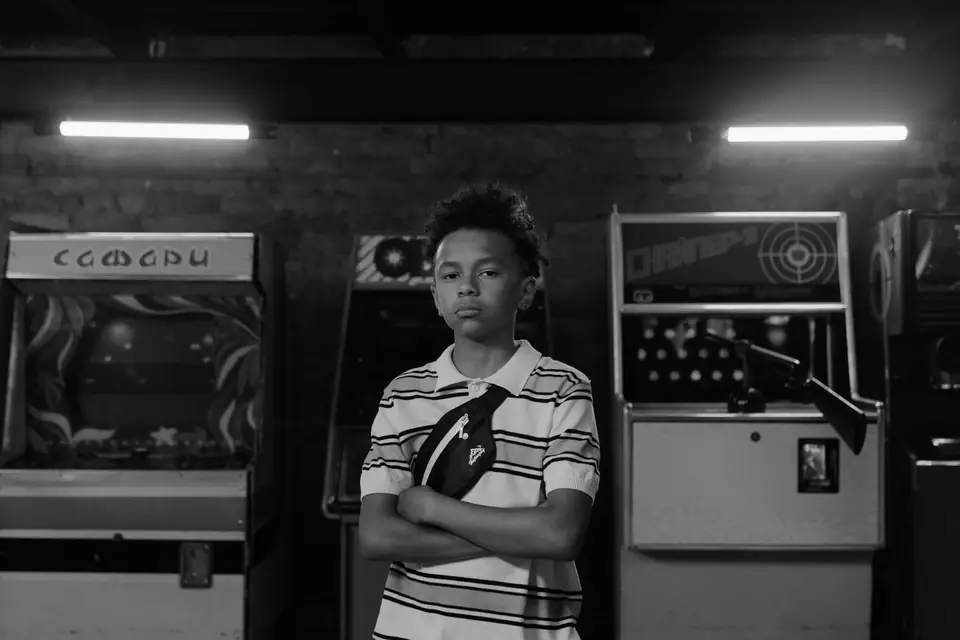
Memory researchers add a further piece. When older adults are asked to recall events from across their lives, they produce a disproportionate number of memories from adolescence and early adulthood, roughly the years from ten to thirty. The effect is called the reminiscence bump. Those are the years when identity forms, when experiences are new, and, for a whole generation, when the games were played. It is no accident that the consoles people collect tend to be the ones they owned at twelve.
Selling the moment back
The industry’s clearest demonstration of this came in a small gray box. Nintendo released the NES Classic Edition, a miniature replica of its 1985 console loaded with thirty built-in games, on November 11, 2016, at $59.99. It was scarce in shops for months, was discontinued in April 2017 after selling 2.3 million units, and was reissued in June 2018. The Super NES Classic Edition followed on September 29, 2017, at $79.99, with twenty-one games, including the first official release of Star Fox 2, a sequel that had been cancelled near completion more than twenty years earlier. By September 30, 2018, the two miniatures together had sold more than ten million units.
The boxes were a clever piece of design. They were small enough to be a keepsake and cheap enough to be an impulse, and they came with no path to add games. They sold the past as a sealed object, complete and unchangeable, which is exactly how memory presents it.
At the other end of the market, the past has become an asset class. In July 2021 a sealed and professionally graded copy of Super Mario 64 sold at Heritage Auctions for $1.56 million. The next month, a sealed copy of Super Mario Bros. sold for $2 million through the collectibles investment platform Rally, which had paid $140,000 for the same copy the year before. The prices drew skepticism from historians, including Frank Cifaldi of the Video Game History Foundation, and a class action later accused the grading company Wata Games of manipulating the market. Whatever the truth of those claims, the buyers were not paying for a game. A sealed box cannot be played without destroying what makes it valuable. They were paying for the idea of the object, frozen, which is another kind of save state.
The past is being sold back to us one subscription at a time, as something we may visit but not own.
The library that vanished
Between the miniature and the auction lies a quieter problem. In July 2023 the Video Game History Foundation and the Software Preservation Network published a study of 1,500 randomly selected games released in the United States before 2010. They found that 87 percent were no longer commercially available in any form. For a medium that still sells its history as a premium product, most of that history can be reached only through an old copy, a preservation library or an emulator of uncertain legality.
What remains is increasingly offered on terms set by the platforms. Nintendo’s online service began adding NES games to the Switch in 2018 and has since added libraries from several other consoles, including GameCube games for the Switch 2. Publishers rebuild their old hits as remasters and remakes, as Square Enix did with Final Fantasy VII Remake in 2020 and Capcom with Resident Evil 4 in 2023. Some of these are serious works in their own right. But the pattern is clear enough. The past is being sold back to us one subscription at a time, as something we may visit but not own.
Why we go back
The strange thing is how often the return disappoints. Anyone who has bought a miniature console knows the pattern. The first evening is thrilling, the title music hits like a smell from childhood, and then, within a week, the box sits unplugged beside the television. The games were not the point. The games were the vessel for a feeling, and the feeling depended on things no one can ship in a box: an afternoon with no end, a friend down the street, a world that seemed enormous because we were small.
This is where the psychology is more generous than the market. The nostalgia research suggests that the value of looking back lies not in recovering the past but in what it does for the present. It reminds a person that he or she once belonged somewhere and was cared for, and that reminder makes the present more bearable and the future more hopeful. Played in that spirit, an old game is not a failed attempt at time travel. It is a way of visiting a self one still carries around.
The emulator’s save state promises a perfect return, and it is the one thing no real memory can provide. Memory rewrites the moment each time it is recalled. The living room of 1991 exists now only in the form our minds have given it, polished by decades of retelling. That is not a flaw to be engineered away. It is the reason the moment still matters. We go back to the games of childhood not to find the room as it was, but to find out who we are when we stand in it again.