
Essay
Carry seven things.
What we carry every day is a running vote on what deserves our time and attention. Seven objects, chosen once and emptied out each night, are enough to run a life.
Written by CONTROL
This article runs 985 words and takes about four minutes to read.
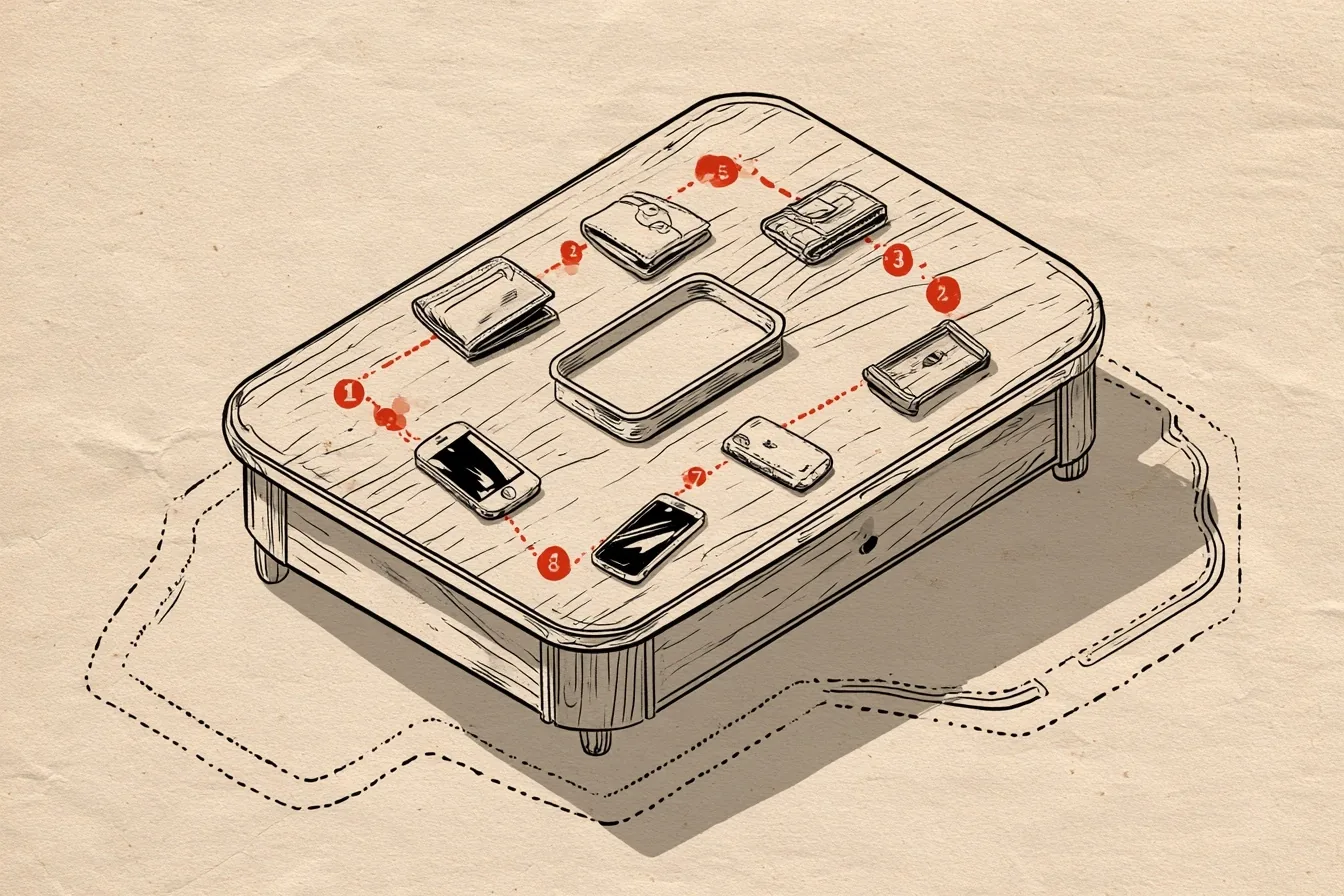
Turn your pockets out onto the kitchen table tonight, and you will find a short history of the week. There will be receipts for things already forgotten, a card for a shop you visited once, a key that opens nothing you can name and perhaps a lip balm from several winters ago. None of it was chosen. It accumulated, the way unread messages accumulate, because keeping something is always easier in the moment than deciding about it.
What a person carries every day is one of the few inventories of a life that fits in two hands. It is also a quiet argument about attention, because every object in a pocket is something you will touch, check or worry about many times before bedtime. The case made here is for seven things: a wallet, keys, a watch, a pen, a notebook, a handkerchief and a phone. Each earns its place by saving time, marking ownership or protecting attention, and the list is short enough to keep honest.
What you own and what you can open
Cut the wallet down to four cards: an ID, one debit card, one credit card and your health insurance card, with two folded bills for the day the card reader is down. A wallet that thin rides in a front pocket, where it is harder to lift and does not leave you sitting crooked on a thick lump for hours at a desk. At home, away from the wallet, keep a list of each card’s last four digits and each bank’s lost-card number. When the wallet goes missing, you make two calls instead of spending an evening hunting for help lines.
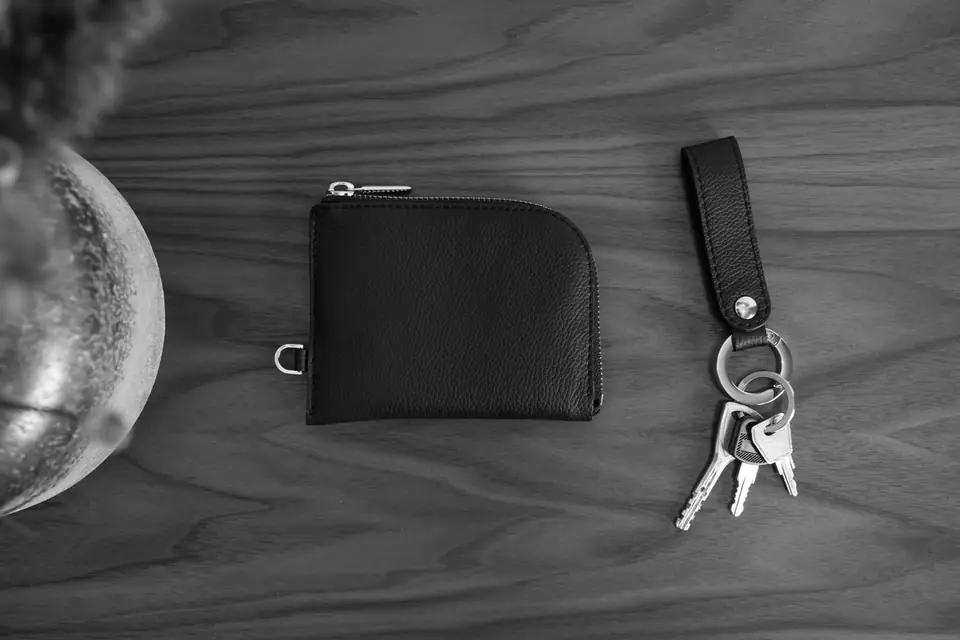
Put the keys on one plain split ring and count them. Each key is a claim to a door, and a ring of them is a map of what you are responsible for. If one has not opened anything in a year, retire it. Hang the car key from a small detachable clip, so a valet or a mechanic gets the car and not your front door.
Each key is a claim to a door, and a ring of them is a map of what you are responsible for.
Three tools for keeping time
Wear an analog watch, because it tells the time and nothing else. Checking the hour on a phone means waking a screen full of messages, and a glance at the time can become ten minutes somewhere else. A watch returns the question to its original size. A hand-wound one also asks for a small ritual: wind it at the same moment each morning until you feel the crown resist, and then stop. It is the first thing in the day that you finish.
Carry a refillable metal pen that clips flat inside a pocket. A pen with a pressurized cartridge, like the Fisher Space Pen that has flown with astronauts since Apollo 7 in 1968, will write on damp paper, in the cold and upside down against a wall. The notebook should fit a back pocket and close with a band, and the pen can ride clipped to its cover. Write your name and phone number on the first page, because a lost notebook comes home more often than you would expect.
The pen and the notebook are the slowest tools on the list, and that is their value. Writing by hand takes long enough that you must decide what is worth writing down. A note in a notebook does not send reminders or suggest anything else to read. It waits, and when you come back to it, it is exactly what you left.
One for you and one to lend
Carry a plain cotton or linen handkerchief in white or navy, and carry a second one to any occasion likely to bring tears, such as a wedding or a funeral. The first is for you, and the second is for lending. It is the only object on the list that exists partly for other people, and people remember who handed them one.
The phone goes in last
The phone goes in last, and deliberately. It is the only object on the list designed to take attention rather than save it, which is why it belongs at the end of the order rather than the start. Set it to silent and turn it face down when you sit with people, and they will notice.
Give it one job in return for its place. Put your emergency information on the lock screen tonight, because a paramedic or a stranger can read it without your passcode. On an iPhone, open the Health app, tap your picture, choose Medical ID, add your emergency contacts and turn on Show When Locked. On Android, look for Safety and Emergency in Settings, where the contacts and medical information you enter can be reached from the lock screen through the Emergency button. It takes three minutes.
The tray by the door
Seven things do not stay seven on their own. The collection grows slowly, one receipt, one loyalty card and one borrowed key at a time, until the wallet is an inch thick again. Keep a small tray by the door. Every night, everything in your pockets goes into the tray, and every morning only the seven things go back out. Anything that sits in the tray for a week without being picked up has told you it does not belong. On the first Sunday of each month, empty the tray and the wallet, throw out the receipts, check that the pen still writes and wash the handkerchiefs.
The tray is the real discipline, and it takes less than a minute a day. What it produces is a day in which you know what you are carrying and why, and in which almost nothing in your pockets is asking for your attention. Seven objects are enough. Everything else can wait at home.
The seven
- WalletCarry a slim leather one with four cards at most.
- KeysKeep them on one plain ring, with nothing that jingles.
- WatchWear an analog one with no notifications.
- PenCarry a metal refillable pen that clips flat.
- NotebookKeep a pocket notebook for writing things down.
- HandkerchiefCarry linen, because someone will need it.
- PhoneKeep it face down and on silent.