

The Long Read
The algorithm and the critic.
Recommendation engines are very good at predicting what we will enjoy next, and that is precisely their limitation. Taste is formed by argument, surprise and the occasional mistake, and those are the things a feed is built to remove.
Written by CONTROL
This article runs 1,276 words and takes about six minutes to read.
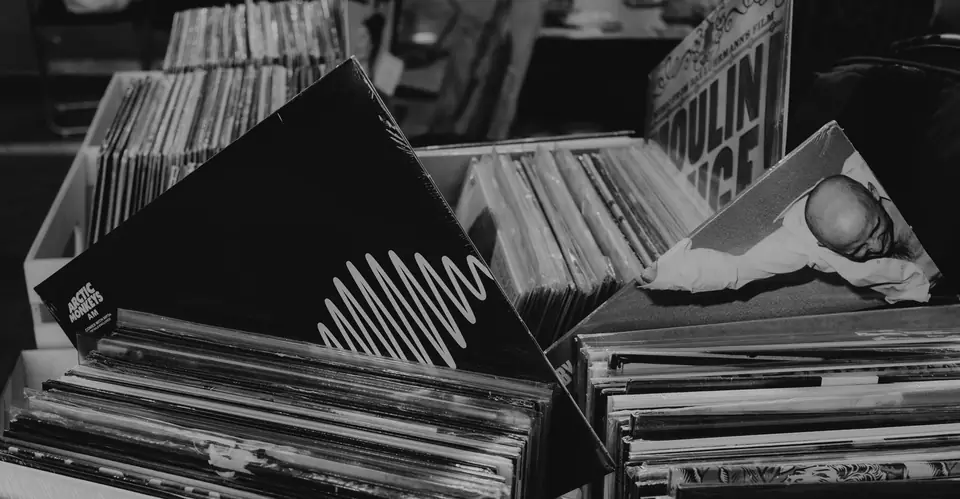
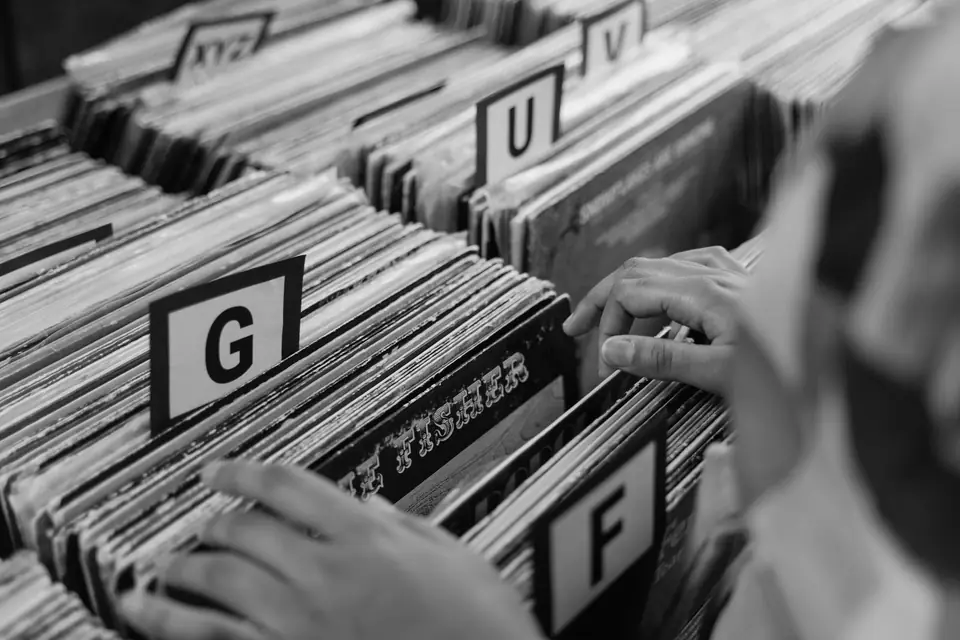
The clerk at the record store was often insufferable, and that was part of the service. You brought a stack of albums to the counter and he looked at them, and sometimes he said nothing, and sometimes he told you that if you liked this you should really hear that, and pulled something from a bin you would never have touched. Nick Hornby built a novel, High Fidelity, around the type in 1995, and the film version five years later turned the clerk’s snobbery into comedy. The joke landed because everybody knew him. He was annoying, opinionated and frequently right, and he was one of the ways a person acquired taste.
Tower Records, which Russ Solomon founded in Sacramento in 1960, closed its last American stores on December 22, 2006. The date is a convenient marker for a change that happened more gradually everywhere else. The clerk’s job, and much of the critic’s, has since passed to software.
The million-dollar question
Less than three months before Tower closed, on October 2, 2006, Netflix announced a public contest. It offered a million dollars to anyone who could improve the accuracy of its film-recommendation algorithm, Cinematch, by ten percent. The prize was claimed in September 2009 by a team called BellKor’s Pragmatic Chaos, which reached an improvement of 10.06 percent. Netflix then declined to put the winning system into production in full. Its engineers wrote in 2012 that the additional accuracy did not justify the engineering effort, though two of the underlying techniques had already been adopted.
In the same post, they reported that 75 percent of what people watched on Netflix came from some form of recommendation. That figure deserves a moment. Three quarters of viewing on the largest streaming service was not the result of a friend’s advice, a review or a browse through the shelves. It was the result of a ranking, generated from the viewer’s past behavior and the behavior of people statistically similar to him. Spotify took the same approach to music, and in July 2015 it launched Discover Weekly, a personalized playlist delivered every Monday that became, for many listeners, a principal route by which new music reached them.
What a recommendation optimizes
It is worth being precise about what these systems do well. They are very good at finding more of what a person already likes. A listener who enjoys one ambient album will be offered ten more, most of them pleasant, some of them excellent. The system learns from what was played to the end and what was skipped, and it improves with every signal. Measured by the thing it is built to measure, which is whether the next item keeps the user listening, it works.
The trouble is that taste is not the same as satisfaction. Researchers at Spotify made this point themselves in a 2020 paper presented at The Web Conference. Ashton Anderson and his colleagues studied the listening histories of Spotify users and found that algorithmically driven listening was associated with lower diversity of consumption. Users who broadened their listening over time did so by moving toward what the authors called organic discovery, such as searching, browsing and following artists, and away from algorithmic recommendation. The same study found that high diversity was strongly associated with long-term measures the company cares about, including conversion to paid accounts and retention. The recommendation engine was good for the next hour and less good for the next year.
Taste is not the same as satisfaction.
There is an older experiment that explains part of the mechanism. In 2006, Matthew Salganik, Peter Sheridan Dodds and Duncan Watts published a study in Science in which more than 14,000 participants were invited to listen to and download songs in an artificial music market. Some saw how many times each song had been downloaded, and some did not. Showing people what others chose made success both more unequal and less predictable. The best songs rarely did badly and the worst rarely did well, but everything in between was largely a matter of which songs got an early lead. A popularity signal does not simply reflect taste. It manufactures a share of it.
The disappearing middlemen
The critic has had a harder decade than the record-store clerk, and for plainer reasons. According to the Pew Research Center, newsroom employment in the United States fell by 26 percent between 2008 and 2020, and newspaper newsrooms lost 57 percent of their jobs, falling from about 71,000 to about 31,000. Arts coverage did not escape the cuts. The full-time film critic at a regional paper, the music writer with a weekly column and the books editor with a budget for freelancers have become rarer, and the ones who remain compete for attention on the same platforms whose rankings they are trying to argue with.
The writer Kyle Chayka named the result in his 2024 book Filterworld. His argument is that algorithmic recommendation has flattened culture, pushing cafés, apartments, songs and television toward a common average that performs well in the feed. One can quarrel with the extent of the effect. Still, anyone who has walked into a coffee shop in a new city and recognized the reclaimed wood, the white tile and the Edison bulbs has felt the thing he is describing.
What the critic and the clerk offered that the algorithm does not is a point of view that was not the reader’s own. A recommendation engine is built from the user’s history and the histories of similar users. By design, it tells a person about the neighborhood he already lives in. A critic is a stranger with a stated position who can be argued with, and who is sometimes wrong in an instructive way. Reading a review you disagree with teaches you what you think. A playlist you half-enjoy teaches you nothing, because it never asked you to decide.
The clerk had another advantage that is easy to forget. He could be embarrassing, and the embarrassment was useful. Standing at the counter with a record he disapproved of, you had to decide whether you liked it anyway, and that small act of defiance was a kind of self-knowledge. No one is embarrassed in front of a recommendation engine. It never raises an eyebrow, and it never tells you that you can do better.
Choosing for yourself
None of this requires giving up the streaming services. It requires treating them as a catalog rather than as a guide. The practical steps are old-fashioned. Follow a small number of critics whose judgment you have tested, including one or two you often disagree with. Listen to whole albums in the order the musicians chose. Take recommendations from people rather than from systems, and repay them with your own. Go to the used bookshop or the record store, if one survives near you, and buy one thing you know nothing about. Keep a list of what you watched and what you thought, because taste is partly memory, and the feed keeps no memory on your behalf that it does not intend to use.
The larger point concerns agency. A person who lets a system choose the next song has not lost anything dramatic. He has handed over a small decision, and then another, until the pattern of his listening is shaped less by curiosity than by prediction. The algorithm is not a villain; it is a mirror that learns to flatter. Taste is the habit of deciding what you value and being able to say why. That habit is formed the way most habits are, through practice, and practice requires that you do some of the choosing yourself.