
Essay
Furnish it slowly.
An apartment furnished in one weekend belongs to the catalog it came from. One furnished slowly and mostly secondhand costs less, lasts longer and ends up saying something true about the person who lives there.
Written by CONTROL
This article runs 909 words and takes about four minutes to read.
In February 1880, William Morris gave a lecture in Birmingham called “The Beauty of Life” and offered what became one of the most repeated rules in the history of decorating. His advice, in short, was to keep nothing in the house that you do not know to be useful or believe to be beautiful. It is usually quoted as a rule about clutter. It is better read as a rule about time, because both knowing and believing take a while.
Most apartments are furnished in one weekend from one store, and they look it. The appeal is obvious: the rooms are finished, the boxes are gone and life can begin. But a room filled in two days is filled with guesses about how you will live in it, and many of those guesses are wrong. A good apartment is built in stages over a year or two. You buy the pieces you use every day first, you buy them well and you leave the rest of the room empty until the right thing turns up. The argument here is that the empty corner is not a failure of furnishing. It is the method.
The chair comes first
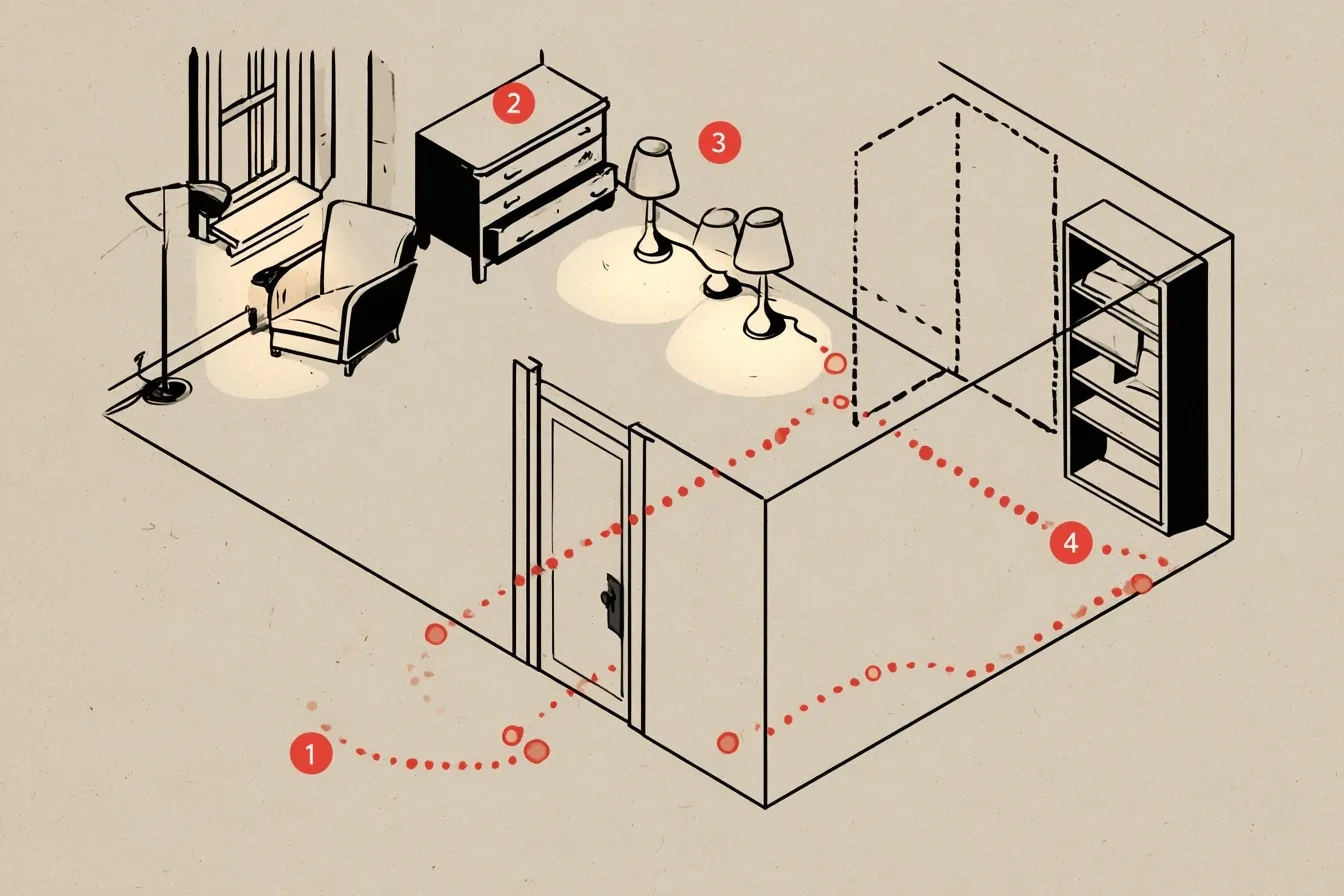
Buy the chair you will sit in every night before anything else. Test it for twenty minutes, not two, with a book in your hands. Your feet should rest flat on the floor, the front edge of the seat should not press into the backs of your knees and the arms should carry your elbows without lifting your shoulders. Put a floor lamp just behind one shoulder and a small table within reach of the other hand. That corner is where you will spend most of your waking hours at home, and it can be finished before the rest of the room has started.
Read the drawer before the price
Estate sales, auctions and secondhand shops are full of dressers, tables and bookcases built to outlast you, often for less than new flat-pack. Go on the last day of an estate sale, when many sellers cut their prices to clear the house. Bring a tape measure and a photograph of the wall the piece is meant for, with its measurements written on it.
You can tell how a piece was built in about thirty seconds. Pull out a drawer and look at its front corner. Interlocking dovetail joints mean someone built it to be used for decades, while staples, glue and a raw particleboard edge mean it was built to be sold. Then look at the edge of the top. On solid wood, the grain on the top runs over the edge and continues down the side; on veneer, the pattern stops at a thin line over a plain core. A light sanding, a coat of Danish oil and a night to dry will bring most honest furniture back.
Secondhand furniture carries a second argument. A dresser that has already survived fifty years has proved something no new piece can, and buying it keeps it in use rather than in a landfill. It also arrives with a history you did not have to invent, which is part of why rooms furnished this way feel lived in from the first day.
Light the room in pools
Turn off the ceiling light after sunset and leave it off. Light the room with three or four lamps at different heights, in the corners and beside the chair, so the light gathers in pools instead of flooding the room. Use bulbs rated at 2700 kelvin, which read as warm in the evening, and put the main lamps on dimmers or smart plugs so they come on together. Hang the curtain rod close to the ceiling and let it run several inches past each side of the window frame. The curtains then frame the glass instead of covering it, and the window looks taller and wider than it is.
Living with the empty corner
The hard part is not buying. It is living with a bare wall or an empty corner for three months while you wait for the right piece. The temptation is to panic, fill the space with something adequate and then live with it for a decade. Keep a written list instead, with each missing piece and its maximum width, depth and height. Check a couple of secondhand listings each weekend, and buy only when something on the list appears at the right size. An empty corner costs nothing, and a wrong sofa costs years.
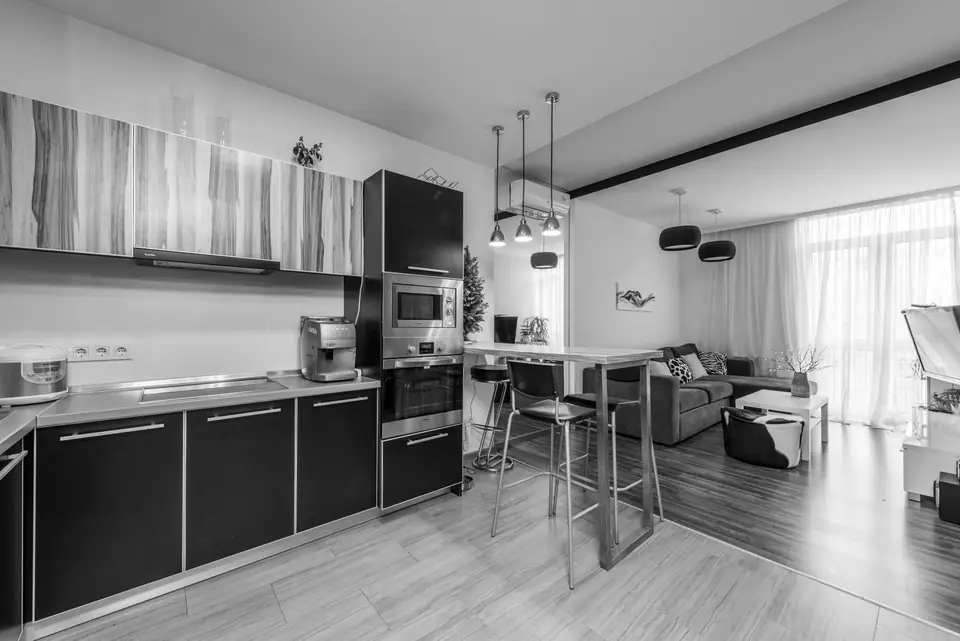
An empty corner costs nothing, and a wrong sofa costs years.
Every object in view should have a job or a story. Everything else goes into a drawer, a closet or a donation box. Give the kitchen counter, the coffee table and the top of the dresser one object each, and fill a bookshelf with the books you have actually read, because a full shelf tells a guest more about you in ten seconds than any print on the wall. Once a week, put each surface back to its one object. Once a year, oil the wood and walk every room with a donation box.
Morris’s rule asks for knowledge and belief, and neither can be bought on a Saturday. They arrive the slow way, one chair, one dresser and one lamp at a time. The apartment that results is not a showroom. It is a record of decisions, made by someone who took the time to make them.