
Essay
The glass tube.
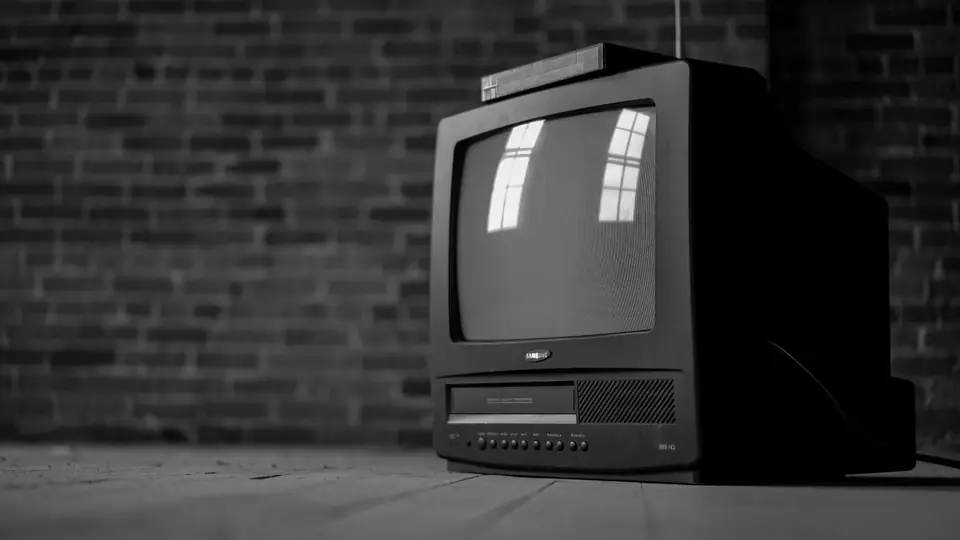
The games of the 1980s and 1990s were composed for a television that nobody makes anymore. Playing them on a tube is not nostalgia, because it restores the timing between the player’s hand and the picture that the designers were counting on.
Written by CONTROL
This article runs 903 words and takes about four minutes to read.
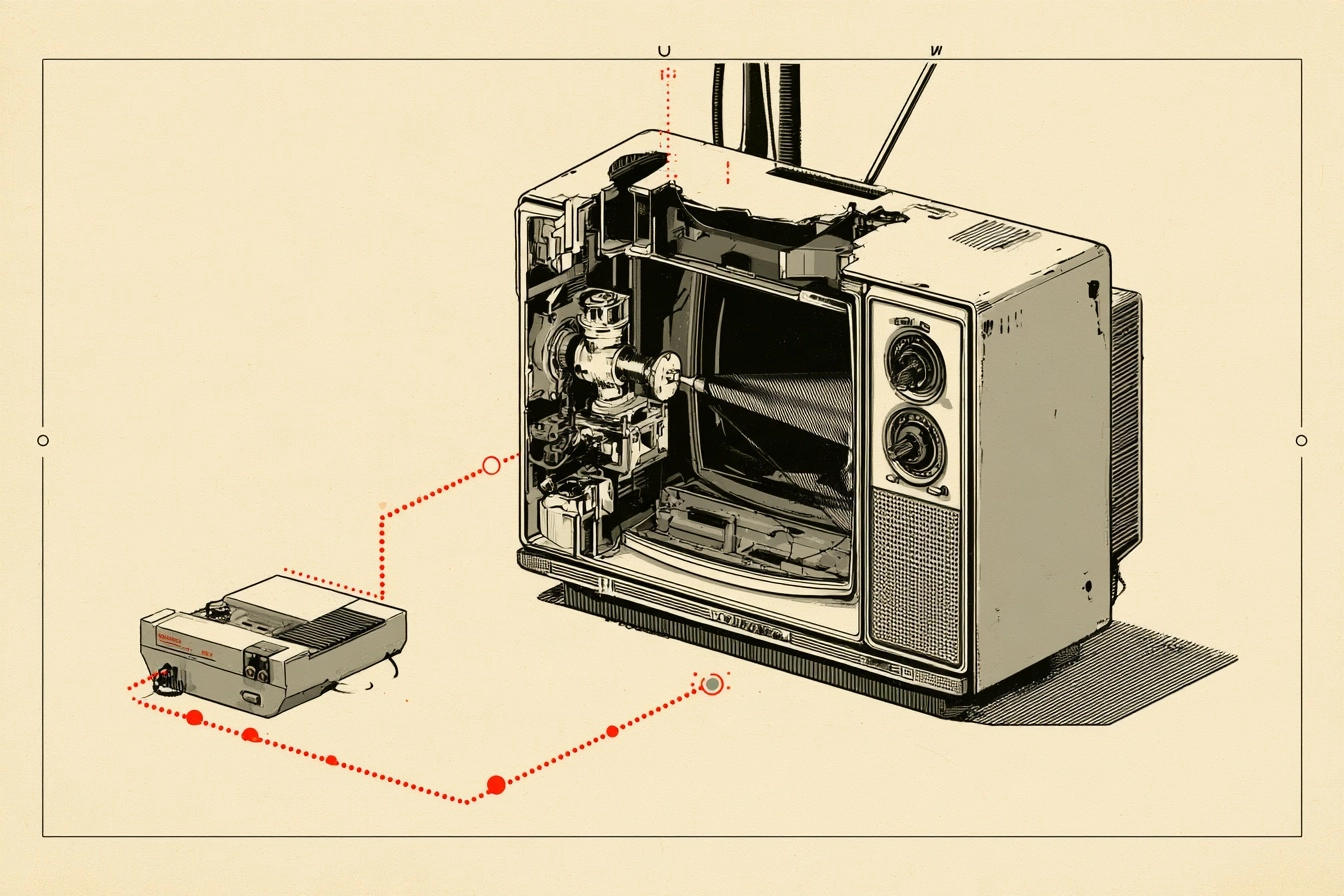
A film shown on the wrong projector is still the film. A game shown on the wrong screen is not quite the game, because a game is something you answer as well as watch, and the answer depends on timing. Every console before the high-definition era was designed for a cathode-ray tube, the heavy glass television most households threw out years ago. Plug a Super NES into a modern flat screen and the picture is soft, the colors are off and the controls feel faintly late. The last of those matters most, because it quietly takes a little control away from the player.
A picture that is never stored
A tube draws the picture with an electron beam that sweeps across the screen line by line as the signal arrives, with nothing stored and nothing processed in between. Most older consoles send a low-resolution signal known as 240p, which a tube shows exactly as intended. Many flat screens do not know what to do with it. They treat it as 480i, a different interlaced format, and then stretch it to fit millions of pixels. That processing takes time, and in a platformer or a fighting game you can feel it. The designers of those games tuned their jumps and punches on displays that showed the picture as it arrived, and a screen that adds delay changes the work.
The gun that needs the tube
The plainest proof that these games and their screens were one system is the light gun. When you pull the trigger of a Nintendo Zapper, the console blacks out the screen for a split second and draws a white box over each target. A light sensor in the gun checks whether it is pointed at the white box, and that check depends on the exact moment the tube draws it. A modern display adds a delay that ruins the timing, so the gun misses every time.
There is a workaround, and it proves the point from the other side. The Sinden Light Gun, released in September 2020, tracks a white border drawn around the screen and works on modern displays, but it works with emulators on a PC and with the MiSTer FPGA system, not with the original console. To make the gun work without the tube, the game itself has to be rebuilt.
The Trinitron and its wires
Sony introduced the Trinitron in 1968, and its Japanese factories stopped making the tubes in 2004. Its sharp, bright picture made it the television collectors look for first. The professional version is the PVM, short for Professional Video Monitor, which Sony built for studios and broadcasters, and many models accept RGB, the cleanest signal older consoles can send.
Look closely at a large Trinitron and you will see one or two thin horizontal lines across the picture. They are not scratches or a defect. They are tungsten damper wires that hold the tube’s vertical grille steady; screens of 15 inches and smaller have one wire, and larger screens have two. The faint lines across a Trinitron are damper wires, and every one of them is supposed to be there. A seller who calls them damage has told you something about the seller.
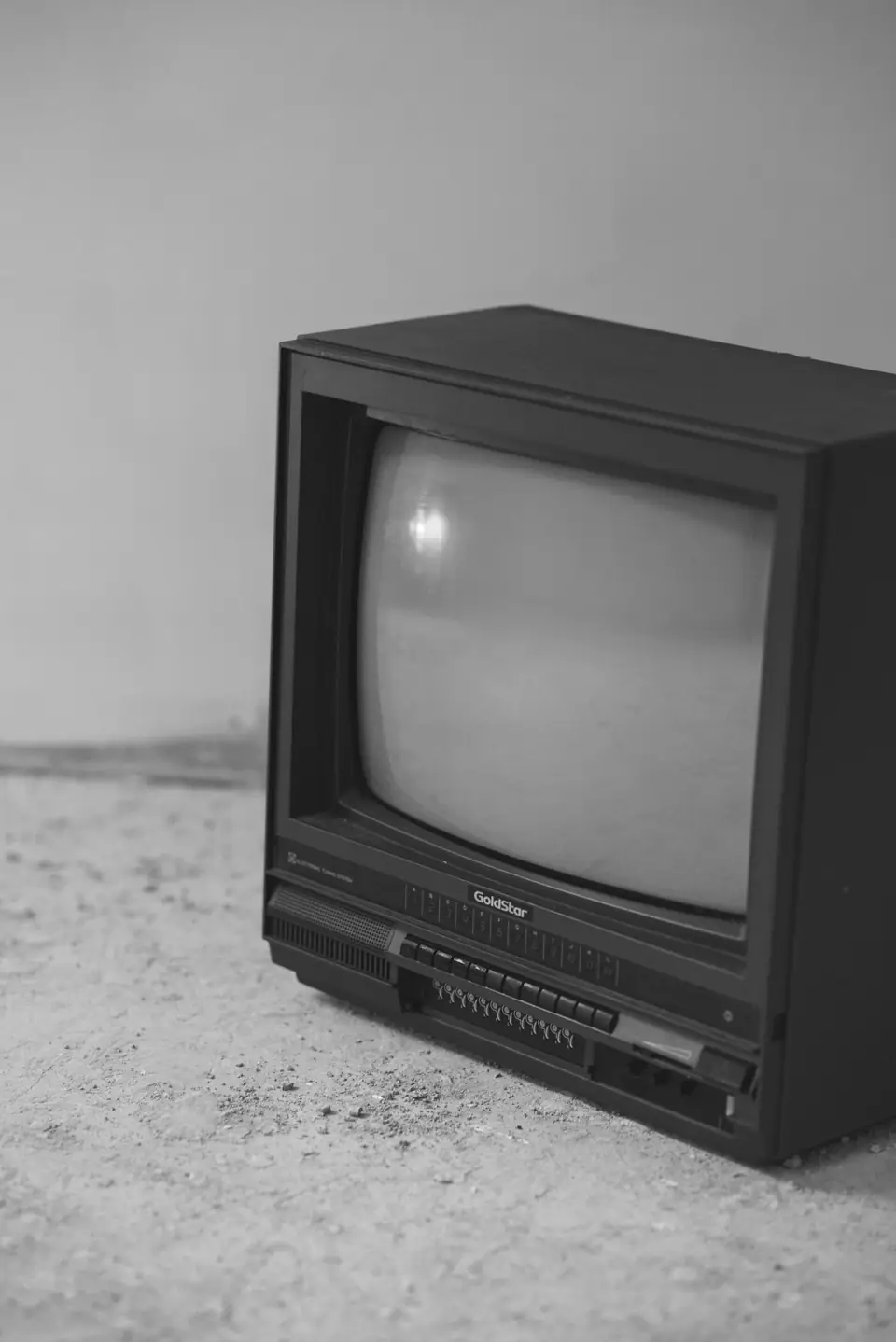
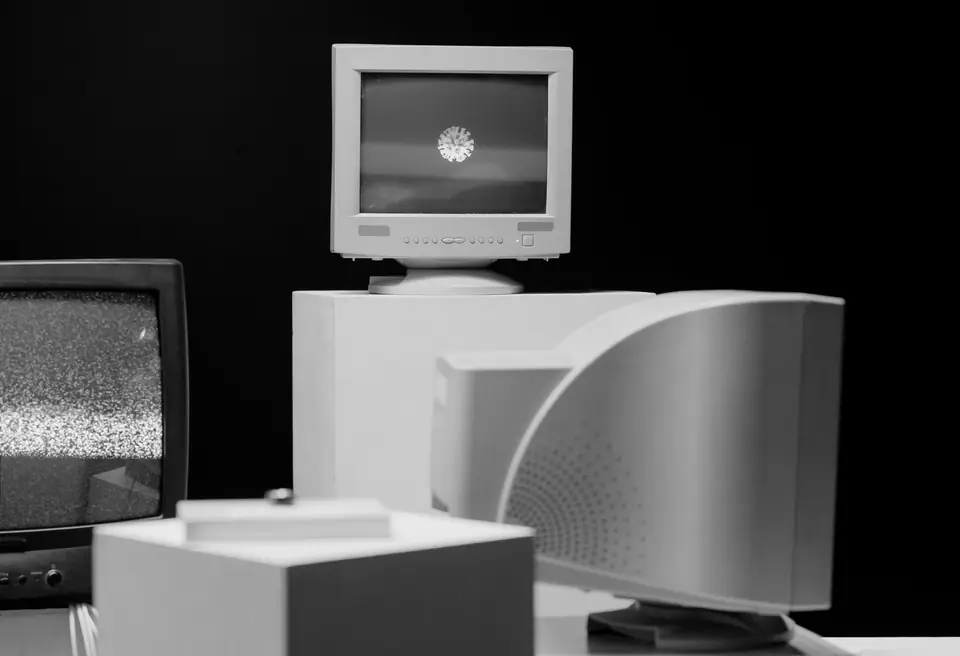
The faint lines across a Trinitron are damper wires, and every one of them is supposed to be there.
Buying a tube secondhand is an exercise in patience. Bring a console and a cable and play for ten minutes before you pay. Look for burned-in shapes on a dark screen, wrong colors near the corners and lines that bend at the edges, and walk away from any set that shows them.
Respect the glass
The inside of a tube is a near vacuum, and a cracked tube can implode and throw glass. A color television tube runs at roughly 24,000 to 32,000 volts, and the glass itself can hold a dangerous charge long after the set is unplugged. Never open a CRT; any repair belongs to a technician who knows how to discharge it. Lift with two people, never by the thin neck at the back of the tube, and put the set on furniture rated for its weight. Large sets are enormously heavy, and Sony’s 43-inch PVM-4300 of 1989 weighed 440 pounds. If a set has been sitting somewhere below freezing, let it warm indoors for a couple of days before you turn it on.
For anyone without room for a tube, a dedicated upscaler is the honest alternative. Devices such as the RetroTINK line and the OSSC, the Open Source Scan Converter, take the old signal, handle 240p correctly and send a clean HDMI picture to a modern television with very little delay. They will not bring back the Zapper, but they fix the picture and most of the lag. Whatever the screen, run the best cable that the console and the television both accept. Composite is the worst, S-Video is better, and component or RGB is best.
The other half of the game
There is a reasonable objection to all of this, which is that a thirty-year-old television is a great deal of glass to keep for a few old games. The answer is that the tube was never an accessory to those games. It was the other half of them, the half that was never sold on a cartridge, and when the last working sets are gone the games will survive only in translation.