

Essay
The machine drafts. You sign.
The new machines are very good at first drafts and very bad at knowing when they are wrong. The sensible arrangement gives them the busywork and keeps judgment, records and skills in human hands.
Written by CONTROL
This article runs 850 words and takes about four minutes to read.
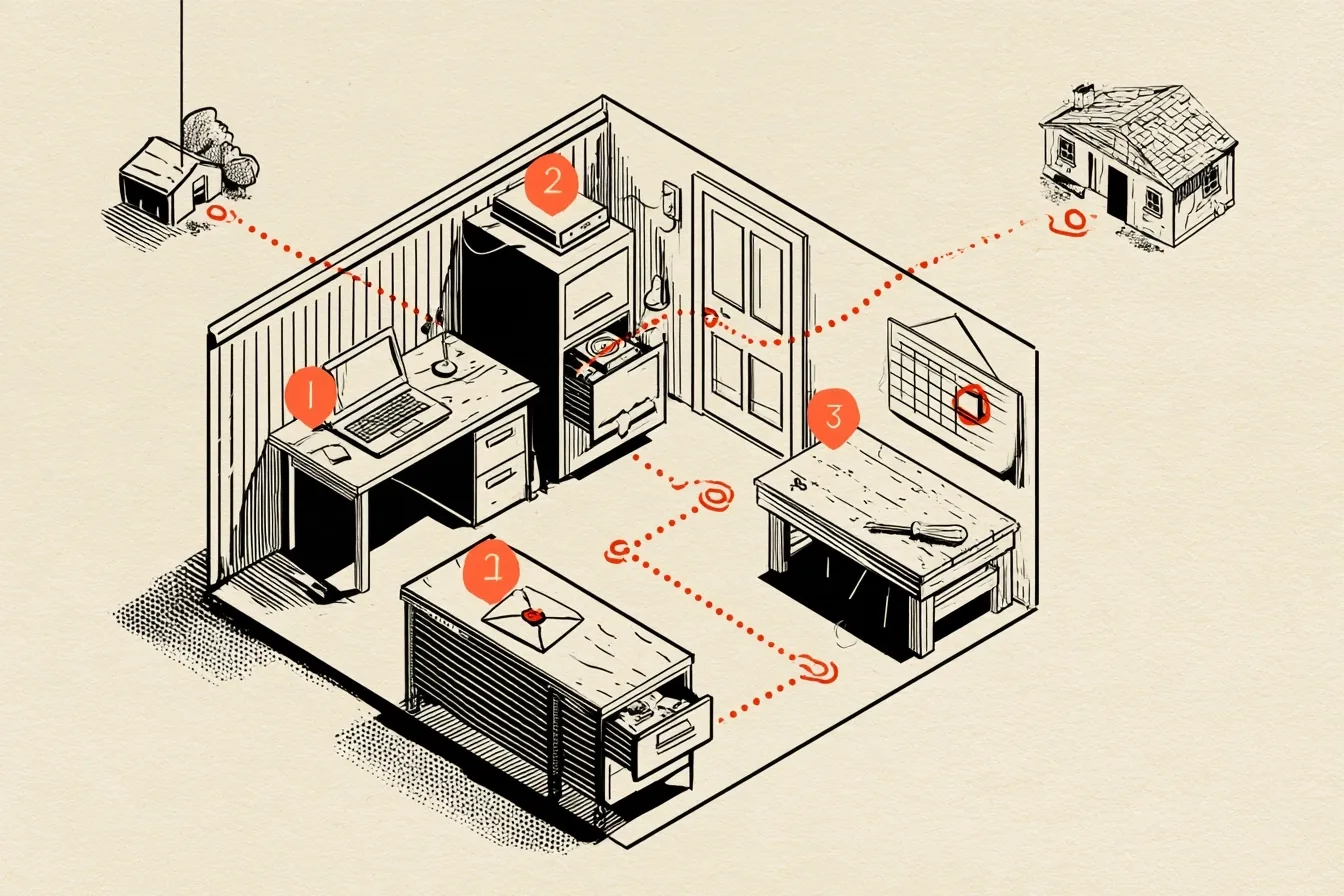
Every generation inherits a machine it has to learn to live with. Our grandparents learned to drive, our parents learned to type, and we learned to carry a computer in a pocket. The next decade will put software that writes, summarizes and plans inside nearly every task a person does at a desk. The question it raises is not whether to use these tools, since most of us already do. It is which parts of a life to hand them, and which parts to keep.
The answer we would propose is an old one borrowed from offices. A good assistant drafts the letter, and someone else signs it. The signature is where judgment lives, along with responsibility and the relationship with the person who receives it. Most of the risks of the new machines come from forgetting which of those two jobs they have been given.
The draft and the signature
AI assistants are good at first drafts, summaries, itineraries, meal plans and turning a disorderly list into a clean one. Giving them that work is sensible, and the hour saved is real. Three jobs are worth keeping for yourself regardless of how good the tools become: the decision, the apology and the letter to a friend. Each of them matters precisely because a person did it.
The tools also have a peculiar weakness. They can state a wrong answer in exactly the same calm tone as a right one, so every fact, figure and citation needs checking before anyone acts on it. Read their output the way you would read a draft from a quick new hire in the first week, with appreciation and a pencil. Never paste passwords, account numbers or anything you would not want read aloud into a chat window.
The subtler risk is not error but atrophy. It begins with routes you no longer know and birthdays you no longer remember, and it can end with decisions you did not really make. One rule counters it. Form your own answer first, then ask the machine. Write the email’s point in a line of your own before requesting a draft, and guess the route before opening the map. Used that way, the tool becomes a check on your thinking rather than a substitute for it.

Form your own answer first, then ask the machine.

An archive is yours only if you hold it
Photographs, messages and documents are the record of a life, and most of them now live on servers owned by a handful of companies. The standard safeguard is the 3-2-1 rule, which calls for three copies, on two different kinds of storage, with one copy kept outside the home. A cloud service, an external drive in a desk drawer and a second drive at a relative’s house will satisfy it.
Once a year, download what the large companies hold. Google Takeout exports a Google account, and Apple’s Data and Privacy page at privacy.apple.com lets you request a copy of yours. Put every password in a password manager, and wherever a service offers it, sign in with a passkey or an authenticator app rather than a code sent by text message, which is easier to intercept.

What happens when you stop logging in
Very few people decide what will become of their accounts when they die, and the default is often a locked door. On an iPhone, open Settings, tap your name, then Sign-In & Security, then Legacy Contact. The person you name receives an access key, and with that key and a death certificate, Apple will release your photographs and files to them. Google’s Inactive Account Manager does a similar job on a timer. You choose a period of silence of three, six, twelve or eighteen months, and up to ten people you trust are notified and can download the data you chose to share. Each takes about five minutes to set up, and each spares a family months of correspondence with a support desk.
Keep something you can do with your hands
The same principle applies to objects. Buy things you can fix, resole or open with a screwdriver. New York, California, Minnesota and Oregon are among the states that have passed right-to-repair laws for consumer electronics, and the European Union adopted a repair directive in 2024 whose rules began to apply in July 2026. Before buying a phone or a laptop, look up its repair guides and repairability score on iFixit.
Then choose one hard skill each year and give it a real hour a week, whether cooking, carpentry, first aid, a second language or a spreadsheet you actually understand. Machines will keep improving at the easy parts of many jobs. A person who can do something difficult without them keeps a kind of independence that no subscription can revoke.
Put a single date on the calendar each January. On that day, download the archives, test the backups by opening a few old files, confirm the legacy contacts and choose the skill for the year. It takes one afternoon, and it ensures that whatever the machines become, the signature stays yours.