
Essay
Train for the long haul.
Muscle is the part of the body that quietly leaves after thirty unless it is asked to stay. Three short lifting sessions and a daily walk keep most of it, and the evidence for bothering is unusually strong.
Written by CONTROL
This article runs 1,007 words and takes about four minutes to read.
Somewhere in the thirties, the knees begin to have opinions about stairs. It is tempting to read that as a verdict, the first notice of a decline that can only be managed with painkillers and good shoes. It is better read as a maintenance schedule. Of all the changes that arrive with age, the loss of strength is among the few that respond directly to what a person does on an ordinary Tuesday. The goal is not a physique. It is a body that can still lift its own suitcase into the overhead bin at seventy, and the cost of that is smaller than the fitness industry would like anyone to believe.
What leaves on its own
Muscle mass declines by roughly 3 to 8 percent per decade after the age of thirty, according to a 2004 review by Elena Volpi and colleagues in Current Opinion in Clinical Nutrition and Metabolic Care, and the rate climbs after sixty. Nothing about the process announces itself. The loss shows up years later as a chair that takes two tries to leave or a grocery bag that has to be set down halfway to the car.
Strength also turns out to say something about survival. In 2015, The Lancet published results from the Prospective Urban Rural Epidemiology study, which measured the grip strength of nearly 140,000 adults in 17 countries and followed them for about four years. Each 5-kilogram drop in grip strength was associated with a 16 percent higher risk of death from any cause, and grip strength predicted death more strongly than systolic blood pressure did. An association is not proof that squeezing a hand gripper extends life. Grip is a marker of how strong the whole body is, and the sensible reading is that general strength is worth keeping.
The federal Physical Activity Guidelines for Americans set the floor. Adults should get 150 to 300 minutes of moderate aerobic activity a week, such as brisk walking, plus muscle-strengthening work on at least two days. The 2018 edition also dropped the old rule that only bouts of ten minutes or longer counted, because any amount of movement has some benefit. If you have not trained in years or you manage a health condition, talk to your doctor before you start and bring the plan with you.
A program small enough to keep
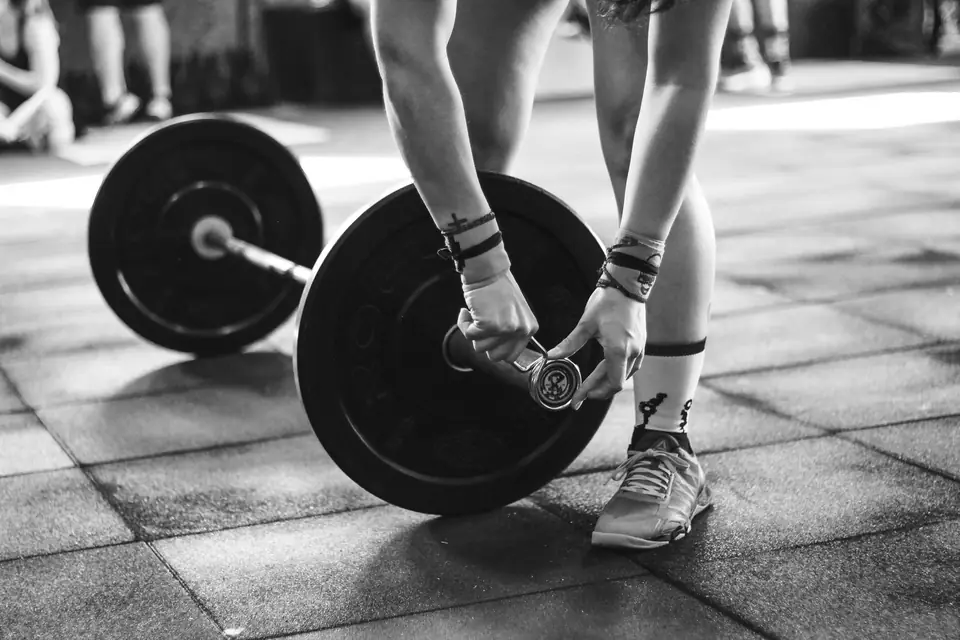
Pick five movements: a squat, a hinge such as the deadlift, an overhead press, a row and a pull-up or lat pulldown. Train on three days that do not touch, such as Monday, Wednesday and Friday. Do three sets of five to eight repetitions of each, and rest two to three minutes between sets. Start lighter than pride suggests, with a weight you could lift eight times with clean form. Forty-five minutes covers the session, warm-up included. If a movement bothers a joint, swap it rather than skip it. A goblet squat with one dumbbell can stand in for the barbell squat, and a dumbbell row can replace almost any pull.
Strength comes from asking for slightly more than last time. When every set and repetition is completed with clean form, add the smallest jump the gym allows at the next session, usually five pounds on the lower-body lifts and two and a half on the presses. Write every set in a paper log with the date, the movement, the weight and the repetitions. End each set with one or two good repetitions still available, because the last ugly repetition builds little and costs the next session. Before the first heavy set, do two light sets with the empty bar and one at about half the working weight. If something hurts in a sharp or unusual way, stop and have it looked at.
The walk counts more than it looks
The number 10,000 has no scientific pedigree. It was popularized in 1960s Japan by a pedometer sold as the manpo-kei, the “ten-thousand-step meter.” The better evidence came later. A 2022 meta-analysis in The Lancet Public Health, pooling 15 studies of nearly 50,000 people, found that the risk of death stopped falling at around 6,000 to 8,000 steps a day for adults over sixty and around 8,000 to 10,000 for younger adults. Walking pace showed no clear association with mortality beyond the total number of steps.
That makes the daily walk the quiet half of the program. Thirty minutes on five days reaches the federal minimum of 150, and the lifting covers the strength requirement. The walk after dinner is the easiest one to keep, and it doubles as the place to think through a problem or have the conversation you have been avoiding.
Never miss twice
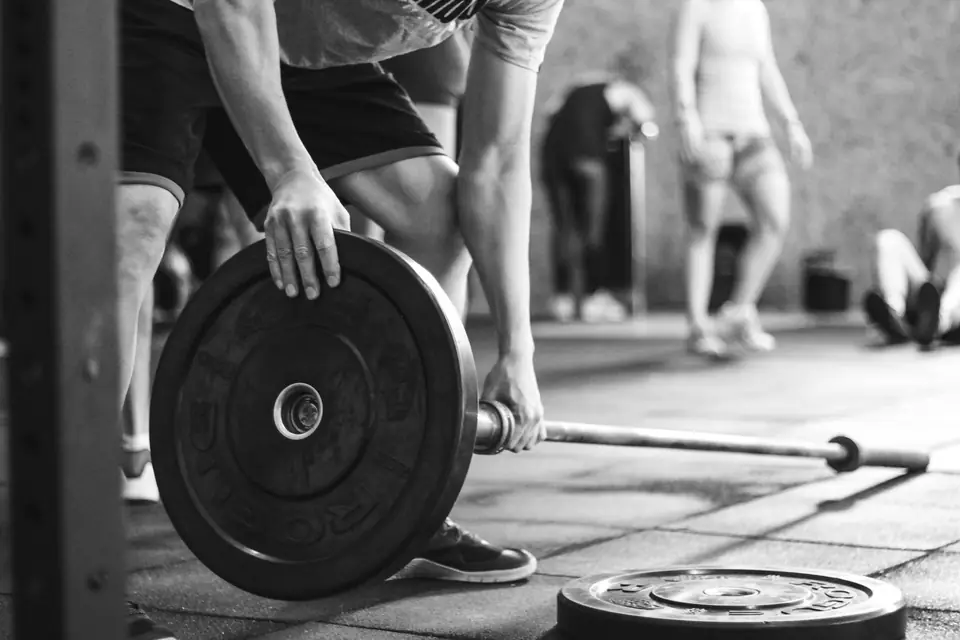
Most people start strong and stall around the third week, when a work trip or a sick child takes out two sessions and the whole plan starts to feel lost. The rule that survives this is short. One missed session is an accident, and two in a row is the start of a new habit. When a week goes sideways, do one brief session of the three biggest lifts and count it. After a longer gap, take ten percent off the last logged weights and rebuild from there.
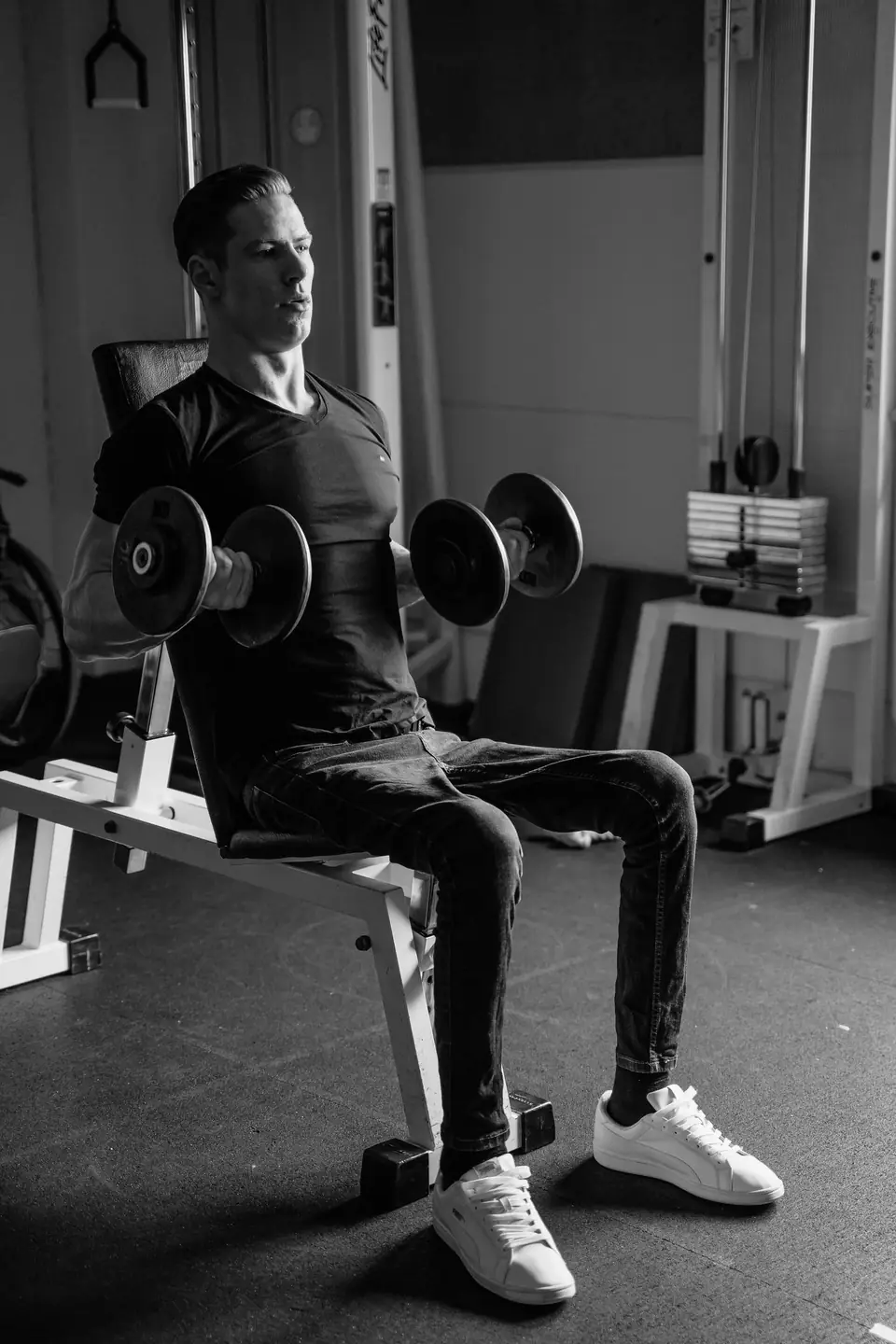
One missed session is an accident, and two in a row is the start of a new habit.
The rest of the program happens away from the gym. The CDC recommends at least seven hours of sleep a night for adults, and the lifting will not survive a schedule that leaves no room for them. Eat plainly, with a real portion of protein at each meal and vegetables you actually like, and take questions about diet or medical conditions to a doctor or a registered dietitian.
Keep the log and never throw it away. In five years it will be a more honest record than any photograph of the body you kept in working order, and it will show something the mirror cannot, which is that a good part of the decline everyone expects was open to argument all along.