
History
It’s dangerous to go alone.
In 1986 Shigeru Miyamoto built a game that handed the player a wooden sword and almost nothing else. The Legend of Zelda trusted children to get lost, and its silence turned a generation of playgrounds into a research network.
Written by CONTROL
This article runs 1,031 words and takes about four minutes to read.
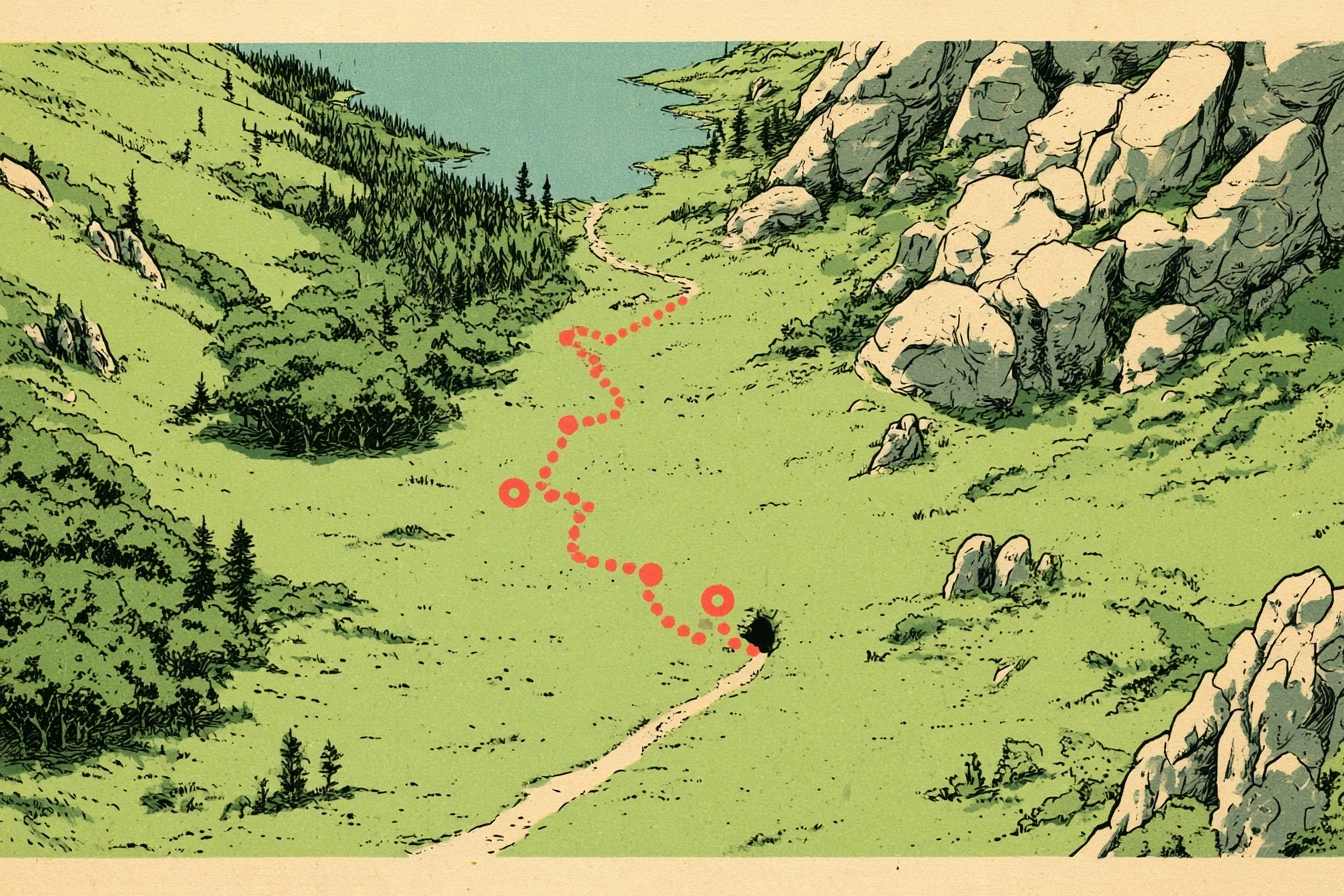
The game begins with a small figure named Link standing in a clearing. There is no introduction to speak of, no tutorial and no arrow pointing anywhere. Most players, sooner or later, walk into the dark doorway in the rock above him and find an old man beside a fire, who hands over a wooden sword with a single line: “It’s dangerous to go alone! Take this.” After that, the game says very little. The dungeons, the items and the order in which to find them are left for the player to discover by walking, burning bushes and bombing walls.
For a certain generation, that silence was the first experience of real freedom on a screen. Before The Legend of Zelda, most console games pushed the player in one direction and made the route plain. This one put a child in a field and let him go wherever he liked, including the wrong way. It is worth looking at how that happened, because the freedom was not an accident of limited hardware. It was a decision, and it depended on a kind of trust that games have since found hard to sustain.
The boy in Sonobe
Shigeru Miyamoto grew up in Sonobe, a small town outside Kyoto, and he has often said that he spent his childhood wandering the countryside without a map. In the story as he tells it, he went hiking one day and came upon a lake he had not known was there, and the surprise of finding it stayed with him. He has also described finding the mouth of a cave and going inside with only a lantern. His family’s house was divided into rooms by sliding doors, and he has said that getting lost in that maze fed the labyrinths of the game’s dungeons.
What he wanted to give players, he has said, was a “miniature garden that they can put inside their drawer.” The phrase is modest, and it is exact. A garden is a place to wander, not a course to complete, and a drawer is a private place. Miyamoto was not building a spectacle. He was building a world small enough to hold and large enough to get lost in.
A disk in Japan, a gold cartridge in America
Miyamoto designed the game with Takashi Tezuka, and Koji Kondo wrote the music. Nintendo released it in Japan on February 21, 1986, as the launch game for the Famicom Disk System, a floppy-disk drive that plugged into the Famicom. The disks could be written to, and that mattered, because a game this large could not be finished in one sitting. The Disk System version went on to sell 1.69 million copies in Japan.
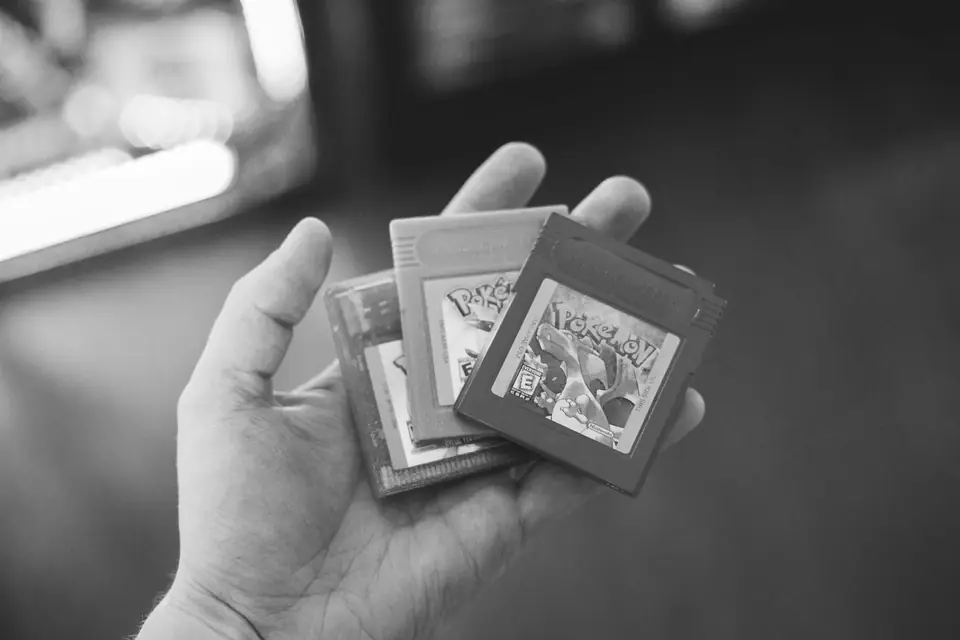
America had no disk drive, so Nintendo put the game on a cartridge and put a battery inside it. The Legend of Zelda arrived in North America on August 22, 1987, as the first NES game that could save a player’s progress, and the cartridge itself was gold. The box had a window cut into its front so that the gold plastic showed on the store shelf. Inside were a full-color manual and a fold-out map. In 1987 it became the first NES game to sell more than a million cartridges in the United States, and it eventually sold 6.51 million copies worldwide.
The silence was the design
The hardest problem Nintendo faced was not a monster. This was a game that took weeks to finish rather than an evening, and the console on its own had no way to remember where a player had stopped. The battery solved the memory problem. The map and the manual solved the rest, because they gave a player just enough of the world to start walking and left everything else to be found. Nintendo sold the mystery and supplied exactly enough help to make the mystery bearable.
Nintendo sold the mystery and supplied exactly enough help to make the mystery bearable.
The rest of the help came from other people. Miyamoto has said he wanted players to talk to one another and share what they had found, and they did. Which wall could be bombed, which bush hid a staircase and where the ladder was: this was knowledge passed along at lunch tables and bus stops, some of it wrong and all of it argued over. The game’s silence did not leave players alone. It sent them to each other.
The other Zelda
Finishing the game does not end it. It begins again as the Second Quest, with the dungeons moved, the map rearranged and the enemies tougher. A player does not have to beat the first quest to see it; registering a new save file under the name ZELDA drops him straight into the harder version. Princess Zelda, for the record, was named after Zelda Fitzgerald, the wife of F. Scott Fitzgerald, because Miyamoto liked the sound of the name.
The Second Quest is the purest statement of the game’s attitude. Having learned one world by getting lost in it, the player is handed another and asked to do it again, with no more instruction than the first time. The reward for exploring is more exploring.
Fold the map
Many large games now keep a marker on the screen at all times, showing the next objective and the shortest route to it. It is a reasonable courtesy to adults with jobs, and it removes the part of Zelda that mattered most, which was the permission to be wrong for an hour and find something anyway. The original trusted children with that permission. It assumed they could tolerate confusion and would be better for it, and it was right.
The easiest way to play the game now is the NES library in Nintendo Switch Online, which includes the original. Collectors should know that the save memory in a gold cartridge runs on a coin-cell battery soldered to the circuit board, and after decades those batteries die, taking the saves with them; any competent repair shop can fit a new one. Then play it the way it was built to be played. Leave the guides closed, fold the map, pick a direction and walk.