Field Notes
The one bag.
A bag is a daily record of what we believe we need, and the best one is chosen by its seams and its metal rather than its season. Keeping one for twenty years is mostly a matter of carrying less.
Written by CONTROL
This article runs 884 words and takes about four minutes to read.
A bag goes to work on Monday, under an airplane seat on Thursday and into the back of a car on Saturday. It is dropped on floors, car seats and airport belts, loaded and unloaded, and picked up by the same two handles thousands of times a year. Few objects are handled so often, and few show so plainly how they were made and how they have been treated. A cheap bag looks tired within a year, while a good one looks better each year, and the difference can be read in about thirty seconds by anyone who knows where to look.
A bag is also a portrait of its owner’s anxieties. Everything inside it is there because someone once thought they might need it. The case for owning one good bag for decades rests on two ideas: that the object should be built to be repaired, and that the owner should be honest about what it needs to carry.
Materials that age well
Two materials age well rather than badly. The first is heavy cotton canvas or twill treated with wax, and the second is full-grain or bridle leather. Both can be cleaned, repaired and restored, and both wear in rather than wearing out. Be wary of anything that depends on a thin plastic coating, bonded leather or edges held together with glue, because those are the parts that peel and split first. A quiet color such as olive, tobacco, tan or charcoal hides scuffs and goes with nearly everything.
Where a bag fails
Bags rarely fail in the middle of a panel. They fail where weight is concentrated, at the handle joins and the strap anchors. The stitching there should be tight, even and doubled, and good bags often add a rivet or a leather reinforcement at the same spot. Tug the handles hard in the shop, and walk away if anything creaks or shifts. Hardware should be solid metal, ideally brass, which does not rust and wears to a warm finish. Run every zipper with one hand. If it snags on the first pull in the shop, it will snag at the security line.
A useful reference
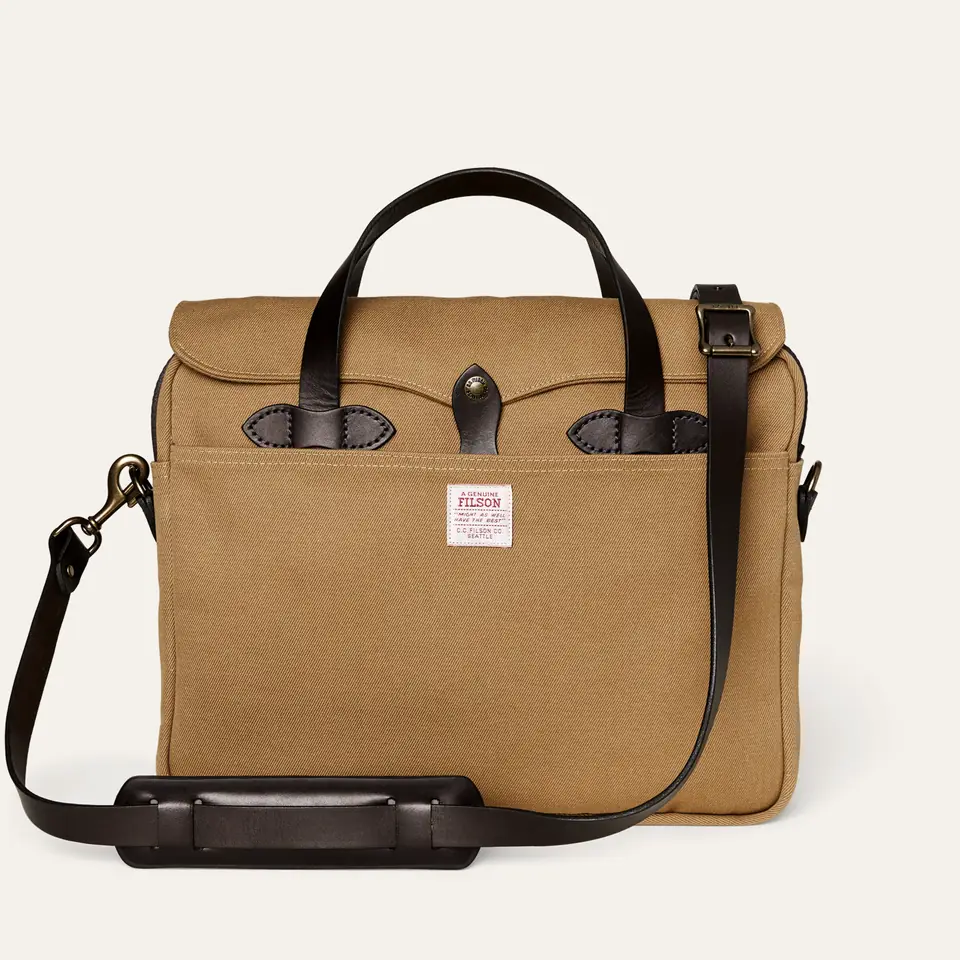
The Filson Rugged Twill Original Briefcase in our shop, at $499, is worth studying even for readers who buy something else. The body is 100 percent cotton twill from British Millerain with a light wax finish. The handles and the detachable shoulder strap are bridle leather, vegetable-tanned in Pennsylvania by Wickett & Craig, and the hardware is sand-cast solid brass, with a heavy brass YKK zipper under a storm flap. The bag measures 16 by 12.5 by 4 inches, holds 13 liters, takes a 15-inch laptop and carries Filson’s limited lifetime guarantee. Hold any candidate up against that list, line by line, and the gaps become obvious.
Waxed cloth also makes an argument about ownership. It is never quite finished when it is bought. Over time it gives up its wax, starts to soak up rain and turns pale at the corners and folds, and that is the signal to rework it. Filson’s own care advice for the briefcase is to wipe or brush it clean and to condition the leather as needed. Rewaxing, when the cloth asks for it, is an afternoon’s work: brush off the dirt, warm the cloth with a hair dryer, rub in a thin coat of wax with a lint-free rag, warm it again so the wax sinks in and hang the bag overnight somewhere warm. Keep the wax and water off the leather trim while you work. Secondhand waxed bags are worth looking for, since a cleaning and a fresh coat of wax bring most of them back.
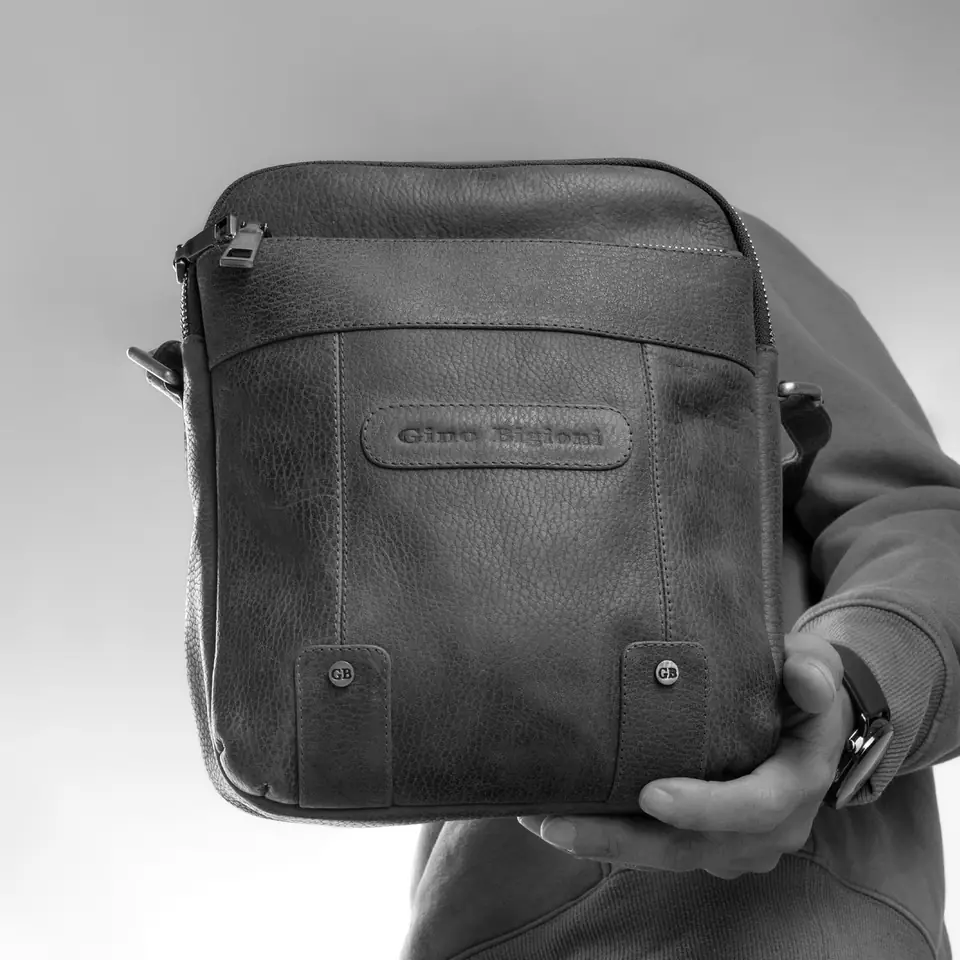
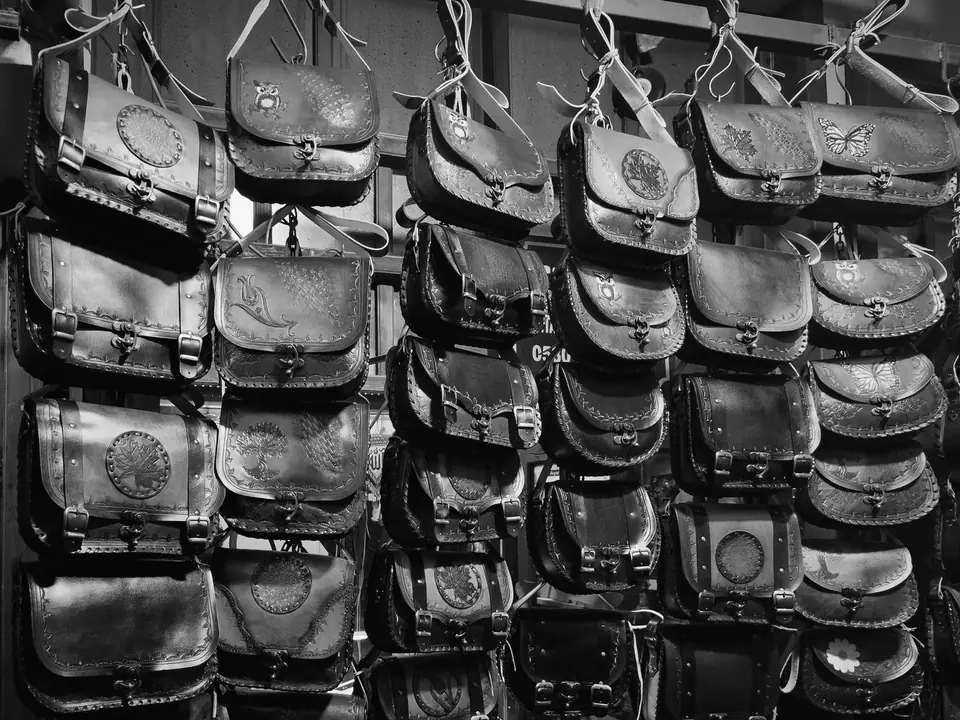
A bag is also a portrait of its owner’s anxieties.
The weight of what we carry
Most people buy a bag for the one day they might need more room, and then carry a half-empty cavern for a decade. A better method is to empty your current bag onto a table and count what you actually use on a working day. For many people that is a laptop, a charger, a notebook, a pen, a water bottle and a sweater, and a briefcase of about 13 liters holds all of it. Measure the laptop before shopping, since a sleeve that is too tight scuffs its corners and one that is too loose lets it slide. A long trip is what a second bag is for.
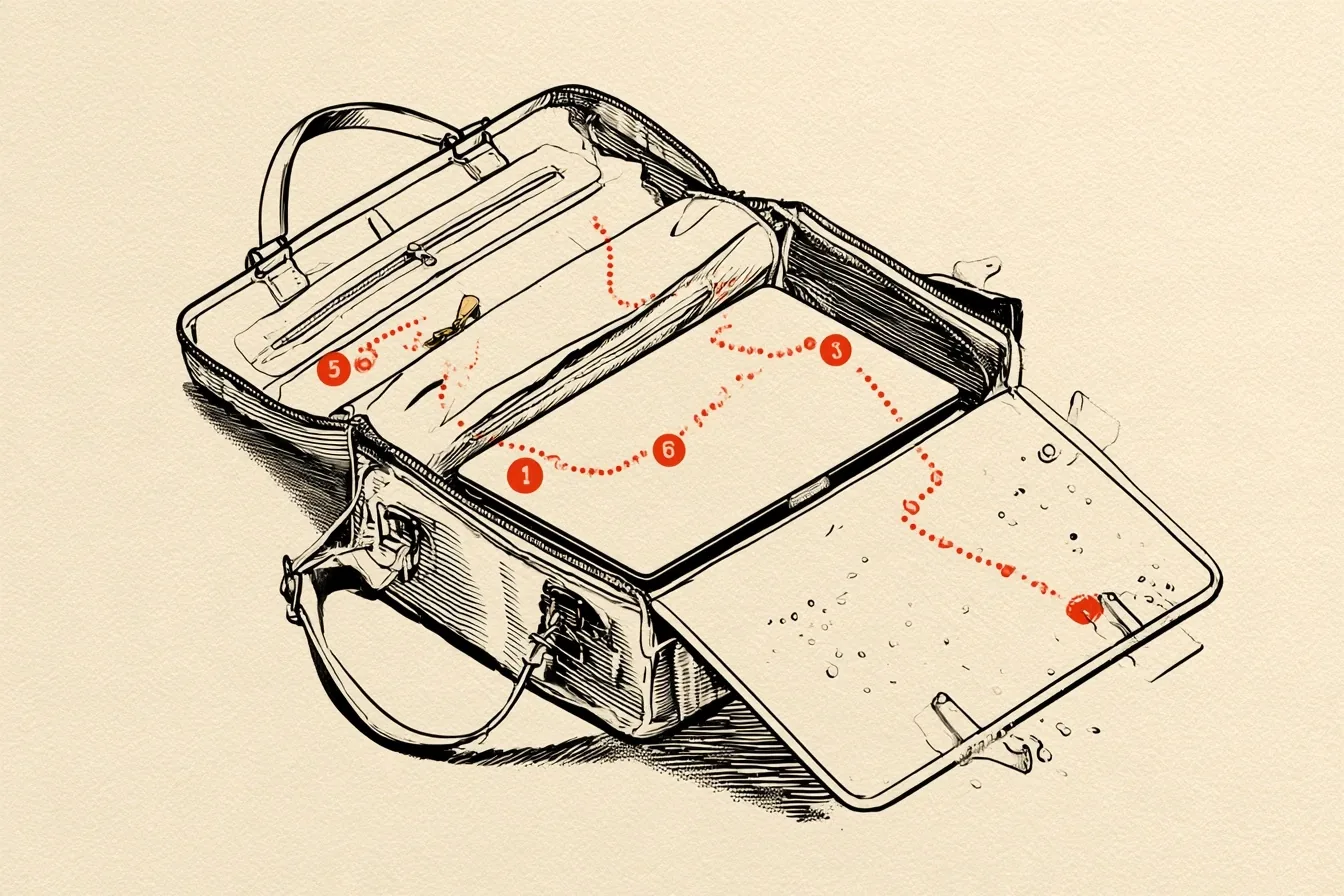
The bag, in the end, rarely fails on its own. Its owner overloads it. Receipts, spare cables, a second notebook, a forgotten lunch and a charger for a device that no longer exists turn a light bag into a heavy one, and the extra weight pulls at the handle joins every day until the stitching gives. The remedy is a weekly ritual. On Friday, turn the bag upside down over a table, put back only what was used that week and throw away the rest.
That habit, together with a monthly look at the stitching and an occasional dose of conditioner for the leather, is what separates a bag that lasts five years from one that lasts twenty. The object sets the upper limit. The owner decides how close it comes to reaching it, and the answer shows up every Friday on the kitchen table.