

Field Notes
Twelve tools.
Competence at home begins with a dozen tools and the willingness to lift the lid off a toilet tank. Five ordinary repairs are enough to turn a house from something that happens to you into something you can look after yourself.
Written by CONTROL
This article runs 912 words and takes about four minutes to read.
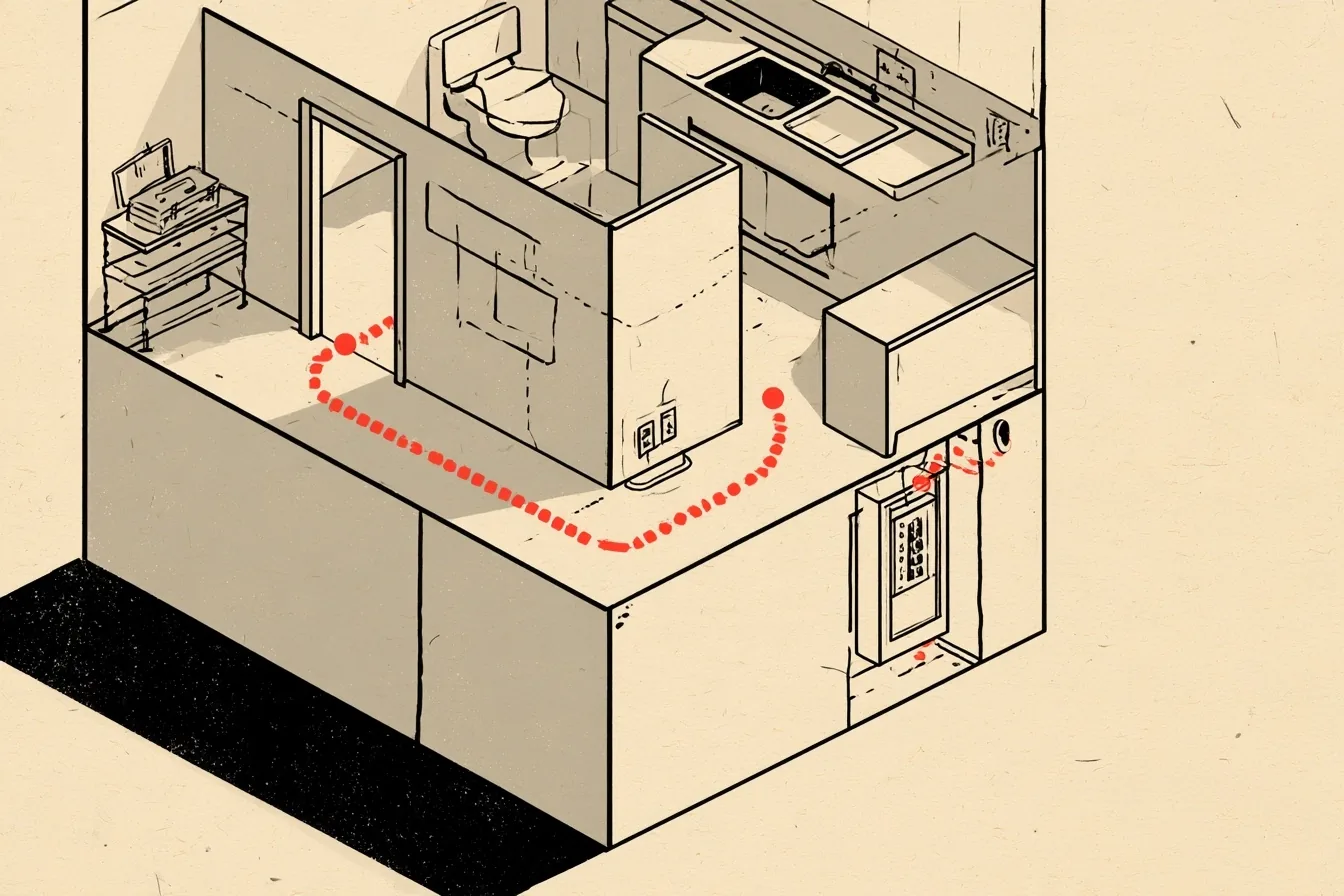
Every home eventually produces the same small list of problems. A toilet runs all night, a sink drains slowly, a doorknob punches a hole in the drywall, an outlet goes dead and something heavy needs to hang on a wall. None of these is difficult, and most take less than half an hour. Yet many capable adults respond to all five in the same way, by calling someone and waiting.
The gap is rarely skill. It is a combination of missing tools and a vague fear of the unknown behind the wall. Both are cheap to fix. A dozen tools in one box, plus an understanding of how water and electricity are turned off, cover nearly everything an ordinary household will ask of its occupants.
A dozen, in one box
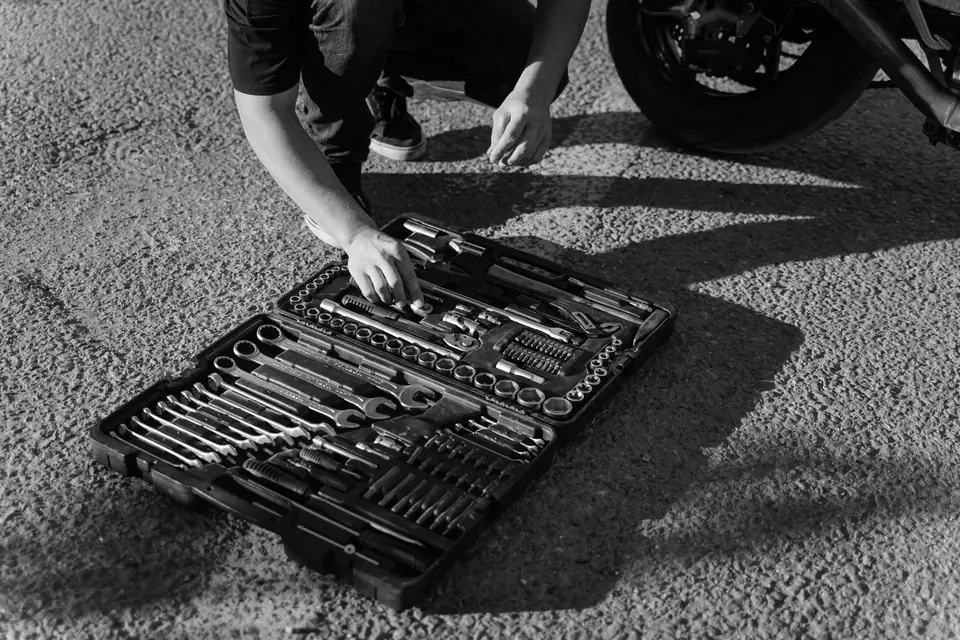
Buy these twelve and nothing else until one of them wears out. The first is a 16-ounce claw hammer. The second is a 25-foot tape measure. The third is a multi-bit screwdriver that holds Phillips and flat heads in several sizes. The fourth is a pair of pliers, which in practice means one slip-joint pair and one needle-nose pair. The fifth is an adjustable wrench, and the sixth is a utility knife with spare blades stored in the handle.
The seventh is a 24-inch level. The eighth is a cordless drill and driver with a small set of drill bits and driver bits. The ninth is a stud finder. The tenth is a non-contact voltage tester, the pen-shaped kind that beeps near a live wire. The eleventh is a flange plunger, which has a soft sleeve that folds out of the cup and seals a toilet drain better than the flat kind. The twelfth is a flexible putty knife.
Keep all twelve in one toolbox on one shelf, and add a small jar of assorted screws, a roll of painter’s tape and a tub of lightweight spackle. When a tool leaves the box, it should come back the same day. A tool that cannot be found at the moment it is needed might as well not be owned.

Five repairs every home asks for
The first repair is the running toilet. Lift the tank lid and look at the flapper, the rubber seal at the bottom of the tank. If it is warped or slimy, close the supply valve behind the toilet, flush to drain the tank and take the old flapper to the hardware store so that you buy a match. Toilets can also leak silently for months. New York City’s Department of Environmental Protection suggests putting a teaspoon of food coloring in the tank, waiting 10 to 15 minutes without flushing and then looking in the bowl. If color appears, the flapper is leaking.
If color appears, the flapper is leaking.

The second is the slow drain. Plunge first, with the overflow hole plugged by a wet rag so that the pressure goes down the pipe instead of out through the top. If that fails, put a bucket under the curved pipe below the sink, loosen its two slip nuts by hand or with the pliers and clean out what you find.
The third is the small hole in drywall. Scrape away loose paper with the utility knife, press spackle in with the putty knife, let it dry, sand it flat and paint. The fourth is the dead outlet. Press the reset button on the nearest outlet that has test and reset buttons, since one of them often protects several others, and then check the breaker panel for a switch resting in the middle position. Push it fully off and then back on.
The fifth is hanging something heavy. Find a stud with the stud finder, confirm it with a small test hole and drive the screw into the wood. In most modern American houses, studs sit 16 inches apart on center, so once you have found one, the tape measure will find the next.
Water and power come first
The riskiest part of home repair is not the repair itself. It is forgetting to stop the water or the power before starting. That single omission turns a fifteen-minute flapper swap into a wet floor and a loose outlet cover into a shock.
The routine is the same every time. Before any plumbing job, find and close the nearest shutoff valve, then flush or open the tap to confirm that it worked. Before any electrical job, turn off the breaker and hold the voltage tester to the wires to confirm that they are dead. Trust the tester rather than the handwriting on the panel door. The Consumer Product Safety Commission also recommends testing every ground-fault outlet once a month with its test button, which takes about a minute for a whole house.
The box that knows where to go
On the first Saturday of each month, press the test and reset buttons on every ground-fault outlet and return any tool that has wandered. Then write the location of the main water shutoff and the breaker panel on the inside of the toolbox lid. When something breaks at midnight, the box will already know where to go.
None of this turns anyone into a contractor, and large jobs still belong to professionals. What changes is smaller and more lasting. The house stops being a set of mysteries that produce invoices and becomes a machine its owner understands, at least well enough to know which valve to close before calling for help.